Monday, August 27, 2018

Gila County Birding 2018

Birding Gila County was my biggest goal and project in 2017.  Birding and exploring different counties outside of Maricopa was my main goal for 2017, and that resulted in focused efforts to Pinal, Greenlee, and Gila Counties.  While the latter two mentioned counties were the biggest enjoyment and thrill in Gila and Greenlee, Gila became the biggest focus for me.  Out of Arizona's most under-birded counties, Gila is the closest drive for me.  It's a two hour drive at the very minimum regardless of which way I choose to enter the County.  Greenlee is over four hours minimum, sometimes I wish I was closer to both.  To get to the point, I birded my butt off in Gila County.  I didn't get to chase rarities much in the county because hardly anyone birds it, and yet, hardly anyone finds rare birds when they do go.  There were a few birders who found some awesome rarities, Ed Dunn found an Eastern Kingbird and Dave Pearson found a Varied Thrush to name a few, but chasing in Gila County is not easy.  Those rarities were ones I did not chase, I knew better.  I did strike out on a Tennessee Warbler that Brian Ison found in Gisela.  Most of the birds I found I had to find on my own.  I started off birding Gila County in 2017 with 137 birds on my county list.  While at first I simply wanted to reach 200 species or a little more for Gila, I fell in love with the county in the process and I saw how diverse it was, and how much potential it had for personal discovery.  Before I knew it, I had spent a huge chunk of the year devoting my birding time to Gila County.  In 2017, I finished with 267 species in the county during that year alone, and my life total got bumped up to 275.  It was a fun ride.  This year, 2018, has started off slow, but I'm really starting to get back into Gila County birding again.

My biggest regret for Gila County birding this year in 2018 was the start of the year.  I went up to the northeastern part of the county to search for higher elevation rarities in the first week of the year, and then, I didn't bird the County well roughly until May.  Who knows, there could have been some great waterbirds I could've found at Roosevelt and San Carlos Lakes, and there could have been rare warblers passing through in spring.  One haunt that lingers is that I didn't chase a Rufous-backed Robin at Green Valley Park in Payson, one that I probably could have relocated with some effort.  A Northern Parula was at the park during that time too.  Oh well, oh well.  I'm back at it, Gila County.  The first highlights I had in the County this year were several trips up into the Sierra Ancha Mountains.  I already blogged that, remember those Spotted Owls!

On June 29th, Caleb Strand and I took a trip to Gila County.  I wanted to show Caleb an area he had never been to before, and that included an exploration of the Winkleman area and north into the high elevations of the Pinal Mountains.  We were hoping for Black Vulture or Mississippi Kite in Winkleman, and we dipped on both.  Regardless, it was fun and Caleb was adding a lot to his Gila list.  Things got fun when we came across this baby Cooper's Hawk.


Heading north up Highway 77 from Winkleman and the Gila River, we stopped at some lush desert habitat where Rufous-winged Sparrows have been found.  I had tried for Rufous-winged Sparrows several times at the location without luck.  The stretch is the northern tip of their range, which can make them more challenging to find.  Ironically, Caleb and I pulled into a dirt road area and before getting out of the truck we heard a Rufous-winged Sparrow singing.  I was thrilled to get my first Gila County lifer of the year, and it came from one that is limited in the county.  We managed to track it down and get some song recordings, as well as minimal photographs.


After a major trip to Greenlee County, a trip to Mt. Baldy and the White Mountains to spend time with my sister and brother, and a few oding trips, I was hardcore back into Gila County birding again.  As I write, the hardcoreness has only increased.  On my way back from Mt. Baldy and the White Mountains, I had just enough light as I entered Gila County and the highlands just below the Mogollon Rim.  Luck struck as I got a new Gila County lifer, a Common Nighthawk.

At the beginning of this month of August, I started to go up to Roosevelt Lake to search for waterbirds, especially shorebirds, which had a big lack to my Gila County birding.  One trip with good shorebird habitat resulted in only a Killdeer.  It was a long, tiring, hot day.  I was mindblown by the absence of birds with perfect water levels, perfect conditions, and hardly any people.  It was a bummer, but it didn't phase me.  I was back the next week.

August 8th was the date of my next trip to Roosevelt Lake to search for shorebirds and other waterbirds.  This trip was quite minimal again for overall diversity, but I added two new birds to my Gila list and luckily, they were both shorebirds, Wilson's Phalarope and Semipalmated Plover.  While they are more common statewide, it was good to find them for Gila where they aren't the easiest to find.  Here's a photograph of two of the Semipalmated Plovers from Bermuda Flat, while the Phalaropes stayed distant.


On August 13th, my friends Jeff, Dara, and Laurie were birding up in the higher elevations of the Pinal Mountains.  During that time, Jeff looked up and spied a very rare Short-tailed Hawk.  Short-tailed Hawks are increasing in Arizona, and they have been sighted in recent years in two Gila County mountain ranges, the Sierra Anchas and the Pinals.  While they were looking the hawk over and photographing it, it turned out it wasn't alone.  Jeff, Dara, and Laurie realized they had seen two Short-tailed Hawks up near Pinal Peak!  What an incredible find by the three of them.  One of the birds was an adult and the other was a juvenile, suggesting they bred in the range.  When August 15th came around, I was up in the Pinals trying for a sighting of a Short-tailed Hawk.  The weather started off on a bad note, cloud cover with horrible lighting and some rain until four hours later when it cleared up and got warmer.  During that time I saw a few cool birds.


Band-tailed Pigeon and Acorn Woodpecker

After those four hours, the skies were clear and raptors were starting to lift up and start soaring.  Luck hit when the adult Short-tailed Hawk made an appearance and found me!


The Short-tailed Hawk is one of the best birds I have seen in Gila County, it could possibly be the best.  Thanks Jeff, Dara, and Laurie, you are freaking awesome.

The rest of the day was spent at Roosevelt Lake, looking for shorebirds and other waterbirds.  I didn't have any major highlights, but a Marbled Godwit was cool to find (my 2nd for Gila County).


From Roosevelt Lake, I went north to the Mogollon Rim highlands in Gila County, where I camped out at Valentine Ridge Campground within the Canyon Creek area. where I would start the next day, August 16th out.  It was a great place to bird and explore.  Two Northern Pygmy-Owls and a Northern Saw-whet Owl started my day off and once it got light out, I heard what was my main target of the area and a new Gila County lifer at that, a Montezuma Quail!  I wandered around the highlands more for some time hoping for American Three-toed Woodpecker without luck.  That will have to wait for another time!  Meanwhile, I had a great look at this Red Crossbill.


From there it was back to Roosevelt Lake...again....and there were no major highlights....again...


The more I bird I find that hitting the same spot time and time again is the best way to find highlights and good birds.  When August 22nd and 23rd came around, it was another camping trip for a second straight week, all centered around Roosevelt Lake on both days.  I figured that if I kept on hitting Roosevelt Lake up, I would be bound to find some good birds.  Thankfully, I kept the strategy.

On August 22nd, I started my day off by going to Gisela.  It turned out that Gisela was flooded by recent rains, and one stretch of the road was covered by a mound of mud.  It prevented me from going any further.  I decided to bird the riparian forests along Tonto Creek via Bar X Crossing Road in Tonto Basin, one of my favorite spots in Gila County.  Bird highlights included a pair of Gray Hawks and a flock of four Wild Turkey.  My main highlight was running into my buddy Max.


During this month, I typically visit four spots within Roosevelt Lake:  Orange Peel, Grapevine Group Site, Bermuda Flat, and Schoolhouse Point.  The latter two I mentioned, which fall within the north and south parts of the lake, are usually the most productive for an overall cast of birds.  This fall, Bermuda Flat has held the most activity.  After birding Bar X Riparian for awhile, I headed to Roosevelt Lake.  At Bermuda, I got worked up to finally add Red-necked Phalarope to my Gila County birding.  It was with Wilson's Phalaropes.


Due to the fact I didn't get much sleep the previous night, I slept for over an hour after I birded Bermuda Flat.  A peep that struck me as a Semipalmated Sandpiper got away.  After my sleep, I birded Grapevine Group Site and Schoolhouse Point.  While Grapevine didn't have any big highlights, I spent time studying a distant tern on a buoy at Schoolhouse Point.  It terned out to be a Forster's Tern, but because I spent a long enough time studying it to make sure of what it was, I got to get another Gila lifer in a Black Tern that was hunting in the distance over the water!  Thankfully, Black Terns have distinctive flight patterns.

After Schoolhouse, I had enough time in the day to return to Bermuda Flat, which seems to have more of an activity peak in the evening.  Right away, I got lucky and found my third Gila lifer of the day, a Long-billed Curlew!  It was spooked along with many other shorebirds by a Peregrine Falcon, and it was constantly calling.  I saw it in flight once by scanning and then another time walking along the shore and too far away for my camera.  I was pumped about the curlew!  As it was getting later, I headed back to the truck.  I was stopped by this interesting oriole.  It's small size and smaller bill and white wing bars made me think Orchard Oriole right away.  It gave vocalizations I had never heard before, and listening to them after the bird departed lined up with Orchard Oriole too.  Once studying and having friends help me on ID points, it is now believed that that was an Orchard Oriole.  Good grief, I got lucky!


After camping out at Bermuda Flat at Roosevelt Lake that night, I headed out early on August 23rd to bird up around Payson.  I birded just north of town at the East Verde River and covered many spots along the stretch.  It was an awesome area that I will have to bird more.  This time the birding wasn't all too great, probably because of flood waters flowing fast down the East Verde River, and the waters were brown and ugly.  Once the rains stop and water levels decrease, this will be an awesome area to bird, I have no doubt about it!  Common Black-Hawks were fun to see along the East Verde.


After the East Verde River and lunch in Payson, I returned to Roosevelt Lake to cover Bermuda Flat and Schoolhouse Point.  Once again, I was very tired and I took a nap right when I got to Bermuda Flat.  After 45 minutes or so, I was ready to bird.  I stepped out of my truck, scanned the lake, and found the bird highlight of the trip, a Reddish Egret!  I was pumped and had no shortage of celebration as I observed the egret, which is quite a rarity for Gila County.  This may be only the 2nd Reddish Egret found in Gila County, and it was for sure a Gila lifer for me.


After enjoying the egret, I searched through peeps and found yet another Gila lifer, a Semipalmated Sandpiper.  I observed it well to see the identification points on the bird, but my digiscope phone setup didn't quite nail it with photographs.


These Beavers were also very fun to watch at Roosevelt Lake!


During the recent trip, Roosevelt Lake gave me six new Gila birds:  Red-necked Phalarope, Black Tern, Long-billed Curlew, Orchard Oriole, Reddish Egret, and Semipalmated Sandpiper.  It was an incredible trip, and after having such limited success at Roosevelt the previous three weeks, it felt great to get rewarded.

I want 315 or more birds for Gila County.  It's a great county to bird in and explore.

Thursday, August 9, 2018

A New Set of "Keys"

Recently, I haven't had much time for blogging, but I have had some awesome highlights over the last month and a half.  These have been key species that I have enjoyed.

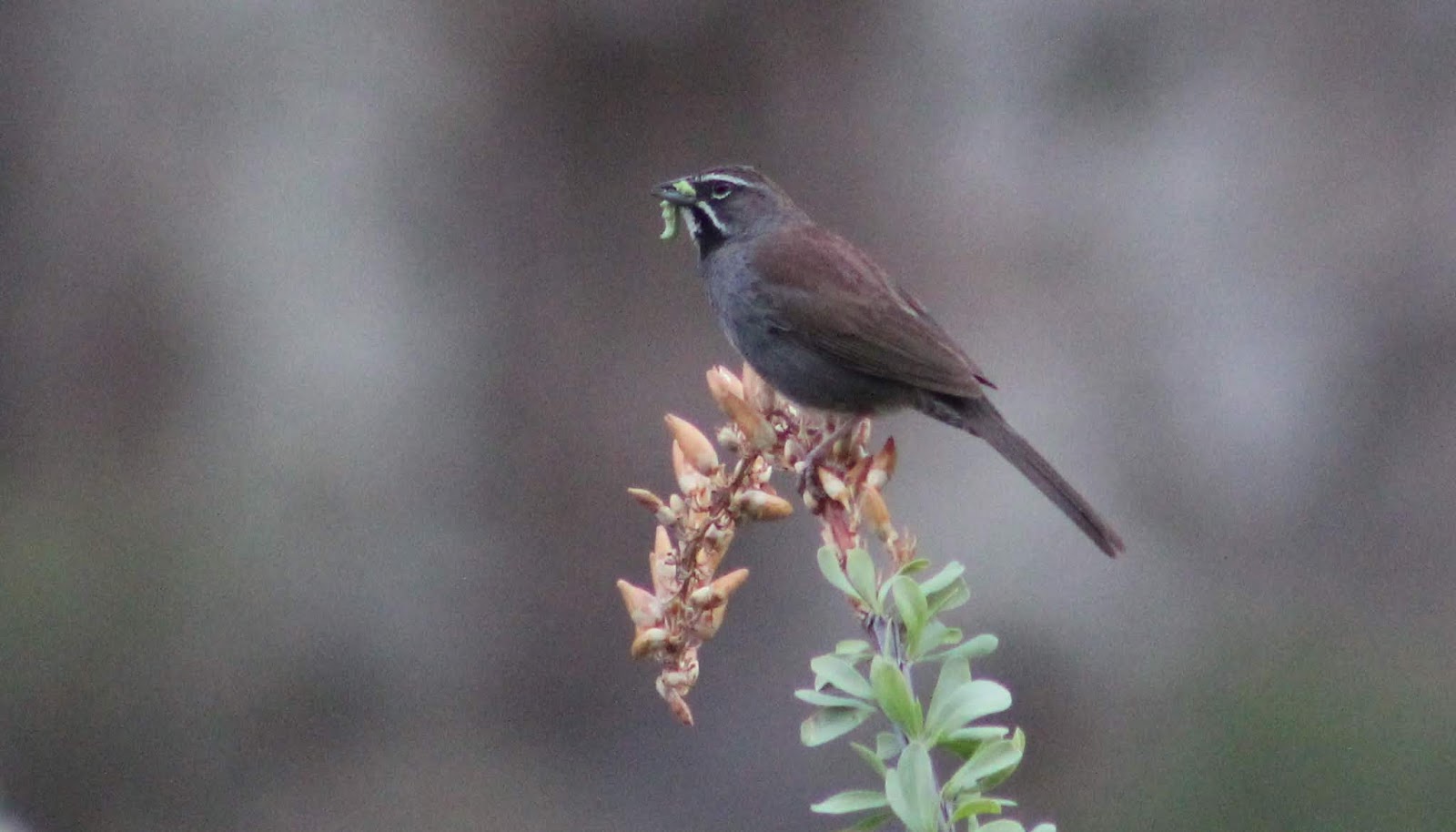
The best was an adult male Ruby-throated Hummingbird that showed up at Hassayampa River Preserve on July 12th, 2018.  Luckily, I was off that day and didn't go after the Five-striped Sparrows that I was thinking about looking for.  I was sitting at home and being lazy when a report came through that Mary McSparen and Laura Ellis were looking at a Ruby-throated Hummingbird.  Once pictures came through to Caleb that the bird was good, I decided to chase the bird, and I was fortunate to have great looks at it.  In the history of Maricopa County birding, this record represents the first for Ruby-throated Hummingbird, and it is officially the 461st bird for the county list.  Fun stuff!


It wasn't long after that I decided not to make a trip for Five-striped Sparrow that my buddy Walker Noe called me up and suggested an evening jaunt down to Box Canyon to look for Five-striped Sparrows.  We succeeded!  This was only the second time I've seen Five-striped Sparrow, after my first brief sighting was of an individual in Montosa Canyon in 2012.


I recently went up to the White Mountains with my sister Talia and brother-in-law, Tom.  We hiked both Baldy Trails to equal out a 17 mile hike.  Some of those epic White Mountain birds were included in the hike.


On July 25th, I was looking for odes in southeastern Arizona, when a report came in that a Fulvous Whistling-Duck had been found at the Green Valley WWTP while I was close by.  The report came in later in the afternoon, and with the WWTP closing at 4 PM, it didn't give birders too much time for a chase.  My location from Empire Cienaga would put me to the spot at 3:40 P.M.  I was excited to attempt seeing this bird again.  Prior to this chase, I had missed the Whistling Duck four times in Maricopa County, with each one being by a day or less.  When Google Maps took me to the wrong spot this time, I was almost positive it would be the fifth miss in five tries.  I got my crap together and managed to find the right entrance to the WWTP with minutes to spare.  Thanks to Andrew Core, Molly Pollack, Mark Stevenson, and Dave Stesjkal, I was pointed in the right direction while in the fence.  I was able to take one one minute distant look at the duck at 358 PM, and I ran out of the WWTP to be out of the exit gate by 4.  It was frustrating because I really wanted to see the bird longer.  But it was good to finally see this species.  And an official lifer at that!


Another trip to southeastern Arizona was taken because of a Yellow-green Vireo down along the Santa Cruz River.  For the third time in my birding life, I struck out on Yellow-green Vireo.  A Green Kingfisher flying along the river was an awesome consolation.  On my way back, I got to stop at that Green Valley WWTP again and enjoy the Fulvous Whistling-Duck for 40 minutes.  This observation was much longer, and better too...


Friday, July 13, 2018

Crying Wolf On A Birding Blog

YEAH, THIS IS OFF THE BIRDING TOPIC, BUT I DON'T CARE!


February 18th, 2018, was a day I will always remember.  It was the first time I got lucky enough to see my favorite animal, the Gray Wolf, in the wild.  I was on a birding trip with my friends Janet Witzeman and Josh Wallestad.  Josh, Janet, and I were driving through a snow storm en route to seeing a Boreal Owl that someone had found roadside in the famous Sax-Sim Bog.  As we were closing in on owl and growing in our anxiety levels, something unexpected happened.  While I didn't think anything could possibly top the Boreal Owl or come close to matching the owl's excitement, the exact opposite happened.  A wolf was walking across the road ahead of us and it stood out among all of the rapid snowflakes that were coming down everywhere.  At first I thought it was just an animal of some sort, and I'll never forget Josh saying, "No, that's a wolf!".  The wolf gave us a decent look to the naked eyes as I started to brake the car.  As soon as Janet handed me my binoculars and when I started to get into the motion of lifting them up, the wolf trotted off into the woods, not to be seen again.  He seemingly emerged out of the snowstorm, and went back into it just as quickly.  The sighting fulfilled a life long dream of mine of seeing a wolf, and I found myself wishing over and over that I had a picture to go along with it.  As we looked at the Boreal Owl minutes later, it took me awhile to focus on the Boreal Owl.  Not because there was an intense snow storm taking place, but because I had just seen my first wolf, the one animal I would choose over such an owl.

I've thought about that Gray Wolf a lot ever since I was lucky enough to see it.  Since my first sighting, I've been wanting another.  I even had thoughts about going to Yellowstone National Park to look for wolves there this summer, but that plan would need more preparation for another time.  My recent vacation was a hardcore birding trip to Greenlee County, Arizona.  Greenlee County is the most under-birded county in the history of Arizona ornithology, and I decided to spend six days in it, covering it from north to south.

The first three days of my trip, July 3rd through July 5th, I would spend in the Hannagan Meadow area.  Hannagan Meadow is a beautiful place, and is an area that is in range of the Mexican Gray Wolf.  The Mexican Gray Wolf is indeed, a wolf!  And a wolf that lives in Arizona.  It's quite amazing actually.  Mexican Gray Wolves are the smallest subspecies of Gray Wolves and are a lot smaller than their northern relatives.  At most, a Mexican Gray Wolf will weigh roughly 85 pounds, while a northern Gray Wolf can get above 150 pounds.  Mexican Gray Wolves are critically endangered.  After roaming the southwest throughout Arizona, New Mexico, and Mexico, Mexican Gray Wolves, who were commonly called "Lobos", were hunted and killed to the brief of extinction.  The last known wolf died in the 1970's and before that, conservation efforts finally kicked in.  After captive breeding and decision making, it was then decided that Mexican Wolves would be re-introduced into the wilds of Arizona and New Mexico again after a long absence.  In 1998, the recovery program began when 11 wolves were re-introduced into the Blue Range Primitive Area of east-central Arizona.  I can still remember getting a poster as a kid of that first wolf to celebrate the event.  That wolf truly had the look of freedom in it's face.  Twenty years later, the program has had limited but yet a decent amount of success.  Even though all of this time I've known about Mexican Wolves living in east-central Arizona and even though I've seen the animal at the Phoenix Zoo many times, it's never really sank in to me that we actually have wild wolves in Arizona!

My recent Greenlee County trip was all about birds from the start.  At least that's what I thought it was going to be.  From day 1 of the trip, I noticed this really awesome valley that was green, full of surrounding conifers and aspens, and it had some small open meadows.  As I drove by it and glanced harder, I realized it had a road going down the valley and it turned out the road paralleled a creek called Foote Creek.  And that road branched right off of the Highway 191 that I was driving on.  I decided to hike it the second day, and I was impressed because it was as awesome as it looked by driving by hiking it on foot.  It held appropriate habitat for my biggest target bird of the trip, the Dusky Grouse.  Aside from that hike, I thought Foote Creek would be the perfect place to see a variety of wildlife, especially when driving by it and looking down on it from Highway 191 in the open meadowy spot.  Whenever I would drive by it, I would glance at it carefully..


I was on my third day of the trip on July 5th, 2018.  The time was great, and a lot of it was spent birding in high coniferous/aspen forest above 9000' in elevation for birds such as Dusky Grouse and Canada Jay.  Because a lot of the region suffered from a devastating wildfire in 2011, it has made those species harder to find.  I was coming back to Hannagan Meadow on that day to spend the last three hours birding in that habitat after birding the day away at the Blue and Black Rivers nearby.  As I made my way back towards Hannagan Meadow, I made a few stops.  One was to get in contact with my Dad and let him know where I was going to be on the coming days for my trip (Greenlee is a remote wilderness county for the most part!).  The other was a one minute stop on Highway 191 to wait for a guy to collect tail feathers off of a road killed Wild Turkey that had been recently hit.  I've thought about it a lot, if I didn't make those two stops I may have missed what was next.  Timing can be perfect in life, or it can be awful.  This time I would be on the perfect end of it.  As I passed by Foote Creek and glanced down into it on that east side of Highway 191, I saw a large canid standing in the meadow and near the entrance to Foote Creek.  And it didn't strike me as a Coyote...


As I looked closer, it gave me a wolf kinda vibe..


I slammed on the breaks of my truck and reversed.  I grabbed my binoculars and looked at the animal, who was also looking at me.  Good grief, it was a Mexican Gray Wolf!


At this point, what stood between my truck and the open meadow area that the wolf was in were some conifers that made it challenging to get clear photographs.  I backed up a few feet to where I had more of an open look.  The Wolf was curious for about ten seconds, and then it trotted off a few feet to where there were conifers blocking my few.  What a smart animal...


Once again, I put my truck in reverse and backed it up a few feet to get past the conifers that were blocking me.  This time, the wolf was closer and we stared at each other for a little while longer before it started to trot away in the opposite direction.  What a beautiful animal.


Right before it started to trot off, I noticed a second wolf behind it!


Wolves are intelligent and have high communication signals with each other.  The second wolf didn't seem too concerned about me, but once the first signaled that they should bail, it listened and trotted off too.


As I was looking with my eyes and snapping pictures quickly and looking through the viewfinder of my camera, I could see that this second wolf has a radio collar!  Fanfreakingtastic!


As the conifers blocked my view of the wolves again, I jumped out of the truck and continued to watch them as they trotted up into a heavily timbered ravine above and on the west side of Foote Creek.  I focused on them with my binoculars more this time than trying to get photos.  Here is the one photo I got of this sequence, can you find the wolf?


With some branch cracking sounds and a few more glimpses, I wouldn't see the wolves again.  I walked down into Foote Creek and walked where they had walked hoping to find a nice track print without any luck.  I also thought about following the wolves further to see if I could see them again, but I thought what I had was as good as it could get, and I let the wolves be.  A few more times throughout the remainder of that day, I did drive up and down that area of Hannagan Meadow with my eyes open.  When I found this Coyote, it made me jump for the first second before I realized it was a Coyote.  I couldn't help but think of the sound of a booing crowd when I realized it.


When driving around the White Mountains of Arizona, people will notice these signs up about the Mexican Gray Wolves and their re-introduction.  For the first time it really made sense to me, ARIZONA HAS WILD WOLVES!!!  How epic is that.


I had to leave the White Mountain region early the next morning to complete birding the southern half of Greenlee County for the trip's remaining three days.  Even though I didn't get Dusky Grouse or Canada Jay, the Wolves were as good as it could ever get, my favorite animal, better than any bird could possibly be, and a great way to leave the White Mountains..


The Aftermath

After posting my wolf pictures on Facebook social media, I had my friend Melissa contact me.  Melissa had worked on Mexican Gray Wolf stuff before in the White Mountains with wolf biologist, Genevieve.  She showed the wolf pictures to her and Genevieve already knew which wolf the radio collared one was and wanted to talk to me about my sighting.

I got a call from Genevieve and she asked me about my sighting, and I told her everything.  I was immediately informed about how rare it is to have a sighting like I had.  She thanked me and I asked her more about the radio collared wolf.  It turns out the wolf radio collared is named and numbered 1477.  He was born in a pack called the Elk Horn Pack, who lives in the Escudilla Mountain area.  When 1477 was a year old, Genevieve put that radio collar on him and the radio collar stands out that she was able to instantly recognize which wolf it was.  She told me that 1477 dispersed not long after that from his birth family, the Elk Horn Pack and went further south.  1477 then met the un-collared wolf who I first saw.  The un-collared wolf, I guess I'll call her Naomi, has been traveling with and paired with 1477 for some time.  1477 and Naomi have been together long enough and Genevieve told me they've shown behavior that they have a den in place.  Because of this, these two wolves have reached pack status, and will be given the name the Eagle Creek Pack.  I think it's epic that Naomi hasn't been touched by human hands, and I'm glad that she was the first wolf that I saw out of the two.

Something really cool that Genevieve explained to me was that from the radio collar of 1477 and the other wolves that they have collared, that daily signals are sent to their computers about the whereabouts of each radio collared wolf.  I asked her if she could look up July 5th, 2018, the day of my sighting.  She looked it up and said, "oh yeah!  Yep.  He (1477) was throughout Hannagan Meadow that day and on both sides of Highway 191".  I was blown away.  Genevieve also told me that they have close to 75 wolves radio collared in Arizona and New Mexico.

For more information on the Mexican Gray Wolves of Arizona, Arizona Game and Fish Department has an excellent source of information on their website.  I'll include a link here.  Go down to monthly reports to see information on the packs, including information on my encountered radio collared wolf, #1477.

https://www.azgfd.com/Wildlife/SpeciesOfGreatestConservNeed/MexicanWolves/


To me, this sighting is the best I've had with wildlife, it beats everything else.  Ever since I've been a little kid, wolves have been my favorite animal.  To have two sightings in a year has certainly been epic!