Showing posts with label Swainson's Hawk. Show all posts

Thursday, August 15, 2019

In The Gila: You Can't Win If You Don't Play

When Arizona birders hear the other-worldly calls from the Buff-collared Nightjar right after dusk, it usually comes from canyons in the southeastern part of the state.  Aside from Arizona birders, birders from many corners travel to witness this bird as the United States' range of the Nightjar is more knowingly restricted to these few Arizona canyons.  Over the years, this bird has shown that it has a high ceiling of showing up elsewhere and further north in Arizona into ranges outside of the typical canyons near the Santa Rita Mountains and California Gulch areas.  Last year, a Buff-collared Nightjar was sound recorded and eBirded in northern Pinal County, close to it's junction with Gila County and at the base of the foothills to the Pinal Mountains on the south side of Globe.  Just as nightjars are cryptic creatures of the night who would require a maze to locate if they didn't vocalize, it seemed as if a remarkable eBird record was just as fleeting on every level.  I never heard one person talk about this record.  Not one.  To me, a species of interest like this, a regional specialty, would qualify for a louder broadcast.  I never knew about it.  Thankfully Caleb Strand is a good buddy of mine, and he brought the record to my attention.  I was blown away, and Caleb made a good point that the species has to be somewhere in Gila County during certain years.  Looking at the eBird range map of Buff-collared Nightjar also showed records of birds in Aravaipa Canyon from Pinal County.  These records showed a handful of observers, but the knowledge of the observations were ones that still eluded me until a Caleb-inspired-research.  Between the bird near the southern base of the Pinal Mountains (which was less than a mile away from Gila County) and Aravaipa Canyon, Caleb and I looked over maps at habitat that looked considerable for additional records of the bird in Gila County.  The Boy and I made it a goal that we would find a good area or two and try to pull up a remarkable record of our own for Buff-collared Nightjar. An equal thrill of finding one would be it being a first Gila County record, a county that is well under the usual radar for the bird.  We were well aware that there was a much better chance of striking out rather than succeeding when looking for a species like this, but it was a worthy goal to us.  Caleb and I had the mindset of, "You can't win if you don't play".  The thought process stays true to the hobby of birding.  For great discoveries to happen, one has to put the work in for it.  I found myself planning a trip with Caleb over the days of July 18th and 19th, where we would be trying for not only a remote Buff-collared Nightjar, but for other birds that are scarce in Gila County that one wouldn't get if they didn't put the times in for.  You can't win if you don't play!

Buff-collared Nightjars are obviously named if you see one in the field or take the more likely route of looking in a field guide or simply going to Google.  These birds are at the very northern limit of their range in Arizona, and seeking them out in new places in places where they haven't been discovered yet is always of high interest.  Even though the nighjars are found in a variety of habitats further south throughout their main Mexico distribution, they are tied into a much more limited habitat choice in southern Arizona.  Most records come from dry canyon bottoms above 3000' and up to 4500' in midst of steep surrounding slopes within deserts or along drainage areas that feature some riparian habitats that have mesquite, hackberry, and oak trees nearby.  Caleb set his eyes on a place that is called Ranch Creek.  The creek is east of Globe and is on the western edge of the San Carlos Indian Reservation.  Looking at maps, Caleb realized that the habitat and elevations were similar to the habitats where Buff-collared Nightjars are typically found in southeastern Arizona.  While I had some places in mind south of Globe along State Highway 77, this place that Caleb had located seemed like a better option.

July 18th was an odd day.  Caleb and I planned to trek over to Ranch Creek after I would get off of work in the afternoon.  It was a Thursday, and for some odd reason I thought I had to work early in the morning that day.  I went into work only to find out that I was off for the day and that I mis-read my schedule, and by the time I told Caleb I actually had the day off, he made plans for the first half of the day.  That point in time was one of my dumbest, but in the early afternoon, we made our way towards Globe and Ranch Creek.  After purchasing recreational permits for the Indian Reservation, we made our way south down a rough road that eventually paralleled Ranch Creek for most of it's entirety.  Ranch Creek Road got rougher and rougher as we continued south.  Caleb's Suburu has a lot of muscle to it and can endure a lot of rough terrain.  Whenever we would cross a dry Ranch Creek, I was concerned for the vehicle.  It got to a point where Caleb parked the car and we would decide to walk south for up to three miles to explore the creek.  In the beginning stretches of the creek and it's riparian habitat of sycamore, cottonwood, and willow, we were greeted by a Zone-tailed Hawk.

Zone-tailed Hawk

Seeing Ranch Creek in person was better than it was on Google Maps, and Caleb was absolutely right that the habitat looked great for the potential in Buff-collared Nightjar.  We thought it also looked great for Varied Bunting, a species that we would have have had a much better chance at finding in the early morning hours or in the middle of a good monsoon season.  Northern Beardless-Tyrannulet was another bird that we thought would be present as we came up upon stands of healthy mesquite bosque with surrounding hackberry and desert vegetation along the sycamore and cottonwood riparian habitat in the creek.  It didn't take long before we heard the distinctive call of the tiny flycatcher, and it was a Gila County lifer for Caleb.  Ranch Creek was a fun place to bird during the remaining hours of daylight, and we had a variety of birds that included Cooper's Hawk, Vermilion Flycatcher, Cassin's Kingbird, Brown-crested Flycatcher, Bushtit, Woodhouse's Scrub-Jay, Bridled and Juniper Titmice, Crissal Thrasher, Canyon and Rock Wrens, Canyon Towhee, Hooded Oriole, Lucy's Warbler, Yellow Warbler, Summer Tanager, Blue Grosbeak, Rufous-crowned Sparrow and most of the common Sonoran desert birds.  Caleb also flushed up a surprise in his first Barn Owl for Gila County.

Cooper's Hawk

Zone-tailed Hawk

Ranch Creek Scenes


After a good hike, we returned to the vehicle at dusk.  Caleb planned it out perfectly (so did the rough road too, I guess) that we would go through what looked to be the best habitat for any potential Buff-collared Nightjars on our return drive north and out of Ranch Creek.  Common Poorwills didn't hesitate to sound off immediately as it got dark.  From the start, Caleb played the calls of Buff-collared Nightjar out loud by placing a speaker on his vehicle.  The sound carried for distance aplenty, and we hoped it would be answered.  We made stop after stop, and we weren't able to locate any Buff-collared Nightjars in close to two hours of nocturnal birding.  Neither of us had hopes that went too high for the species, but at the same time, it was extremely awesome to try.  It was also great to explore a new area that has probably rarely ever been birded.  You can't win if you don't play, right?  On the other hand, we did detect 12 Western Screech-Owls, 2 Great Horned Owls, an Elf Owl, and 4 Common Poorwills.  The first former of those night birds had several individuals that wanted to chill with us and perhaps they had always wanted to see a Buff-collared Nightjar in Gila County too.

Western Screech-Owl


Kangaroo Rat

Elf Owls were present at our camp out along Highway 77, south of Globe and north of the small town of Winkelman.  July 19th was the day, and we planned to venture south along the Gila River north of Winkelman before looking for Gila County rarities in Mississippi Kite, Black Vulture, and Varied Bunting and we would then visit the high elevations of the Pinal Mountains in the second half of the day.   Before the temperatures in this lowland habitat would hit triple digits, we birded along the recreation sites and riparian habitat at the Gila River.  Gray Hawks were a cool highlight, as was a heard-only Willow Flycatcher and Yellow-billed Cuckoo.  We didn't detect any Varied Buntings, which I've only found once along this stretch in 2017.

Gray Hawk

Summer Tanager 

In Gila County, Black Vulture and Mississippi Kite are two "you can't win if you don't play"-kind've-birds.  There are several records of Black Vulture in Gila County, most of which are from the town limits of Winkelman or just barely north of Winkelman while birders have been traveling on Highway 77.  I had tried for the bird a handful of times, and it managed to elude me.  Mississippi Kite is one that used to be reliable in Gila County in the town of Winkelman, especially on the public golf course in town.  From what I've heard, birders in the past used to be able to see the kites pretty easily, and often at times without having to get out of their vehicles.  Since then, they have declined in the area, but have been recorded breeding just to the south along the San Pedro River adjacent to the town of Dudleyville.  Looking at eBird, the last Gila County sighting of the kite was from Ed Dunn in June of 2015.  I still think the Kites visit the area, but are a species one has to make regular visits for in order to obtain a sighting.  Our stakes were definitely higher to see a Black Vulture out of the two, and as we got to Winkelman mid-morning, Winkelman Flats Park was our first visit.  Immediately after turning onto the entrance road to the park, I saw that three vultures were perched up on a large tree.  The left was a Turkey Vulture, and the other two were shaped differently, had gray heads that had bare skin that extended further down to the neck, and longer legs.  I freaked out and knew that we had landed our Gila first Black Vultures!

Black Vultures (Gila County #312)

Most of the Turkey Vultures in the area had started to lift up and start their morning soaring, but the Black Vultures weren't in any rush to start their soaring.  As Caleb and I observed them, they did fly away from us a few times to land on nearby perches.  It's been awhile since I've been pumped up to see a Black Vulture, but a Gila County Black Vulture is a Gila County Black Vulture...


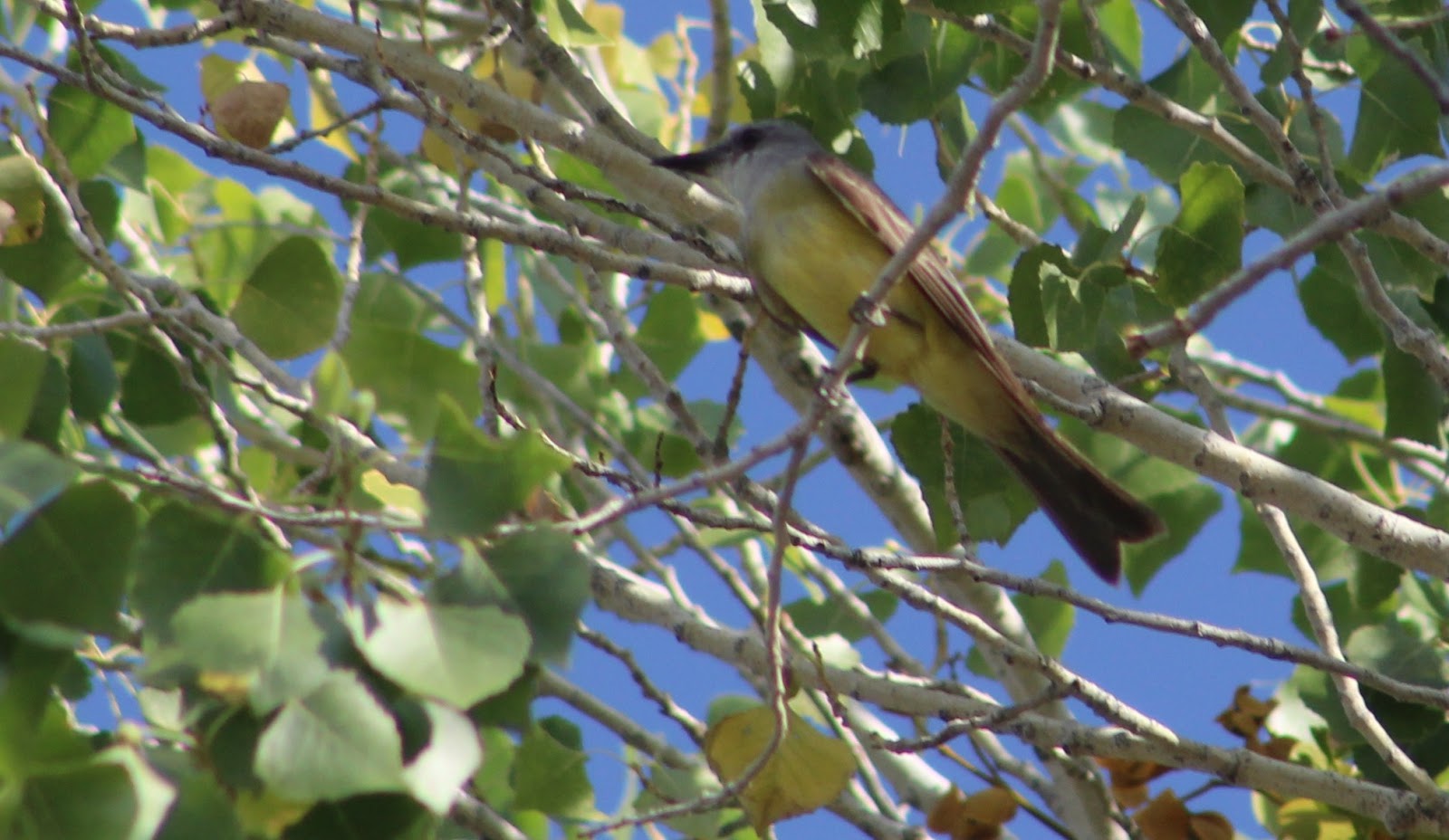
This Tropical Kingbird was also nearby.

Our next birding stop was in high and cool elevations of the Pinal Mountains.  We started off in the Pioneer Pass half of the range, and we were impressed with the area.  It was my first time visiting Pioneer Pass, and we had close to 40 different bird species in the places that we stopped at, and that included a handful of Yellow-eyed Juncos.  We tried for a Sulphur-bellied Flycatcher that was found by Paul Wolterbeek while he was birding along Trail 200 a few weeks prior to our visit.  The Flycatcher eluded us, but what we were really searching for in the Pinals was Short-tailed Hawk.  Short-tailed Hawks are for sure "you can't win if you don't play-kind've-birds too, and Caleb and I climbed up Trail 196 in Pioneer Pass to get to an elevated viewpoint to scan the ridges for any raptors.  This small buteo was one that had eluded Caleb prior to our July 19th visit to Gila County.  We didn't find one at Pioneer Pass in our long shot attempt, but after Pioneer Pass we went over to the area of Pinal Peak, west of Pioneer Pass where the Short-tailed Hawk was more likely.

Juv. Yellow-eyed Juncos


Caleb and I were convinced we were searching for an active Shorty, especially since Dave Pearson and his birding group had seen an individual earlier in the season prior to our visit.  Even though the hawk was one I chased and got to see in the Pinals last year after Jeff, Dara, and Laurie had discovered two remarkable individuals, I was extremely pumped for Caleb to have the chance at seeing one.  I was rooting for Caleb, because it was a life bird to be for him.  When we got close to Pinal Peak, Caleb got excited as he saw a raptor that had a great initial impression.  But all it was was a Swainson's Hawk taunting Caleb.

Swainson's Hawk

The odds seemed to be against us after the Swainson's Hawk gave us a fool, and it's a raptor that usually sticks to lower elevations in mid-July.  Caleb laughed it off, and said that it was a perfect way to start our Short-tailed Hawk search in this upper part of the Pinals.  In the past, Caleb had looked many times in southeastern Arizona mountains and scanned ridges for Short-tailed Hawks without any success.

After we started scanning Pinal Peak for about ten minutes, Caleb spied two smaller raptors in the distance and further west of the towers of Pinal Peak.  They were harassing a Red-tailed Hawk.  Looking at their proportions, Caleb was convinced that they were a pair of Short-tailed Hawks.  We rushed over to get closer to spot where the hawks were at, and luckily, Caleb was able to get on them again and confirm that they were Short-tailed Hawks.  In all of the times that Caleb has scanned for this bird, it was freaking awesome to see him come away with not one, but the Pinal Mountain pair.  The behavior of the Short-tailed Hawks resulted in the birds coming after other raptors when they would fly over a specific part of the mountain.  It suggested nesting behavior, and there is probably a nest somewhere within that area where we observed them.  After a patient wait, one of the Short-tailed Hawks flew over at a fairly close range.

Short-tailed Hawk!

Caleb "The Boy" Strand right after getting his lifer STHA

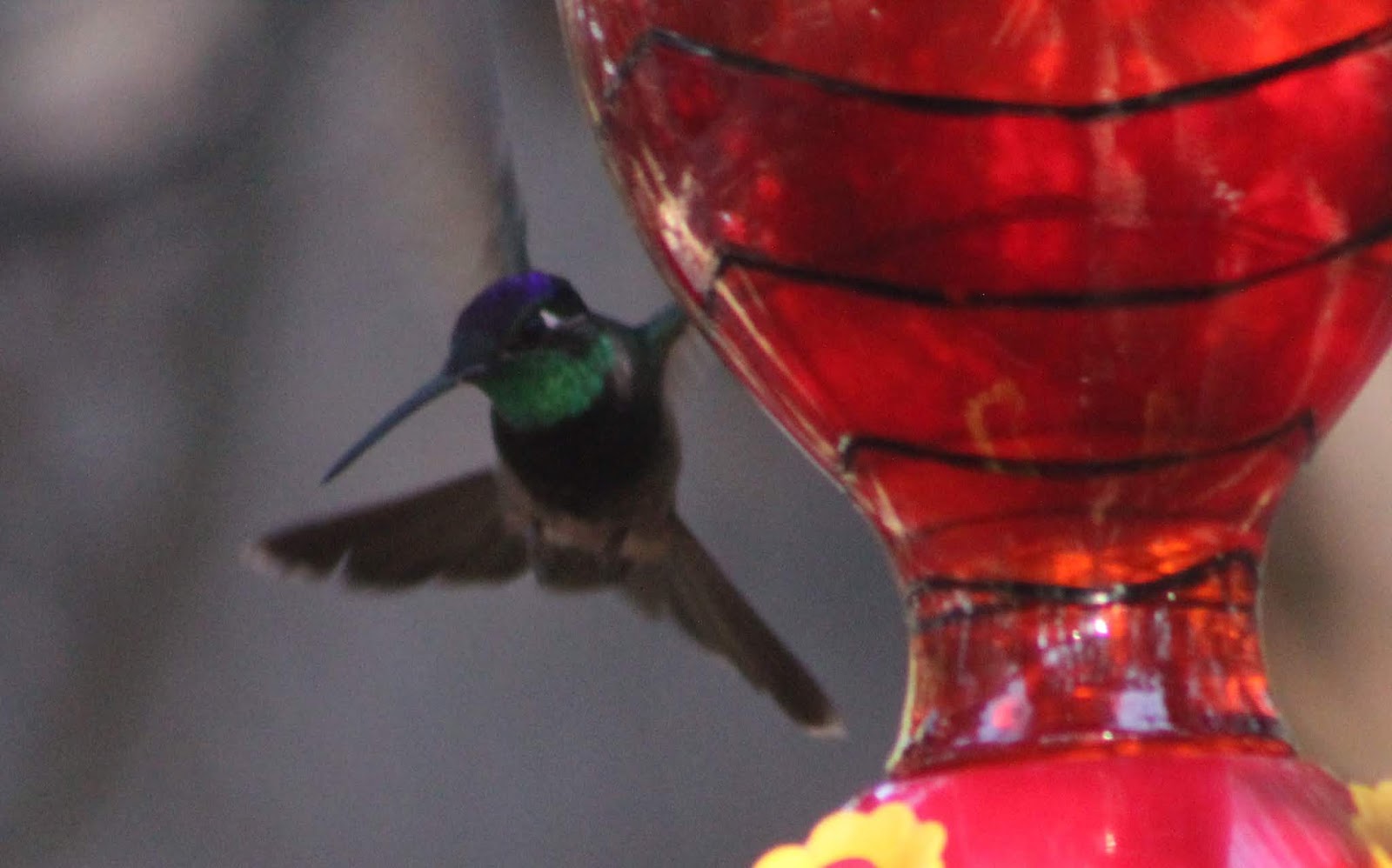
The Pinals came through big time, and it's pretty rare to see Caleb get a life bird in Arizona these days.  Before leaving the Pinals, we made a last stop at a line of hummingbird feeders that are managed by a friendly couple who reside in a cabin near Pinal Peak.  We got to see Rivoli's and Calliope Hummingbirds during our quick visit among numbers of Rufous and Broad-tailed Hummingbirds.

Rivoli's Hummingbird


Searching for uncommon and rare birds as target birds is a fun way to bird, and it pays off when success is a conclusion.  In the future of my Gila County birding, I hope to make continued reps to search for the possibility of Buff-collared Nightjars.  There's also rare grassland birds one can expect in the winter, and those Mississippi Kites.  And I still need a Northern Goshawk for Gila...

Monday, May 13, 2019

Texas Times: The Plan and The Go

There are many places in the world that I haven't had the chance to visit, and most of those places I want to explore.  Some locations are a daydream and would require a lucky line of numbers to secure a visit anytime soon, and some are right up my alley.  While vacation time at work limits me to an understandable three weeks of vacation time annually, I have to plan that main yearly escapade thoughtfully.  Different states to visit are a dominating factor right now and probably will be in the next decade of my life coming forward.  It's exciting to see new places, and to fill in personal slots on the map.  And of course you all know me, it's all about birding.  When I started birding in the year 2000 at about 14 years of age, I held the "birding globe" in my hands and would spin it around.  Yeah...Africa, Australia, India, South America, and Antarctica have been out of the question over these last 19 years as I have looked things over, but different corners of the United States have always had my attention as places to visit.  Over the last few years I have birded more outside of Arizona, but the more I do it, the more states I've realized I indeed want to visit someday.  When I've spun the birding globe throughout the United States, one of the states it has landed on the most has been Texas.  Birders flock to Texas to see it's avifauna, as it's one of the most diverse states for birds in North America.  While I've gotten used to birders from the all over the world flocking to southeastern Arizona to see range restricted birds in my home state, Texas has their own showdown with such in the Rio Grande Valley.  Birds are rich in the Rio Grande Valley, and for the longest time of looking into my field guides and seeing their specialties, I've wanted to have the chance to bird the locations of the Valley myself.  Recently, I've gotten the chance to go and also, I held on tight to that chance and did go to Texas to see that Rio Grande Valley and many other locations and regions the state has to offer for birding.  After the long wait of wanting to see Texas, it was finally time to put an end to wanting to go.

Last year, I spent my vacation exploring Greenlee County, Arizona's most under-birded county, for close to a week.  It was a fun vacation, but was much shorter than vacations I usually take.  This year, I made my vacation plans faster than previous years.  While talking to Caleb Strand one night, he was telling me that he and our mutual buddies Joshua Smith, Jared Conaway, and David Tonnesson, were planning to go on a huge Texas road trip in starting in late April through the first week of May.  Last year, Caleb, Josh, and David did a huge road trip to Colorado, Oklahoma, Nebraska, and a tiny portion of northern Texas.  They really cleaned house on that trip and had impressive sightings and numbers.  As Caleb told me about Texas, he explained that it was not only the Rio Grande Valley that they would do, but they would also cover the western part of Texas as well as eastern Texas and the Gulf Coast.  It was to be a huge trip, and Caleb's description of their plans sounded extreme.  I think I jumped out of my seat several times as he talked about Texas.  The thirst to go to Texas hit me harder in the feels than it had ever hit me before.  Time halted in those few minutes and was equivalent to a few hours or days.  I wanted to go to Texas too.  Without much hesitation, I couldn't help but blurt to Caleb, "Hey, do you have room for one more?  I want to go".  Caleb said without hesitation, "Yes, let me confirm with the guys".  I invited myself on the trip, and I'm glad I did!  A few days later, I was officially part of the Texas squad and was on board with things as the boys wanted me along for the ride.  AND I was pumped up at the opportunity.

What is it about Texas birding that has ignited my interest over the years and captured my attention over other vacation possibilities?  West Texas is a good starting point.  There is much to explore, and a powerful draw for birders is a long hike into a mountain range to see a certain warbler who is mainly seen in that mountain range as a limited United States breeder.  Every serious birder in North America will come to a wanting of attempting the "death march" for the Colima Warbler.  Most famously, there's the Rio Grande Valley.  Everyone talks about the Rio Grande Valley.  As I said earlier, birding the Rio Grande Valley is similar for birders who want to explore southeastern Arizona.  There are a handful of species who are only found in that area of the ABA, similar to southeastern Arizona.  The Rio Grande harbors eye-catching specialties like the stunning Great Kiskadee, Altamira and Audubon's Orioles, Ringed and Green Kingfishers, Buff-bellied Hummingbird, Morrelet's Seedeater, Plain Chacalaca, Common Pauraque, Tropical Parula, Red-billed Pigeon, and the uniquely stunning Green Jay.  Some birders might get extremely lucky along the Rio Grande and be in the right place at the right time to cross paths with Hook-billed Kite or Wild Muscovy Ducks.  Special raptors found in or near the Valley are White-tailed Hawk, Ferruginous Pygmy-Owl, and the endangered Aplomado Falcon.  East and north of the Valley opens up more and more for the birding variety.  High Island and South Padre Islands are two primary sources to witness migration fallout in birds.  Such events are rumored to be unforgettable for birders as thousands of warblers and other songbirds see their first glimpse of land and are desperate to land and feed after migrating for long hauls.  Dropping down into the Gulf Coast to bird the shores and waters of the Atlantic Ocean heeds an incredible variety of waterbirds.  What's also great about Texas is it's variety of western and eastern birds.  At some places in Texas there are varieties of both.  Central Texas harbors iconic specialties like Black-capped Vireo and Golden-cheeked Warbler, and east Texas's decidous and long-leafed pine forests and surrounding fields and marshes bring fourth birds like Swainson's Warbler, Swallow-tailed Kite, Anhinga, Red-cockaded Woodpecker, Bachman's Sparrow, and Brown-headed Nuthatch.  It would take a lot more of a write up to explain the birds of Texas with justice, but Caleb's common words of, "Tommy, we can possibly see up to 400 species in Texas on this one road trip", said it all.  Also, the Scissor-tailed Flycatcher is a mysterious-looking species I've wanted to see for years.  They are said to be abundant throughout Texas, and I was looking forward to that too.

It was back in January that Caleb brought the trip idea up to me, and we had our plans set right after February.  The dates of our trip would last from April 27th through May 8th.  Caleb's Subaro Forester would be our source of transportation for the trip.  While that vehicle model is great for traveling, it would be hard to cram five people into the vehicle.  From the start, I wondered what that would be like.  I knew from the beginning that I was at least 11 years older than everyone else on the trip.  Joshua Smith is 21.  Caleb Strand is 19.  David Tonnessen is 18.  Jared Conaway is 16.  I thought it was kinda cool, and Caleb and I thought at first that it would be wise to consider renting a small trailer for carrying supplies, or else it would be very hard to fit everything, yet everyone, in our transportation source.  Unfortunately, things ended up falling through for Jared to come on the trip, and it brought our people count down to 4.  With nearly three months ahead of us before we would leave for our trip, it seemed a long ways off.  Josh, who is a great planner, planned out the itinerary for our trip.  He would factor in driving times and distances, what birds we could get at each stop, and where we would bird at and camp out at each night.  The itinerary was awesome as I looked over it, and Josh also made a bird list of the species that were more likely on our adventure.  For me, I knew that there was a great chance I could get 50 or more lifers on the trip.  By reading over the trip plans I realized how much driving would be involved.  We are talking hours and hours of driving at times.  As the time passed our group would talk over group text messaging, and a few times we'd talk about the trip over a conference phone call.  I knew I was going to be going on a trip with three skilled birders.  You guys all know Caleb from reading by blog by now.  Josh birded with me often when he lived in Arizona for a few years.  He's busy with college a lot, but he studies birds and nature constantly and isn't just a skilled birder, but an incredible naturalist too.  Josh lives in Colorado now, as does David.  I had never met David in person before the trip, but I always knew that he's a skilled birder.  David lives in Colorado too, and at his young age he's already found two first Colorado state records of Red-breasted Sapsucker and Tropical Kingbird.  With two Colorado birders joining forces with two Arizona birders over a twelve day span to bird and navigate what would be New Mexico for a day, Texas for ten days, and Louisiana for a day, I knew the time was going to be an epic one to remember for the rest of my life.

Before the trip, I meant to do a lot of book studying in my field guides, as well as audio studies of different birds I was unfamiliar with.  I put studying off a lot, and before I knew it, the big trip was already in front of me.  As a result I decided it would be fun to learn in the Texas field as I went, as spontaneous learning is usually how I learn best when birding.  April 27th came around very fast.  I had prepared everything I was going to take with me on the previous day, and I woke up and drove to Caleb's house to get the trip started.  We packed up both of our supplies and realized it would take up a lot of space, and Caleb said that David and Josh would have less than we would.  After getting groceries at the store, Caleb and I picked up Josh and David from the Phoenix area, and the trip was underway.  And the supplies would indeed cram up a lot of space and make it hard to move around in the vehicle..


We made our way toward our first stop of the trip, Willcox Lake and Golf Course in southeastern Arizona.  From the start our team already had a lot of energy and excitement for everything that was ahead.  It was great to see Josh again, as well as meet David in person.  Willcox wasn't too exciting other than a break to stop and bird along the way for awhile.  A singing Bendire's Thrasher was a highlight.


From Willcox we would head into New Mexico for the remainder of the day for several birding stops.  After eating burgers at Whataburger, we camped out along a road near Las Cruces, New Mexico for the night and when Sunday, April 28th arrived, we birded New Mexico for a few hours in the morning at a productive place called Mesilla Valley Bosque State Park.  We added a lot of birds to our New Mexico state lists during the stops in New Mexico on the afternoon of the 27th and morning of the 28th.  Caleb spied a Semipalmated Sandpiper at a wastewater treatment plant as one of the best birds.

Some New Mexico birds

Swainson's Hawk

Sharp-shinned Hawk

Bullock's Oriole

Cliff Swallow


Something that was awesome from the start of the trip was that Josh would keep track of almost everything we observed through eBird.  It gave us many ticks throughout the trip for the many counties we would pass through.  Josh was constantly busy keeping track of everything that was being seen, and it was impressive.  It got even more impressive as we got closer and closer to Texas after we birded New Mexico for awhile and made sure that each of us passed 100 species for the state.  After birding Mesilla Valley, we made our way to towards El Paso, Texas.  We couldn't wait to officially get into the giant state where we would bird in most, and as we approached that state line and crossed into it, this is how it went..


It was 10:22 A.M. when we got into El Paso, Texas.  Josh cranked up eBird and started to make one incidental checklist after the other.  Once we got into Texas, that's really when it seemed like the trip began for me.  Our first birds in Texas were none other than Eurasian Collared-Dove, Rock Pigeon, Mourning Dove, and Northern Mockingbird.

The first spot in Texas that we got out and eBirded was a place called Ascarate Park, which featured a lake.  What drew our attention was that it had a lingering Snow Goose within the parks limits.  During our time spent of 1.5 hours, we didn't find the goose but did find a Canada Goose.  Caleb and Josh studied domestic ducks for quite a while, and David and I wanted to move on to the next spot as quickly as possible.  A few migrants were observed, such as a push of Wilson's Warblers and a Dusky Flycatcher.  Waterbirds on the lake included Blue-winged Teal, Mexican Duck, Northern Shoveler, Ruddy Duck, and Pied-billed Grebe.  There was also this domestic Muscovy Duck sitting alongside one of the shores.  I took this picture in case a chance of compare and contrast with a Wild Muscovy would come up.  We followed Ascarate Park with an awesome meal at a Mexican restaurant, which Texas has a lot of.


From El Paso, we took the Interstate 10 in the southeast direction for about an hour to our next stop, which was a lake in Hudspeth County called McNary Reservoir.  Birds started to fill our lists up such as Swainson's Hawks and several species of desert birds that included Gambel's Quail as we got close to the lake.  As we are used to seeing Gambel's Quail in Arizona in abundant numbers, the eastern range of their limit comes into this area in Texas.  Before the reservoir, a canal caught our attention that had reeds lining the water.  We got out to check, and looking up at the swallows above us gave me my first lifer of the trip, which was the Cave Swallow.  I predicted that this species or Scissor-tailed Flycatcher would be my first addition on my trip, and I was right.  There ended up being a few Cave Swallows in the flock, and some of them gave us very close views.


Cave Swallows look very similar to Cliff Swallows, but they have a cinnamon-colored forehead, a cinnamon colored throat that wraps around the neck, and relatively the same color of a rump.  They also give different calls than that of a Cliff Swallow.  As Cave Swallows have a history of wide vagrancy, they are most reliably found in parts of Texas and northern Mexico, which is their usual range.  Welcome to my life list, Cave Swallow!


McNary Reservoir had a share of waterbirds, such as Clark's Grebe, Blue-winged and Cinnamon Teals, Northern Shoveler, Ruddy Duck, Pied-billed and Eared Grebes, Common Gallinule, Ring-billed Gull, Double-crested and Neotropic Cormorants, Great and Snowy Egrets, and White-faced Ibis.


Our next stop would be another lake called Balmorhea Lake.  From McNary it took us about two hours to get to Balmorhea.  Along the way we drove through a few more Texas counties, and Josh had his eBird continuously going with incidentals.  It was easy to see that Balmorhea Lake had a lot of potential as we pulled up to it.


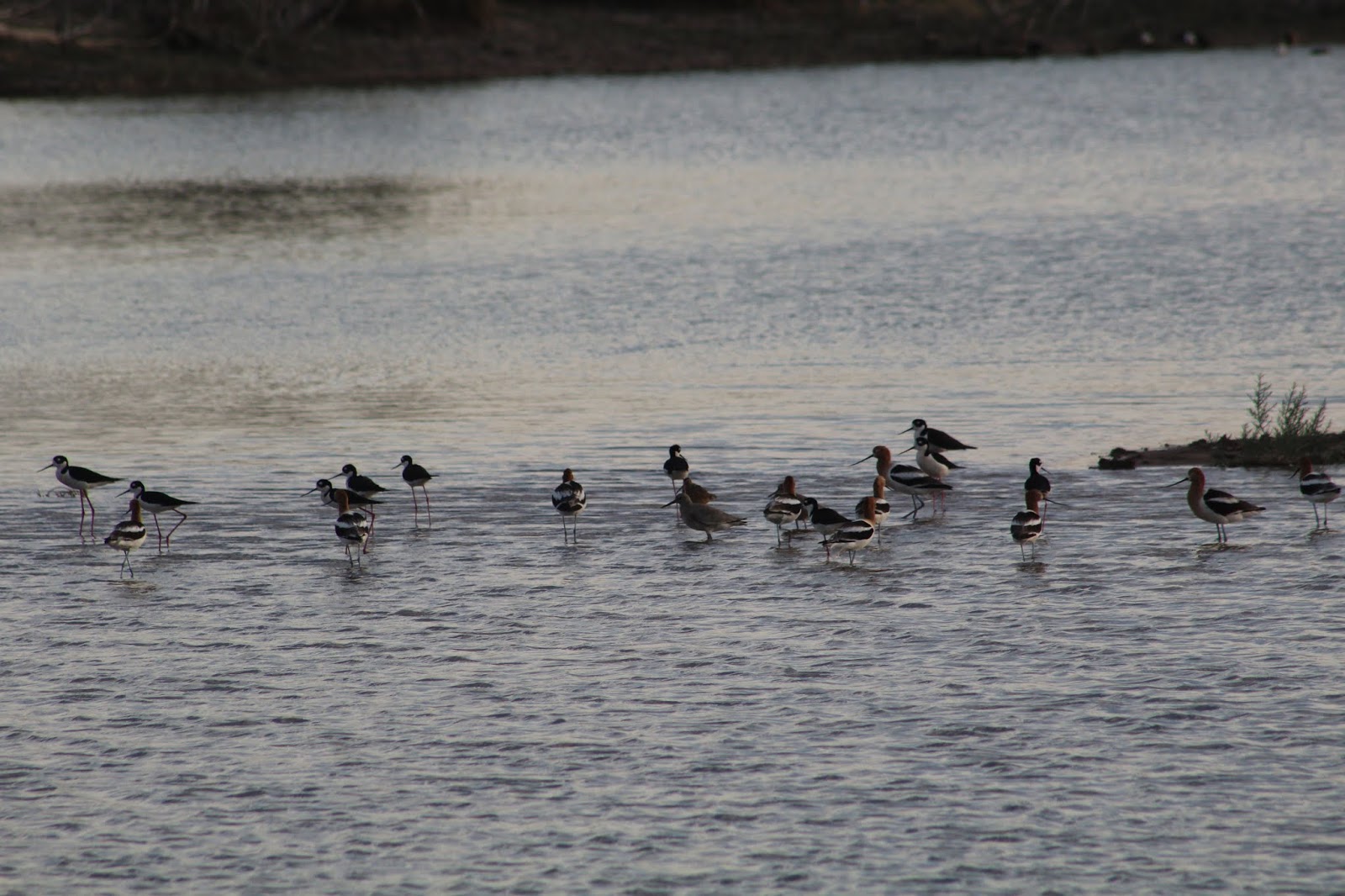
Scanning the big lake, we turned up numbers of waterfowl that included Bufflehead, Green-winged Teal, and American Wigeon.  Both Clark's and Western Grebes were on the lake.  Franklin's, Ring-billed, and a Herring Gull sat out on the lake as well as a flock of 26 Forster's Terns.  Caleb spied a Snowy Plover along the shore, and Scaled Quail could be seen and heard.  A friendly lady who lived along the lake was a birder and she told us about a pond that served as an inflow part of the lake.  The spot was good for shorebirds, and we added Black-necked Stilts, American Avocets, Least Sandpiper, Long-billed Dowitcher, Wilson's Phalarope, Spotted Sandpiper, and Willet to our young Texas lists.  A handful of songbirds were also present, as were a few Virginia Rails calling from reeds.

Scaled Quail

Snowy Plover


The birdy spot gave us about 60 species, but the one that grabbed me the most came out of the blue.  Two long-tailed flycatchers with split scissor-tails flew over and Caleb immediately called out, "Scissor-tailed Flycatcher!".  The pair landed close by to us and gave good views.  For me, it was finally the time to enjoy this bird for the first time in my 19 years of birding..


This bird is named for the obvious, as it often opens and closes it's tail like a pair of scissors.  These birds are unmistakable and distinctive among all others in North America, and they are most often seen over grasslands and other open areas while commonly perching on wires and fence lines.  They are commonly seen while driving, and they hunt from low perches to pursue insects on the ground.  The flights performed by the Scissor-tailed Flycather are often very acrobatic.  While the others in my party continued to bird on past the Scissor-tailed Flycatchers, I went aside to observe them for the time that they sat there.


Here's a video of the Scissor-tailed Flycatcher


Here's our crew:  David, Caleb, Josh, Me


After our birding at Balmorhea Lake concluded, we would continue to head further southeast into Texas's Davis Mountains.  Our first half day of Texas resulted in over 80 species, two of which were lifers for me.  Stay tuned for many more posts to come from this trip and this new blog series of mine:  Texas Times.