Recently, I haven't had much time for blogging, but I have had some awesome highlights over the last month and a half. These have been key species that I have enjoyed.
The best was an adult male Ruby-throated Hummingbird that showed up at Hassayampa River Preserve on July 12th, 2018. Luckily, I was off that day and didn't go after the Five-striped Sparrows that I was thinking about looking for. I was sitting at home and being lazy when a report came through that Mary McSparen and Laura Ellis were looking at a Ruby-throated Hummingbird. Once pictures came through to Caleb that the bird was good, I decided to chase the bird, and I was fortunate to have great looks at it. In the history of Maricopa County birding, this record represents the first for Ruby-throated Hummingbird, and it is officially the 461st bird for the county list. Fun stuff!
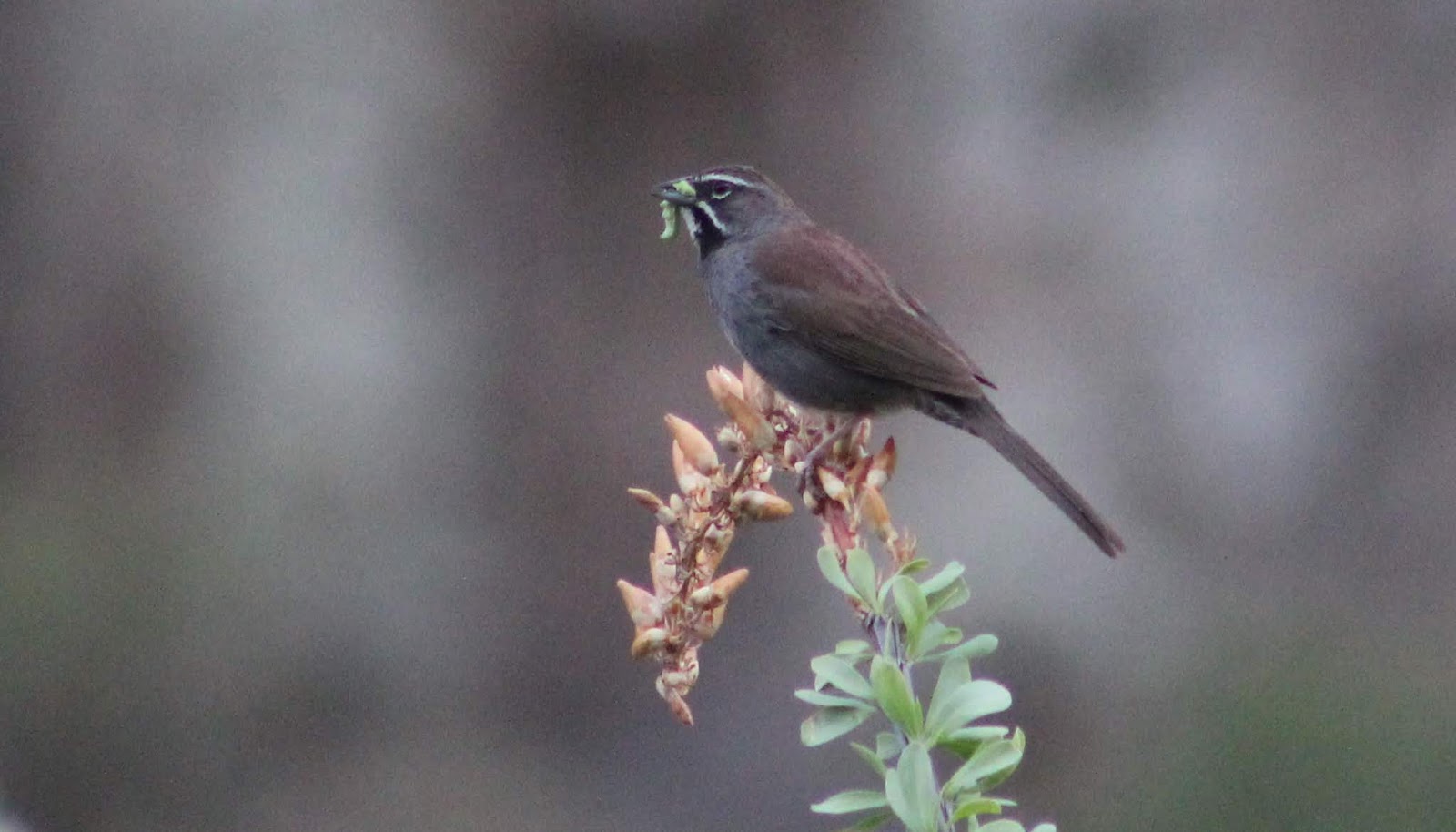
It wasn't long after that I decided not to make a trip for Five-striped Sparrow that my buddy Walker Noe called me up and suggested an evening jaunt down to Box Canyon to look for Five-striped Sparrows. We succeeded! This was only the second time I've seen Five-striped Sparrow, after my first brief sighting was of an individual in Montosa Canyon in 2012.
I recently went up to the White Mountains with my sister Talia and brother-in-law, Tom. We hiked both Baldy Trails to equal out a 17 mile hike. Some of those epic White Mountain birds were included in the hike.
On July 25th, I was looking for odes in southeastern Arizona, when a report came in that a Fulvous Whistling-Duck had been found at the Green Valley WWTP while I was close by. The report came in later in the afternoon, and with the WWTP closing at 4 PM, it didn't give birders too much time for a chase. My location from Empire Cienaga would put me to the spot at 3:40 P.M. I was excited to attempt seeing this bird again. Prior to this chase, I had missed the Whistling Duck four times in Maricopa County, with each one being by a day or less. When Google Maps took me to the wrong spot this time, I was almost positive it would be the fifth miss in five tries. I got my crap together and managed to find the right entrance to the WWTP with minutes to spare. Thanks to Andrew Core, Molly Pollack, Mark Stevenson, and Dave Stesjkal, I was pointed in the right direction while in the fence. I was able to take one one minute distant look at the duck at 358 PM, and I ran out of the WWTP to be out of the exit gate by 4. It was frustrating because I really wanted to see the bird longer. But it was good to finally see this species. And an official lifer at that!
Another trip to southeastern Arizona was taken because of a Yellow-green Vireo down along the Santa Cruz River. For the third time in my birding life, I struck out on Yellow-green Vireo. A Green Kingfisher flying along the river was an awesome consolation. On my way back, I got to stop at that Green Valley WWTP again and enjoy the Fulvous Whistling-Duck for 40 minutes. This observation was much longer, and better too...
January 3rd, 2018: My great buddy Walker Noe and I went north to Yavapai County to look for an American Dipper, or two, that have been seen in Fain Park in Prescott Valley. We were able to find one of the two Dippers. It was odd to see this bird at a lake and not along a fast running stream. There are running water sources on both sides of the lake with good water flow, but the dipper kept to the lake edges. What a cool bird, a great bird for Yavapai County, and an Arizona state bird for Walker.
Later in the day, I went to some spots in Maricopa County southwest of Phoenix and in Buckeye, all based around a billionth failed Short-eared Owl attempt in Maricopa County. I did get a White-tailed Kite from SEOW lookout, and some other highlights:
I've always felt like I'm in a different zone when I've birded in the White Mountains of east-central Arizona. The area seems surreal, and too good to be true. And yet, with me being in the Phoenix area, the east side of the White Mountains are only a 4.5 hour drive away. These mountains are the southwestern-most extension of the Rocky Mountains. My original birding ties came from this area, and it would be nice to call the area home someday. I enjoy just as much as birding in Maricopa County. This past July, I took another vacation with my family to this wonderful area for 11 days. It was 11 days full of awesomeness. I took it upon myself to bird much of the area as I decided to start a project on the White Mountains on my website. The trip had some amazing surprises, some serious disappointment, but was overall a classic time of fun being spent in the White Mountains. My goal and most-wanted bird of the trip was to find an adult Northern Saw-whet Owl.
Things started off fun right away in the beginning stages of my trip at Benny Creek in Greer. I looked for an adult male American Redstart that was found a week earlier, but instead, I found a shocker in an adult male Blue-throated Hummingbird. As rarities can be jerks with allowing birders to obtain documentation of their presence, this guy was a perfect example. A Red-faced Warbler was a lot more cooperative.
As I went a few feet next door to Rosey Creek, I saw more birds, such as this female Black-headed Grosbeak. Little did I know at the time, but I captured the male flying behind her.
Benny Creek is also a very beautiful place. It's very peaceful, and the birding is awesome.
As I worked my way around Greer in the beginning of my trip, my bird list started to climb fast. One of my stops was a short hike down the West Fork Trail # 94 in Greer. A female Williamson's Sapsucker caught my attention, and so did this American Three-toed Woodpecker.
Bark Flaker is the nick-name I have given the American Three-toed Woodpecker. It flakes bark off of the trees, and if you look on the picture, it is very evident. This woodpecker is highly sought after by birders visiting the White Mountain Region. Another sought after species is the Gray Catbird. While the South Fork of the Little Colorado River has been the traditional place to see them over the years, I have found most of my luck to be right in Greer along the Little Colorado River.
The Gray Catbird above was very obliging for a bird that is usually quite the skulker in it's behavior. And yes, the Gray Catbird sounds like an angry cat. Here is a recording I obtained of this individual.
The West Baldy Trail # 94 is my favorite place to bird in the White Mountains in the Mount Baldy Wilderness. This wilderness area is epic and might be my favorite place in the entire state. There is a high chance of that.
Last year on the West Baldy Trail I found several cool things, and that continued into this year. I heard several rare-in-Arizona Pine Grosbeaks on the trail, and saw Dusky Grouse, American Dipper, American Three-toed Woodpecker, Gray Jay, as well as breeding White-crowned Sparrow on Baldy's highest slopes, and counter-singing Swainson's Thrushes. Seeing an American Dipper along the Little Colorado River with cascading flows of the river behind it is a neat experience.
I've had plenty of luck with locating Dusky Grouse over the years in the White Mountains. This luck often comes at my own expense, though. Dusky Grouse are often tame, and they wont flush at times until your about the step on one. This bird gives a loud helicopter-like tone to it's flight takeoff when frightened, and it is loud. I usually don't detect them until I almost step on them. One of these times a heart attack might be the result, because it scares the poop out of me.
White-crowned Sparrows breed just below the peak of Mt. Baldy at elevation close to 11,000'. This area is one of the only places this species will breed at in Arizona.
Counter-singing Swainson's Thrushes may indicate breeding of this species in this area...probably so. While the birds stuck to the highest perches, I did manage a recording of the source singing.
One of my the most exciting days on my trip came when I decided to explore the Blue River Area. I made my way down into the valley and canyons of the Blue River. However, flooding in the road kept me from accessing the Blue River itself, but I did get to explore Greenlee County's Blue Campbell and Turkey Creeks just north of the Blue River. Both of those creeks were awesome, and I look forward to seeing beyond the fog next time in this cool area.
This area held different habitat than what I have birded elsewhere in the White Mountains, including lower elevations with cottonwood riparian.
In four miles of covering this area in Greenlee County, I recorded 51 species. It was an eventful birding outing, especially considering I didn't even get to access the Blue River. The best birds I found were three juvenile Northern Pygmy-Owls. Here is one of the three. I had to climb up a rocky area in order to get these eye-level views.
The area also held a Greater Pewee, high elevation Summer Tanagers, and common numbers of both Painted Redstart and Red-faced Warbler. The Redstart was a White Mountain first for me, which was overdue.
I spent a lot of time in this area searching for Spotted Owls without luck. The habitat was perfect though, I swear. I did find this Cordilleran Flycatcher nest. It had 3-4 eggs inside of it.
One morning was spent at Nelson Reservoir, where I was hoping to track down and see a Montezuma Quail. I've only seen MONQ once in my life, way back in 2004. I didn't see any Montezuma Quail at Nelson Reservoir, but the lake itself is very neat.
This is an excellent place to see Osprey. I know Osprey are common in the White Mountains around reservoirs and rivers, but Nelson Reservoir is a "classic" place to see them. I saw 3-4 birds on my visit here.
Yeah, yeah, yeah. I did have a major highlight when two Pinyon Jays decided to come along the trail. This lake is known for this species and almost any visit here in early morning is likely to produce sightings of these odd but yet neat birds.
Have two wrongs ever been known to make a right? I don't think so. What happens when two morons come together and make a fire during dry seasons? They use Jolly Rancher wrappers to test whether it was dead or not. When the wrappers don't melt right away, they assume the fire is safe to leave to burn out on it's own. Never mind the fact they can pour water on the fire. But no, they decide to leave. When they get back to their campsite, they realize they have started a bit of a fire. One of their two dogs even burned in the fire's early stages. So then they go into complete retard mode and leave the fire. Yet, at this point, it is containable. They would get in trouble if they got caught. But what if they didn't get caught? By the time the fire got reported in early summer, it was too late. Dry circumstances in the forest combined with high winds is not good. Some 500,000+ acres and over a month later, the fire was contained. Sadly, this happened in the White Mountains. I hate these two idiots. The fire started south of Alpine and ventured too far north, south, west, east, and everywhere else. Greer even got hit hard by the fire, and other places have been destroyed. The Wallow Fire of 2011 is a true story, one that I'm sorry to say happened. Luckily, the White Mountains are still a beautiful place, but sadly, a lot of it is gone. One of my favorite places, Escudilla Mountain, was one of the Wallow Fire's victims.
All because of two morons. But the area is home to one of the largest stands of aspen ever. Live aspen too.
Despite the devastation in the Escudilla Mountain area, there are still live patches of live conifer stands. Plenty of birds still congregate in these sections that did not burn. It's still a beautiful place.
Another cool place to visit is the South Fork of the Little Colorado River. I went with my sister and brother-in-law. At South Fork I enjoyed up close looks of Bushtit and Juniper Titmouse.
A trip to Lyman Lake State Park one morning yielded two new Apache County birds: Black-throated Sparrow and Crissal Thrasher. It also yielded a huge Black-tailed Jackrabbit. Lyman Lake is one of my favorite places in the White Mountains. I've seen a lot of good stuff there.
Sadness took place after reaching the summit area of Mount Baldy with my Dad, brother, and sister. I tripped and fell and screwed up my camera lense. I was left without a good photography source for most of my trip. Luckily, I was still able to take good scene shots, which ended up being my main objective of the trip anyways. I'll explain later. I had a blast with my family while hiking up in the Mt. Baldy Wilderness, I'll choose to remember that over screwing up my camera lense.
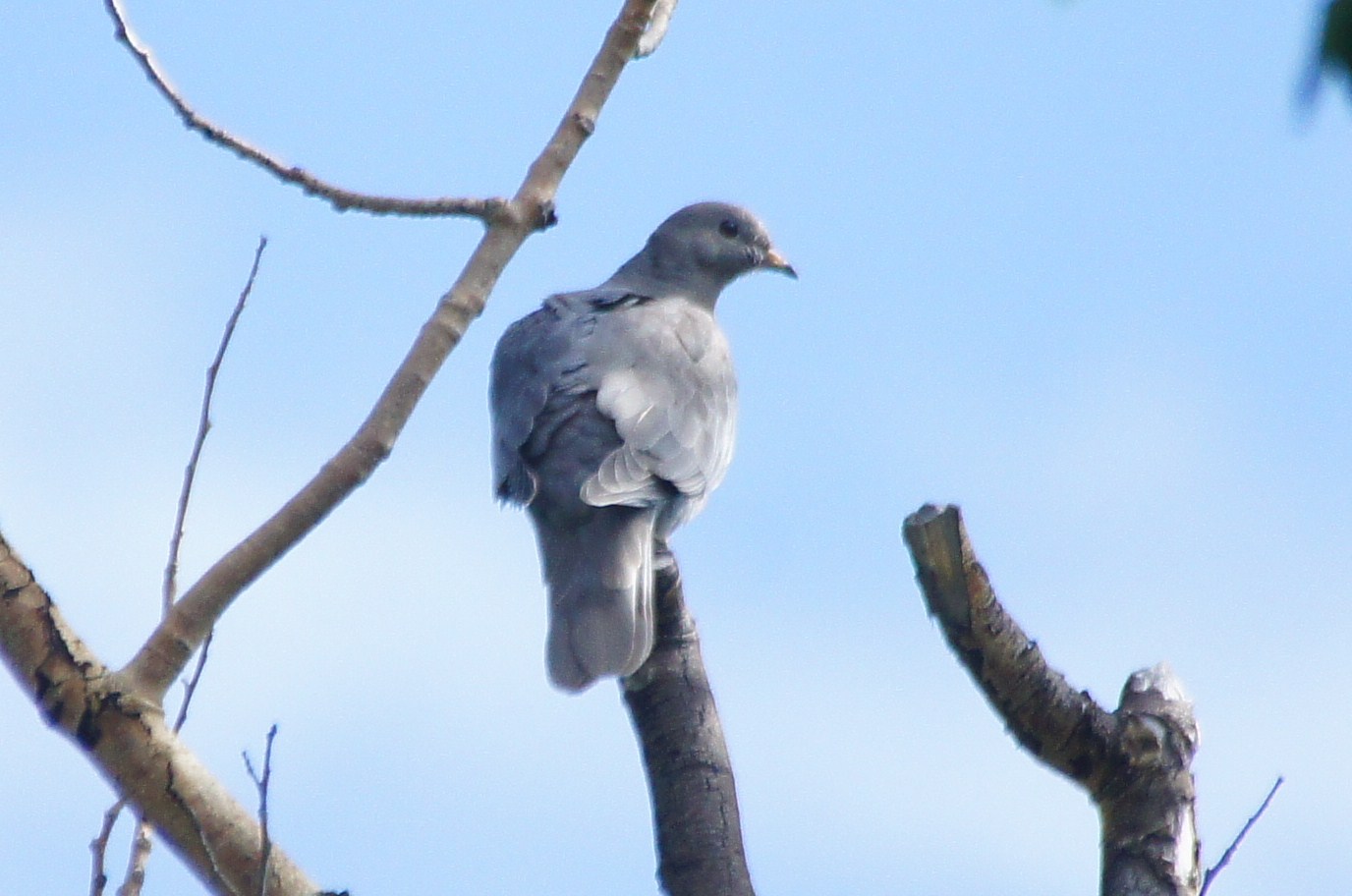
After I busted my lense, the only "decent" photograph I obtained was of a Band-tailed Pigeon on top of the scenic Greens Peak. See how messed up this picture is? It's blurry. Under normal circumstances this Pigeon would have looked a lot better. Oh well, there are worse things that I could complain about.
Views from Greens Peak are to die for...
As I posted before, the number one bird I wanted to see on my trip was an adult Northern Saw-whet Owl. On July 20th, that wish came true and it was only on the fourth day of the trip! I owled a Greer back road right after dark and a cooperative Saw-whet Owl gave me exactly what I asked for. Luckily, I encountered this little owl before my slip-and-slide on Mt. Baldy. Finding and photographing this bird was a breathtaking experience for me and it was a huge accomplishment. And it seemingly came along as "easy". After all, July 20th seems to be a good day for me. On July 20th, 2008, I saw my first Northern Goshawk, which was also in Greer...
I'm still not over the Northern Saw-whet Owl, I want to see more of them. I even went back three more times to try for them again (yeah, there were four of them) without luck.
Over the trip, I drove around many different places to write a second guide on my website, called Birding in Arizona's White Mountains. The White Mountain region is huge, so this is a 5 year project I'll have to add on to as I go. But during the trip, I traveled around and took many photos of the area. I submitted 55 checklists to eBird during the ten days of my trip. I birded a lot. So much I didn't have time for numerous blog posts and write-ups. But the guide is up on my website, and it is available at the link here below:
I could mumble on and on and on about how much I love the White Mountains and how much I love birding in the White Mountains. To really get a feel for where I have birded in this area, please check out my website at the link I gave. As I close, I want to say I've also published a slideshow video on my YouTube account showing many scenes of this spectacular area. A few birds are in the video too. Take a look, I hope you enjoy. The band behind the pictures is Hillsong United. As for now, enjoy birding ;)