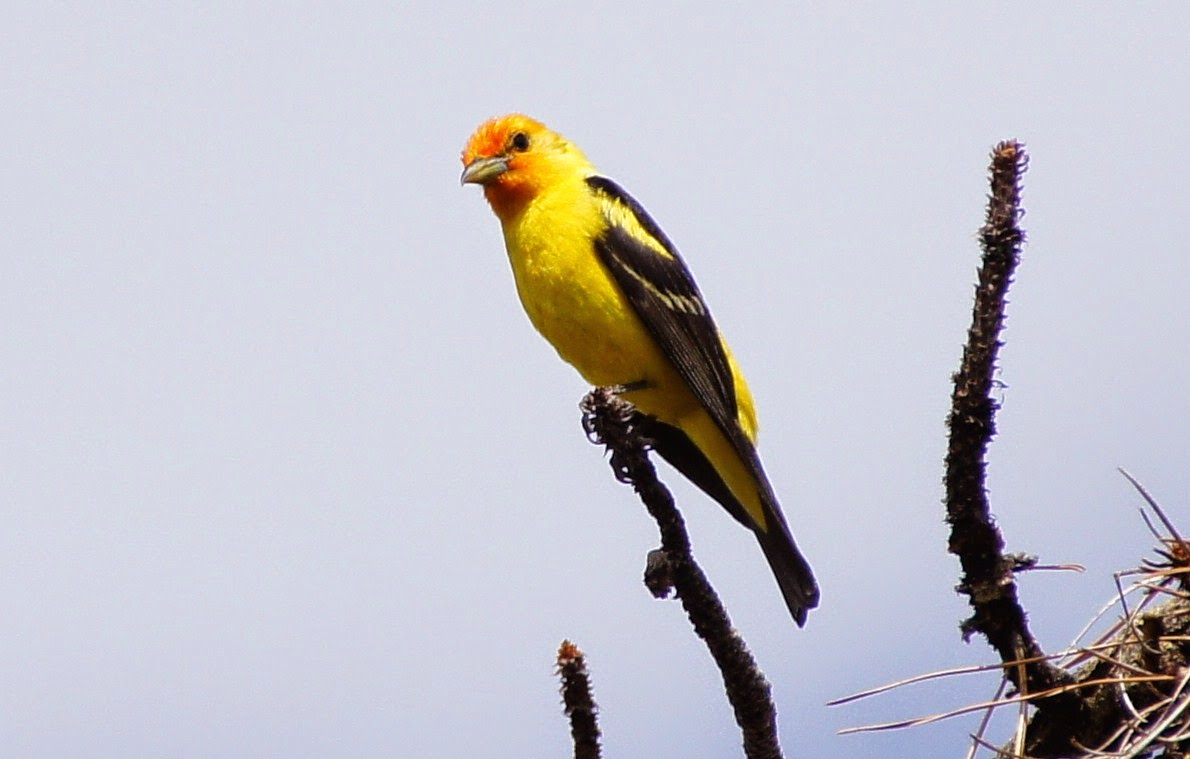
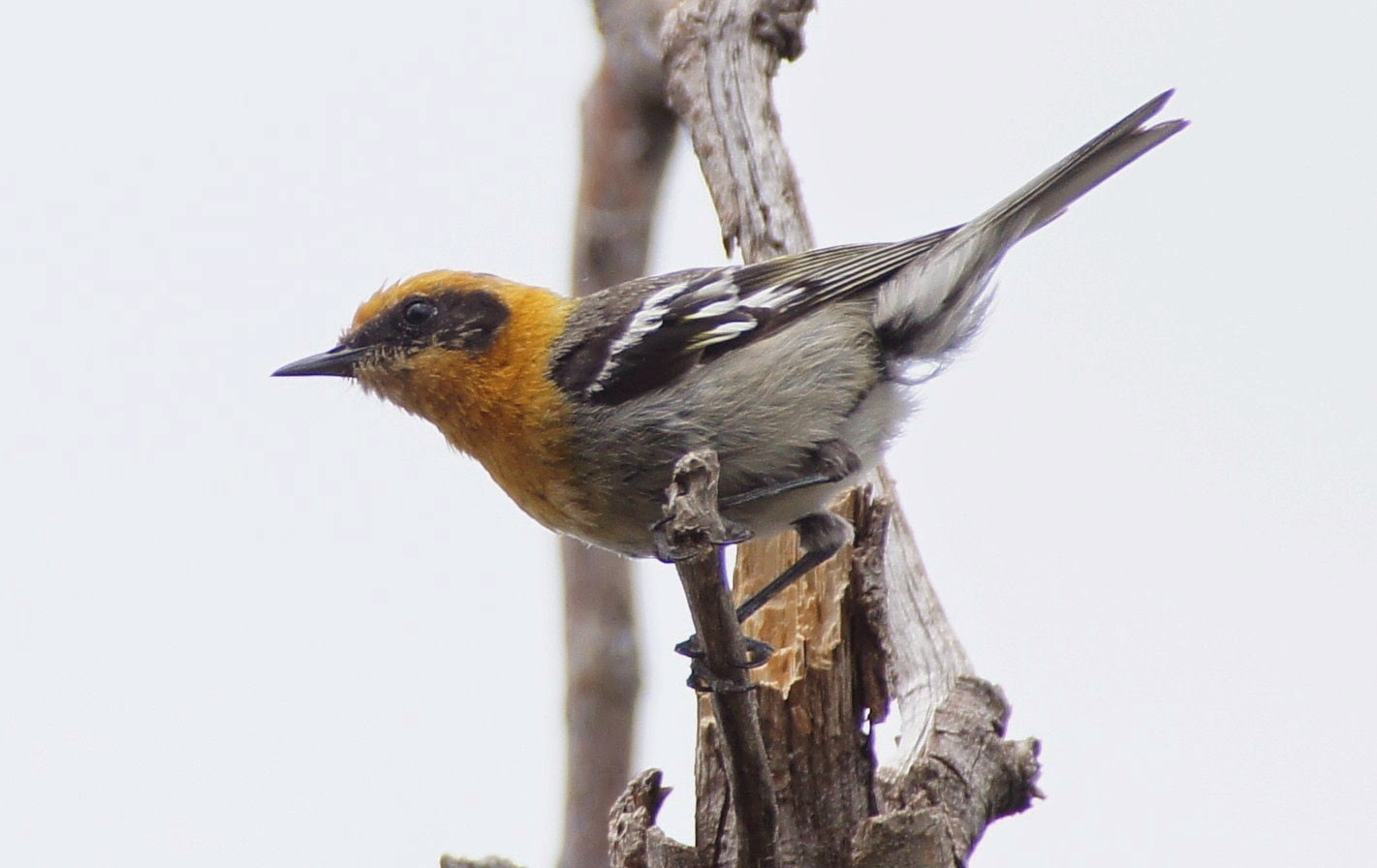
A lot of my summer was dedicated to exploring the avifauna in Gila County's high elevation canyons and forests. Time has gone by since the summer and the Gila County birding has been spectacular, and this post will recap more of my summer. Tracing back to archives, I did write a post for In The Gila called High Country. While that was the first half of my summertime explorations, this will be the second half conclusion to that write up. Come along with me and turn the good ol' mind's eye on, because these high elevation treks in Gila County are worth stepping into. I'll try my best to describe the locations well and perhaps I'll sell it to the point you readers will go to some of these spots next summer yourself.

The setting of a computer at a table inside an apartment living room is a shelter for me and thousands of others during a Phoenix summer. Call it a cage too-it's not fun to go outside in the heat. My computer would be lightened up daily by maps of one remote area to another in those higher elevations of Gila County. Satellite imagery can be as heroic as Hercules, and it highlighted the places worth investigating while stabbing other locations that weren't time worthy.
One road that I really love is Colcord Road in the northern tip of Gila County. It is just below the Mogollon Rim and it has it's sections of habitats that are both fun and productive for my bird surveys. By looking at maps I realized how long Colcord Road (also known as Forest Road 291) is. The eastern half of the road looked awesome, and I figured that it would give the western half a run for it's money. When I explored the eastern side of things, I think I liked it a little bitter than it's counterpart. While the west side has had American Three-toed Woodpeckers, the east side has thick and dense forests filled with Douglas fir, pine, and oak. One particular drainage system I explored in the afternoon of a day surely has loads of Red-faced Warblers as well as Saw-whet, Flammulated, and Spotted Owls by night. One fun bird that I encountered though in the owl department in this area was the small but a yet soon-to-be-ferocious immature Northern Pygmy-Owl. Two of these owls gave themselves away by their insect-like trilling calls.


Songbirds can be challenging to photograph in the forests. My times on Colcord Road had overcast and cloudy conditions as well as scattered thunderstorms with the monsoon season in session. Pishing can bring birds in close at times. This Hutton's Vireo was an awesome exception!


This Brown Creeper cooperated well too. He was in a drainage where I found myself looking for Spotted Owls.

My worst encounter of the summer was this odd guy on one of Colcord's side roads. He was one of those who thought he knew everything about my life based on a few things I said and he basically proclaimed to me, "I am all knowing and what I have to say is more important than what you have to say". All I could detect was constipation because he was full of crap. When he said, "There was a reason you ran into me today, it's for me to point you to the direction you need to go", I started to walk away and quickly cut off the conversation. Luckily I had a giant herd of elk to point him to down the road.

An area I really enjoyed fell on the northern flank of the Sierra Ancha Mountains. On the west side of Road 288, I took a rather rough road called Forest Road 609 for about six miles. Along the way I encountered lots of pine and oak woodland as well as chaparral habitat. This area was really awesome. From Road 609, I hiked deep into the area along FR 486. Pine and oak habitat filled this area, and landmarks that I explored included Salt Log Canyon, East Lacy Fork, and Indian Camp Reservoir. Common birds typical of pine and oak woodlands were encountered for the most part, and the highlight bird was a single Downy Woodpecker. This area is one I wish to return to. There's a lot of wilderness, as well as some historic cabin that is nearby to where I explored.


After exploring the remote area of Forest Road 609, I continued north on 288 to camp. I settled down just south of the town of Young, and when I woke up in the morning, I scouted out areas by driving slowly north up Road 288 through Young and north. The town of Young is small, but it hosts a lot of grassland habitat. Sadly, most of the habitat is on private property and any birding has to be done from the road. As I entered Young there was a pond along the road that I decided to check out. It was private of course, and I stood and scanned things from the road. Things got fun when I heard and eventually saw a Yellow-billed Cuckoo in the habitats around the pond. It was pretty cooperative for photographs.


A family of Wild Turkey slowly moved along the meadows and open clearings of Lower Canyon Creek. The area of Canyon Creek is a fun one, and other locations to visit there are Upper Canyon Creek Fish Hatchery, Airplane Flats Campground, Valentine Ridge Campground, and Colcord Ridge Campground. In a half day I managed to cover all of those locations. However, my favorite spot in this area is Forest Road 188 south of Valentine Ridge Campground. It has an assortment of birds, including Red-faced Warbler and Greater Pewee, and without doubt fun owling chances at night in spring and summer.


The Northern Goshawk is a bird that is without doubt in the Gila County high country. I hoped for it all summer long without any luck. My recent post about the Goshawk nest wasn't in Gila County. Goshawks are elusive "gray ghosts" of high elevation forests and canyons, and it was the last regularly occurring Gila bird I would need for high country. I also hoped to stumble across some sort of a miraculous Mexican vagrant during these journeys. Hey hey, Eared Quetzal has shown up in Gila County several times now, and an Elegant Trogon has shown up once. Despite not finding anything quite elusive as a Goshawk or something nearly as rare as an Eared Quetzal, hiking through miles and miles of terrain I had never been to before was incredibly fun. There were plenty of Hepatic Tanagers to go along with it. This bird was in the Whispering Pines area near a location called Bray Creek.

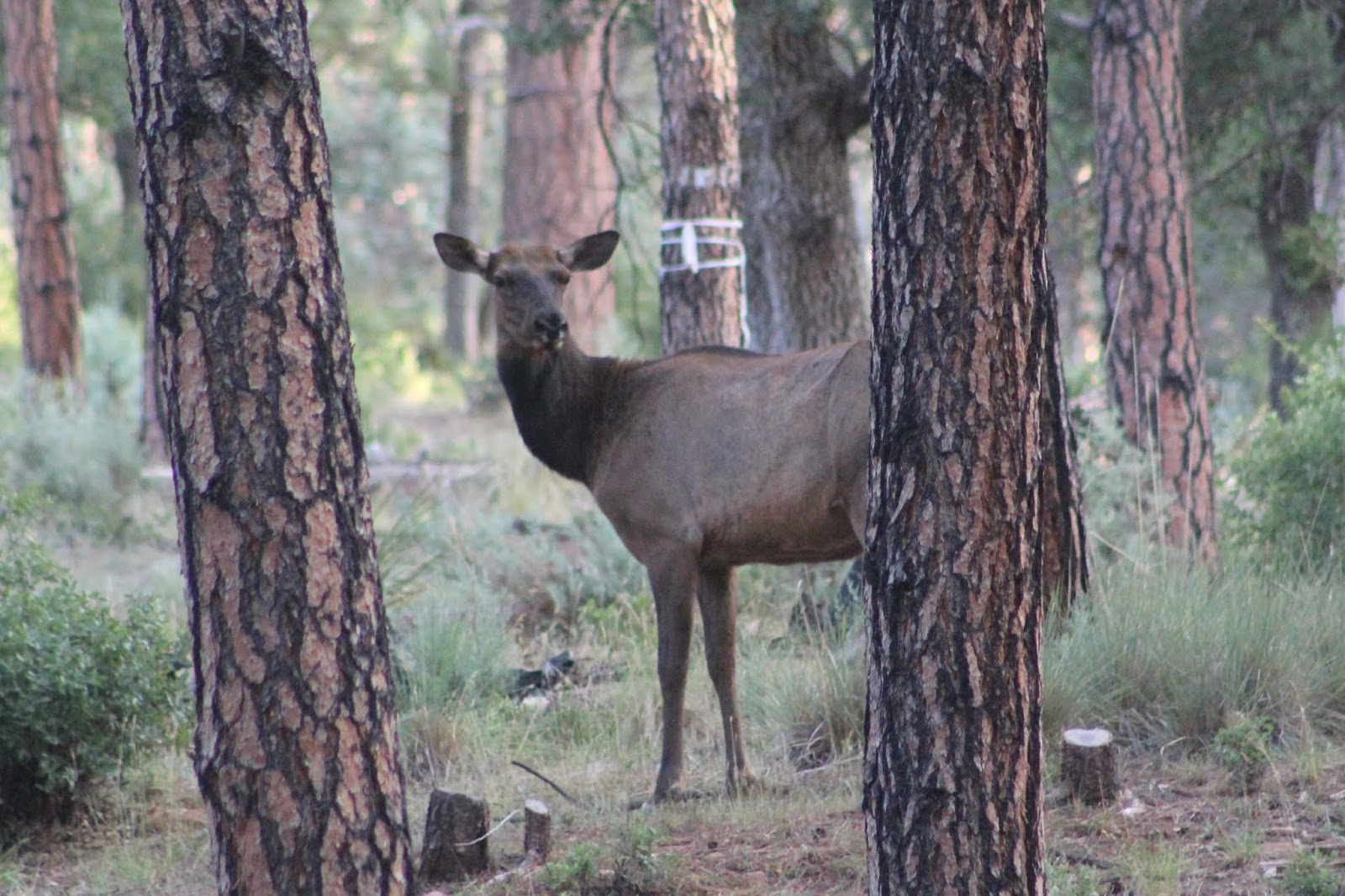
The Whispering Pines and Washington Park area became one of my favorite areas to explore in the summer in Gila. There is a lot of forest to cover there with many jeep and ATV side roads to explore. There are drainages with thickly wooded terrain. There are beautiful creeks full of running water. There are also plenty of birds. One morning I had rare company and Caleb Strand joined me. In the Whispering Pines area we hiked up a drainage called Dude Creek. The name of the creek was fitting for two guys exploring, and we tallied close to 60 species of birds. A tally of seven Greater Pewee was incredible along Dude. There were also some mini waterfalls, Elk, and a cooperative Band-tailed Pigeon. The creek also held good Spotted Owl habitat.


The wilderness takes people to greatness. If it weren't for wilderness, I'd be lost in life. While this post has been a basic summary of my summer adventure, there was a lot more to it. I contributed a few hundred checklists to eBird from the many hikes I did. Some days I hiked from anywhere in between 15 and 20 miles. The more I went, the more I craved to keep going.
Colcord Road is not only awesome in itself, but it is also the access point for several different roads that go further south into the Tonto National Forest. Once such road is Forest Road 200, that is also known as Chamberlain Road. One day I took Colcord Road to the east to access FR 200, and I took 200 south to an area that looked awesome on Google Maps. This spot is called Haigler Creek, and I hiked down a side road labeled as FR 848 to the east from FR 200. FR 848 was rough for my truck to trust, and I didn't mind a hike down into a canyon that the road led down into. This canyon harbors Haigler Creek, and from the start I could tell it was scenic. The creek was nestled down in between two steep slopes for it's duration, and the slopes held stands of thick Douglas fir and ponderosa pine. I was impressed, and FR 848 continued to go further and eventually parallel both sides of Haigler Creek. Crossing the creek was a must to explore the area, and it quickly became my favorite location that I birded all summer long due to it's scenic beauty, it's wonder and remoteness, and it's potential for the mountain forest birds that I love. At this point it was in early August, and a lot of birds were quiet and weren't singing. The canyon was creepy at times due to it's remoteness too. There were many twists and turns, and who knows how many Mountain Lions live up on the steep ridges. A noise above me turned out to be a memorable family of White-nosed Coati-an adult and four young troopers!


The Haigler Creek hike still has me. I can't wait for next spring and summer when I can go back and fully detect breeding birds such as Red-faced Warbler, Painted Redstart, Spotted Owl, and Flammulated Owl in full numbers.


The best part of the Haigler Creek hike was this epic waterfall where the creek reached it's limit of running water. Another creek flowed into Haigler Creek from a spot called Colcord Canyon (another spot to explore next summer). The water flowed into Haigler in the form of this waterfall that was simple but yet astoundingly beautiful. It was the best scene of my summer in birding in this high country, here is a video:
Once again, I really look forward to going back to Haigler Creek! Other than my summer adventures, I enjoyed hearing and vicariously seeing adventures of others too. My sister Talia was a perfect example, and she went on an awesome adventure herself. She and her husband Tom journeyed across the United States and she got to see lots of amazing states, cities, and wilderness areas. One place that she went for a few days was Yellowstone National Park. She was hoping to see a lot of wildlife, especially bears. Quite surprisingly, she didn't see any bears. But she did cross paths with a Wolf!
Towards mid-August, I combined my forest birding with some lower elevation riparian birding. The East Verde River north of Payson was a fun location to bird. It holds potential for a variety of breeding, migratory, and wintering birdlife. What got me stoked was a new Gila County lifebird in a Gray Catbird! It popped out along the trail, gave it's namesake call several times, and sat up for a few pictures. It was my 314th bird for Gila County.


In The Gila has a few more posts that I plan to write soon with some exciting birds to be involved-I have to get this blog all caught up!