Heidy Ho, Birding Neighbors! After completing two Big Years in 2016 I have been doing great. I'm relaxing! I'm still out birding but it's at a much more relaxed pace without any crazy goals in mind. Yet anyways. Crazy goals will be coming soon I think...
I'm still thinking about my major birding goals for this year. Sometimes it takes me awhile to figure such out. I am brainstorming some ideas. In the meantime, here are a few cool birds I have seen to start off 2017.
Remember the Long-tailed Duck from the Glendale Recharge Ponds in 2016? Well, he's still present! I'm very impressed that this duck has hung around my patch for as long as he has.
Jim Ripley found an impressive adult Trumpeter Swan in Buckeye. This thing is huge, but it's hard to get close to because it is on private property. I've seen the thing twice this year already. It's been the most reliable Trumpeter Swan in Maricopa County's history and is the County's third record. I got to see the first record in 2015 but the bird's were hit and miss for many people. The second record was discovered on private property. And this record, well, this record resulted in this huge bird staying put in one field for a few weeks. Almost everyone who got to see it went away glad. Too bad this bird didn't show up a few weeks earlier, and then it could've been a part of my Maricopa County Big Year of 2016!
Black Vulture, Dean and Beloat Riparian Area. For some reason this Vulture is always cool to me.
One of the best highlights for me this year was watching a pair of White-tailed Kites. Caleb Strand and I enjoyed this bird up close, and the two of us also found these birds in 2016. These White-tailed Kites have hung around in a field in the Buckeye area reliably and many other birders have made trips to go and see them. The White-tailed Kite is one of my favorite raptors, and they can entertain!
Caleb Strand relocated this Rusty Blackbird at Coon Bluff Recreation Site along the Lower Salt River. This is an awesome bird in it's basic plumage.
One day I decided to do a hardcore Pinal County birding day, and I went to the Santa Cruz Flats looking for Pinal County lifers. I got 6 of those birds out of about 12 that I was hoping for, and it was a neat day despite the fact that it was raining a lot of the time. Along the Santa Cruz River there is a Louisiana Waterthrush that has returned for a second straight winter. As I got to see it last winter, why not see it again this winter. This bird has treated me well lately. I got to enjoy this one up close, and we can't forget about the one I got to see in Maricopa County last year!
That's pretty much it for now. And, before I head off, here are a few things I want to accomplish this year for my birding in 2017:
I want to explore more, more, and more. Maricopa County a ton, other counties a lot (but not a ton), and other states some.
I want to gain five more Maricopers this year. A Maricoper is a Maricopa County life bird. If Yellow-rumped Warbler is split into two like anticipated, I could take some extra time off for searching ;) Anyways, 390 would be exciting to hit this year. My Downy Woodpecker search that I want to do may have to wait a few weeks due to snow and mud everywhere after recent storms of rain and snow. Maybe this is the year I'll finally get that dumb Mexican Whip-poor-will in Maricopa County.
I want to see more Owls. Owls outside of Arizona especially...
I want to hit over 100 species in La Paz County, Mohave County, and Greenlee County. Then, I'll have 100 species in every Arizona County.
I want to gain get over 200 species in two other counties this year in Arizona. I have 183 for Pinal for one of them, and the next highest is Coconino at 138 and Gila at 137. I think Gila can be doable. Then I'd have 8 Counties in Arizona with 200 species or more.
I wanna see a Jaeger. It doesn't matter which kind, I want to see a Jaeger. They are some of the coolest birds. I wanna see a Jaeger.
I wanna pioneer bird and find my own epic hotspot, find a good bird at that hotspot, and get other birders to start birding that hotspot.
I don't want to do any sort of Big Year.
And last but not least: There's been Rose-throated Becards reported the last two years in Arizona. A pair of them are being seen NOW. It's about time I should chase one of them....
I've been exhausted lately. Days and days have been spent in the field for my Maricopa County Big Year. I'll go birding before work and I'll go birding after work. I'll bird all day on days off. We last left off with my additions of Northern Parula to the Big Year and then a remarkable discovery at Veterans Oasis Park in Chandler, my lifer Groove-billed Ani.
About a week after the Groove-billed Ani excitement in Chandler, Gordon Karre and I made a trip up to Slate Creek Divide on November 23rd to try and find some key high elevation birds for our Maricopa County Big Years. Yes, that's right, Gordon is doing a Maricopa County Big Year too. We found plenty of key birds. A painful miss was a heard only woodpecker that was very likely a Downy Woodpecker. How likely? Well, the only other thing it could have been was a Ladder-backed Woodpecker. There have been a few times where I have found Ladder-backed Woodpeckers in higher elevations, even higher in elevation that at Slate Creek Divide. Although we couldn't find the likely Downy, the Douglas fir stands at Slate Creek harbored my 318th year bird in a flock of Golden-crowned Kinglets.
Later that day on the 23rd, a Ruddy Ground-Dove was reported at Celaya Park in Tempe by Dave Hawksworth, a visiting birder from New Mexico. While Gordon's house was only minutes away from this park, he went to investigate the report and found there was a Ruddy Ground-Dove present on the 24th, which was Thanksgiving Day. I rushed to the park and Gordon kindly waited for me to get there. Just before I got there, a group of kids playing basketball flushed the Ruddy Ground-Dove. Gordon was furious. With basketball being an equally big passion of mine as birding is, I couldn't get mad at the ballers. While waiting, Dave Hawksworth joined us and soon after, Inca Doves started to fly to the ground. Eventually, the Ruddy Ground-Dove joined the Incas and became my 319th bird of the Big Year. Thanks Dave!
In Mesa on November 26th, Jack Sheldon found a Harris's Sparrow coming to his yard to feed at his feeders. On the 27th, Gordon Karre, Barb Meding, and I all got permission from Jack to look for his sparrow. With me having to be at work by 1 P.M., I chased the sparrow after 11 A.M. which would only give me 30 minutes to look. Jack and his wife were very accommodating to us and kindly let us peek over their wall. Several neighbors of Jacks became very concerned and were considering calling the police as I learned later. But with 10 minutes left on the clock, the Harris's Sparrow made it's appearance to be my 320th bird. It was awesome, thanks Jack!
You might be wondering what happens on days in between of when I get year birds. You can consider those days as searches and strikeouts. Still good birding though!
As December rolled in, the first excitement came on the 2nd. A Tundra Swan was reported in Sun City West, and Melanie Herring found a Ross's Goose at Lower River Road Ponds near Buckeye. Ross's Goose was the last easy bird I needed for my Big Year. I decided to make a loop out of Lower River Road Ponds and Sun City West after work that day. Arriving at the Lower River Road Ponds, it didn't take me long to find the Ross's Goose, who was with 2 Snow Geese. It's fun to save a bird with the number of 321 later in the year like this Ross's Goose.
The Tundra Swan was interesting to say the least. It showed up at a golf course in Sun City West and was hanging out with a golf course pet Mute Swan. I didn't know what to think of the Tundra's origin, but I did not think it was wild at first, not even a slight chance. However, both of it's hallux were intact and I also remember having a Tundra Swan in this area several years back. The one several years back was said to be wild by Sun City residents, as it would stay the winter and leave in the spring. Turns out this bird is that same bird, and the residents said it had just returned for the winter again, and it leaves in spring. Thanks to Chris Rohrer and Magill Weber, they were able to lock down this information. This bird seems like a wild bird so I decided to count it, even though it is very used to people. A lot of winter waterfowl will eventually become used to people when they winter here. But this is flat out weird..
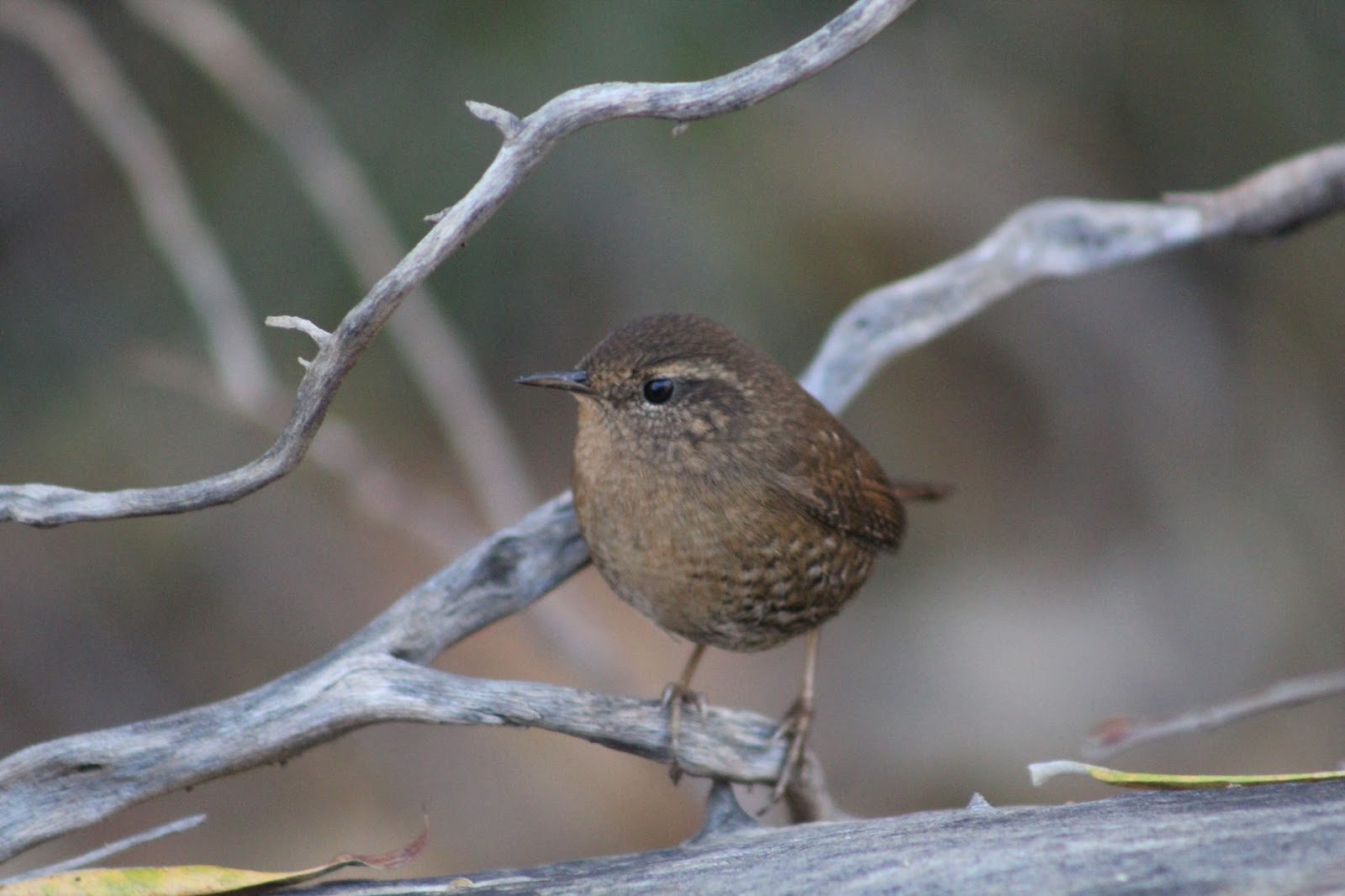
On December 3rd, Troy Corman found a Hooded Warbler at Seven Springs Wash and it was a nice adult male bird. With me having work the next day on December 4th, I decided to go for the warbler before work where it would be one of my longer chases during the Big Year on a work day. Ironically, I was about to walk down Seven Springs Wash in the previous week and I decided not to. The Hooded Warbler is one I had only seen once in my life prior to this chase, and it was a female at Morgan City Wash in 2009. The first Hooded Warbler eluded my camera, which made me want to see this bird even more and get a photo of it. I walked through the canyon at Seven Springs Wash slowly and because the sunshine hadn't hit the area where the warbler was on my way down the canyon, I would walk back up canyon and move even slower when birds would become more active. This technique worked out well for me as I discovered my 323rd year bird for Maricopa County, a Pacific Wren! The tiny bird was located by it's distinctive double-call notes, which sound reminiscent to that of a Wilson's Warbler.
Pacific Wren seems to be a lot more rare in Maricopa County than the extremely similar Winter Wren that it has recently been split off from. I've found 4 Winter Wrens this winter and this Pacific Wren was in no doubt overdue.
While the Pacific Wren had made my trek, I was still hoping to find the Hooded Warbler. I moved up the wash as slow as I could and listened carefully for it's call notes. When I came across a loud spring of water flowing through the wash, I had the feeling to walk away from the loud noise. As soon as I got away from it, I heard the call note of the Hooded Warbler! I rushed in the direction of the call and was able to spy the bird. I performed my own victory dance before getting down to business. While the Hooded Warbler turned out to be very skittish, it took me awhile to finally snap a few pictures of it. This sighting was epic for me, as I hadn't seen a Hooded Warbler since the year of 2009. Thanks Troy!
Following December 4th and already having 4 year birds to start December, the reality of the game set in as I searched and searched for more year birds throughout the entire following week without any additions. In places I have been to lately, awesome birds were found. A few days after I was on Mount Ord, Charlie Babbitt found a Downy Woodpecker in the same area I was birding. Jeff Ritz found a stunning Lesser Black-backed Gull at Glendale Recharge Ponds, the closest hotspot to my home. It didn't stick around very long. On Saturday the 10th I went to Lake Pleasant, but windy conditions made viewing difficult and I didn't have a lot of patience. Caleb went there later in the day and found a Long-tailed Duck flying south over the lake! I wondered if I had overlooked the duck earlier in the morning. Long-tailed Duck is a species that dives a lot, and with the constant waves that were created by the wind, it would be very hard to pick a bird like that out.
Something crazy happened though on the 11th, and several Long-tailed Ducks were found in Arizona. Luckily Louis Hoeniger was at Glendale Recharge Ponds and he discovered a Long-tailed Duck there in Basin 5. Ironically, I got to see my first ever Long-tailed Duck here in 2013 on Christmas Eve, in the same exact basin. I was at work when the bird was found, and fortunately, the bird was still there when I arrived to become my 325th bird! The Long-tailed Duck is quite the stunning duck, especially an adult male. This one at Glendale dove constantly, and would only surface for about 3-5 seconds before diving under water for longer periods of time. Thanks Louis!
As I write here on December 13th, I have roughly 18 days left in 2016 to add more birds. 330 would be a great number to hit, but at this point, I will say that 325 was what I've been shooting for. There's a lot of hardcore birding left, and there is a lot of potential for many more birds. Stay tuned for more..
It was the morning of January 30th. It was day two of our Minnesota birding excursions. It was bound to be another epic birding day. It was the exact opposite of the first day at Sax-Zim Bog. It was surprisingly warm on this second day. It was time to bird the cities of Duluth, Minnesota and Superior, Wisconsin. It was time to score..
I don't know how many times when Josh was telling me stories on this day that I thought to myself, "You have got to be kidding me". To give a brief refresh of our trip before I get to the main ordeal, it was our second full day of birding. The first day was spent in the heart of Sax-Zim Bog Birding Area where a Great Gray Owl, Sharp-tailed Grouse, and Boreal Chickadees were among the highlights (see previous blog). And we went from that atmosphere, to industrial areas after crossing the Minnesota and Wisconsin state line to birding in Superior, Wisconsin. After eating a McDonald's breakfast, it was all about birding, in an industrial city. But if there are incredible birds around, I don't really care about the scenery. After all, look at my patch at home, the Glendale Recharge Ponds. Josh, Gordon, and I were targeting two raptors: Snowy Owls and the rare Gyrfalcon. We started off by looking for Snowies in Superior in the early morning hours in places that Josh was told about by others. When Josh told me about where the Snowy Owls were being seen and what they were being seen perched on, that's when I kept thinking, "You have got to be kidding me". When we went on the bridge that crosses from Duluth into Superior, Josh said, "The Snowy Owl will perch on top of this bridge at times". When we drove past the airport and it's adjacent open fieldy areas, Josh said, "The Snowy Owl will perch on the buildings around here, in the field on the ground, or on any mound or pile of sticks". When we drove through town, Josh said, "The Snowy Owl will perch on any of these buildings, it has been seen throughout this stretch". When we drove up to the store Menards, Josh said, "The Snowy Owl often perches on the store sign, in the parking lot, on the trucks, or anywhere in this area in general". When we didn't find any Snowy Owls during our early morning search, Josh said, "It's pretty hard to find them in morning, evening is much better".
Snowy Owl searching was crazy. And there was more than one in the area that we drove through. Yes I knew it is a bird of open areas, but I was surprised how they can get used to being in human dominated environments. Rodents are abound in areas like this, who can blame the Snowy Owls for wanting to be around this? After all, these areas are open, and Josh said that Snowy Owls are not picky. As we drove around in the morning without finding any Snowy Owls, it only helped us better prepare ourselves for the search in the evening...
The Gyrfalcon is a mighty creature of the Arctic and far North. It is found along rocky and barren tundra and it nests on cliffs along rivers and coasts. With small population numbers and with it being an epic falcon, it is highly coveted by birders. Gyrfalcons have a variety of look to their repertoire, with three main color morphs that can be seen. Some of these falcons can be nearly white in the white morph. The Gyrfalcon is the largest true falcon in the world, and this powerful predator hunts a variety of birds and mammals. While some Gyrs are residents within their range in the high arctic, some of them move south during winter. Some of these winter birds can be found in some of the northern Lower 48 states where they are found in a variety of open habitats. Luckily, they are annual in Wisconsin and Minnesota in areas like Duluth and Superior. When a Gyr shows up in an area, it is most often content with that area and will spend the winter. Luckily in Superior, Wisconsin, where we were on January 30th, two Gyrfalcons were in the area. And one of them used the Peavey company towers (photographed above) as it's base perch and roost.
I have a confession to make. You can call me crazy, and you can call me a fool. I was completely fixated on owls on this trip that going into this trip, the Gyrfalcon possibility seemed muted to me because I wanted owls so bad. That's right, I said it. The Gyrfalcon didn't even come close to the owls in my thought process. As Josh, Gordon, and I waited for 15 minutes, I still wasn't overly pumped up about the Falcon. But when I saw that Gyrfalcon fly in at 9:15 A.M., it was right up there with the Owls. Only a mighty creature has the easiest time of changing a mind, and I was screaming my head off inside my mind at the sight of the Gyrfalcon...
At first, the Gyrfalcon flew up to the highest perch of the tower possible before flying in much closer, and lower, thankfully! Pigeon after pigeon was seen flying around the tower, probably one of the Gyr's many food sources in the area. I started to set my scope up as the Gyrfalcon was perched up on the tall buildings.
Once I got my scope set up, oooohs and aaaahs were exclaimed by the three of us, and by several other birders who were driving up on the scene. Because the Gyrfalcon was so distant, I decided to go back in time to my era of Digiscope photography by using my iPod. And it the method worked well this time around too. It actually worked better than my normal camera did!
Also for some fun, here is a video I took of the Gyrfalcon while using my iPod touch camera.
After enjoying the Gyrfalcon while it was perched in the open for us for about 10 minutes, the bird took off and flew low to the ground and about 100 yards past us. Had we had been adjacent to the spot where it was flying to, we would have had incredible looks. It was an enjoyable and incredible life bird to see, one that I always have wondered if I would ever see or not.
Up next Josh, Gordon, and I headed back into Duluth, Minnesota to go to Canal Park along Lake Superior to look for gulls, American Black Duck, and more. Canal Park in Duluth was the site where the mega-rare Ivory Gull had spent a good amount of time. As I mentioned in my previous post, the gull had likely died and it was last seen about four days before Gordon and my arrival into Minnesota. I would have loved to see the Ivory Gull, as it is a very challenging bird to get in North America because it typically stays as far north as possible. But there were other birds to look for, and many gulls favored the packs of ice that floated on the lake. At Canal Park, Gordon and I had several potential gull life birds apiece which included Thayer's, Iceland, and the mighty Great Black-backed Gull as well as Gordon's first potential Glaucous Gull. Out of all of these gulls, I really really really really really wanted to see the Great Black-backed Gull! It's the largest gull in North America, and it would seem awesome to see it on Lake Superior, the largest lake in the United States.
Herring Gull is the most common gull in Minnesota. We started to search through many Herring Gulls in search of any life gulls. Located in the middle of the Herring Gull flock was Stumpy, an Iceland and Thayer's Gull hybrid. It was an interesting bird, but is pointless at the end of the day because it can't be counted for anything, technically. A hybrid lifer! Can you find Stumpy?
After some scanning, we did find an adult Thayer's Gull floating on the ice with some Herring Gulls. At this point, there weren't many gulls out on the water, but it was fun to lock up the Thayer's Gull as a life bird before we had to head off to pursue other birding locations. There was also a Black-legged Kittiwake in the area, a rarity in Minnesota and a lifer for Josh. The Kittiwake didn't make an appearance while we were there. Here is the Thayer's Gull on the left of the Herring Gulls.
There were many birders on site of Canal Park in Duluth, and all of them knew Josh, and all of them really like Josh. Gordon and I were with a Minnesota birding phenomenon as our guide! Among those folks was Peder Svingen, Minnesota's top eBirder and one of the state's best birders. He was helpful to us and he told me that a mature and pure Iceland Gull had been around at times. I saw an interesting gull that I thought was that bird, and every time I got it in my scope and tried to show it to Peder for confirmation, it flew off every time Peder was about to study it. I wasn't too happy with that gull. After the gulls left the area, we tried looking over the area a little further in hopes of finding American Black Ducks without luck. That miss was made up for by skipping rocks across Superior. It was then time to head off to Two Harbors to look for Long-tailed Ducks and for Gordon and my potential lifer Bohemian Waxwings. But before that, I had to snap a photograph of North America's three most Superior birders in front of that ginormous lake.
Lake Superior was beautiful, and as we made our way north to Two Harbors, I also had to take some video of the lake as we were driving along.
When we got to Two Harbors, we decided to check the harbors first to search for Long-tailed Ducks. It was extremely windy there, making it extremely cold. We weren't as keen as can be when it came to searching because of these weather aspects, but birder Jim Lind made things easy for us as he already had a drake Long-tailed Duck staked out in his scope. Although the Long-tailed Duck was a distance out on the water, we had decent scope looks at this gorgeous duck. And I managed a couple of very distant photos with my camera for the memory.
We then searched for Bohemian Waxwings in neighborhoods they had been found at in recent days that surrounded Two Harbors. Bohemian Waxwings are nomadic birds of the North and they can be very hard to find at times. They aren't rare, but they are constantly on the move. To find them in a place where they were previously reported would mean that we would have to be pretty lucky. In some regards, it's a bird you have to find on your own a lot of times. We didn't find any Waxwings and my hungry stomach needing a Subway sandwich took twenty minutes away from our search. Regardless, we spent time trying and that's what birding is all about. We got an E for effort. At this point and time of the day, it was about 1:30 P.M. It didn't seem like it was that late into the day already. Josh had two ideas before we would start our Snowy Owl search in the evening after 3 P.M. One of those ideas was to look for the American Black Ducks near Duluth and the other idea was to give Canal Park a second visit just in case more gulls were visiting the park. The second option seemed to be the better option, and we headed back to Canal Park to attempt more gulling. When we pulled up to Canal Park, a few awesome things happened. One was that we had that incredible view of Lake Superior again!
The second thing was that one of Josh's good friends, Randy Frederickson, came to Canal Park to study Thayer's Gulls. When we arrived at the park, Josh got a timely text from Randy about two lifers for Gordon and I being present: Iceland Gull and a Great Black-backed Gull! We were thrilled and practically ran out of the van and up towards the lookout area. As I got to the lookout, I could see that many more gulls were present. Can you spy the Great Black-backed Gull?
I wanted the Great Black-backed Gull the most, and who could blame me. It's awesome! As I looked out on the ice, the well named bird stood out easily amongst the "other ones". Wow.
Despite the fact that I think the Great Black-backed Gull is awesome, and despite the fact that Josh and Gordon also think the Great Black-backed Gull is awesome, it doesn't necessarily mean that other birds feel the same way about it. The Great Black-backed Gull size can range up to 30" and it is North America's largest gull. It is also a very predatory creature, as it has quite the varied diet that can range from a cheerio to a cormorant. It's also very moody, as it can be aggressive to almost any bird but can also come into gull flocks without any nasty intentions. Although a Herring Gull could certainly become prey for this large gull, the Great Black-backed Gull is far more likely to steal the Herring Gull's fish scraps than take the Herring Gull itself. This Great Black-backed Gull didn't seem to be much of the aggressive type, as this Herring Gull was chasing it around.
At times, if seen poorly, I'm sure the Great Black-backed Gull has been confused with a Bald Eagle.
After all, both are huge. Both pick on other birds. And both...are beyond awesome! Gosh I'm glad I got to see this bird!!!!!
And he went back to hanging out on ice with the Herring Gulls.
After I got my look at the Great Black-backed Gull (which I did look at time and time throughout our second time at Canal Park well after photos), I looked for the Iceland Gull. Randy had joined Peder and they pointed the Iceland Gull out to us, which was a second-winter bird. It was neat to see a pure bird of this species, which is mainly a North Atlantic gull. And it was my second gull lifer in a minute.
Iceland Gulls are pretty scarce in North America. This is a bird I was very happy to land for this trip and to get on my life list.
As I was up to three gull lifers on this day, this time around at Canal Park gave me much better looks at the Thayer's Gulls that were present, which was my first gull lifer of the day during our first pass in Canal Park. I made sure to get the photographs I wanted of this bird when the opportunities presented themselves.
For many years, the Thayer's Gull was considered to be conspecific with Herring Gull until the two were split in the 70's. Thayer's is smaller and has a more delicate look to it, visually wise. Iceland Gull is very similar to Thayer's Gull, and some ornithologists consider Thayer's Gull to be a subspecies of Iceland Gull, while others obviously feel like Thayer's Gull is a different species. Either way, gull identification is birding's biggest puzzle and quite obviously, Herring, Thayer's, and Iceland Gulls are very closely related.
This shot I found to be pretty cool as Herring Gulls fought over food while the Thayer's Gull was watching from the outskirts of the flock, thinking perhaps of a way to grab a bite from those who were fighting so hard.
The gull fun got more exciting when the large Glaucous Gull flew into the area and joined the flock of gulls that we were looking at up close. Glaucous Gull is one of the larger gulls in North America, and it is one I've seen only once in my life prior to the Canal Park bird. It was a life bird for Gordon, something that he was happy about. I ended up with three gull lifers at Canal Park and Gordon topped me with four. In the pictures below, the Glaucous Gull is the brown-colored bird with the whitish head, behind the Herring Gull.
As I just mentioned a little bit ago in the text, the Great Black-backed Gull is one that I couldn't stop looking back at. Although distant, here is another shot of the spectacular gull, and a great memory for me.
As we left Canal Park in Duluth, it was then after 3 P.M. and that meant that our main search of the day and one of our most hopeful targets of the day was now being searched for. We were now looking for the highly desired Snowy Owl, which was for me, one of my most wanted for the trip. After missing them in the morning, I was anxious and eager as we made our way back down into the industrial areas of Superior to search airport fields, any open areas, piles of sticks, grocery store signs, building tops, billboards, and a variety of other perches. Now, there were two Snowy Owls that we were seeking out. The first one was one that we mainly looked for during our morning searches. This individual liked to hang out at the store, Menard's, a lot, as well as hang out in the vicinity of the nearby Richard/Bong Airport. We cruised along roads throughout this area several times while carefully checking the previously mentioned perches. Despite our searches, we could not find this particular owl. However, we did cross paths with this Northern Shrike.
The Northern Shrike is incredibly hardy, and it endures northern climates like this throughout the entire winter. I have a lot of respect for shrikes, as they are a predatory songbird that perhaps should be considered a raptor. Osprey, Eagles, Kites, Hawks, Falcons, Owls, Shrikes.........I like the idea.
Luckily, while we were at Canal Park and when Josh was talking to Peder, Peder gave Josh the location of another Snowy Owl who was a few miles north of the one we were looking for. Luckily, this Snowy Owl was in a more condensed area and would hopefully be the easier owl to find. As it was being seen in more of the open and industrial habitat like the other one was, we started to scan buildings, open grassy areas, and any other perch. As we came up upon a big FedEx building, I spied that wanted big blob on top of a light post! And there it was, my first ever Snowy Owl...
In a similar tone as to when I spied the previous day's Great Gray Owl, I said, "Right here guys!". Josh slammed on the breaks and Gordon and I jumped out of the vehicle to get better binocular views and photographs. There were tall fences surrounding the FedEx building, and Gordon and I had to shoot through that fence. The Snowy Owl calmly perched on the light post, rather oblivious to us rambling on about it's highly wanted presence.
If you look on the bird's wing, it has a tag on it that reads, "24". That tag is on there because there is someone who monitors the Snowy Owl population in the area. He captures the owls and puts the tag on them to study the habits of these creatures and probably to get a general census of Snowy Owls in the specific area.
As you can see, this Snowy Owl is very dark because it is a younger owl. As adults have mostly white on them with some adult males being nearby pure white, young birds are the quite opposite. This one looks very dark and barred overall. I didn't care though, heck, it was a SNOWY OWL!
With this owl, we were now two-for-two on attempts at the Northern Big Three!
As we were enjoying this Snowy Owl, another car full of birders pulled up. That group was led by Kim Risen, and Kim told us about another Snowy Owl that was whiter and was only blocks down the road. After talking with Kim for a few minutes, we sped off to find the second Snowy Owl. It didn't take us very long to spy it on top of a pole. It was much lighter than our first, and wow, it was a cool sight!
From these two owls that are photographed so far, it is very evident that by these pictures, the Snowy Owl is a very big and round-headed owl. At 24" in length, it is North America's second largest owl lengthwise behind the Gray Gray Owl. The Snowy Owl is very robust and is a skilled hunter. Out of the North American Owls, it is by far the heaviest, weighing in at four pounds. It is on average about a pound heavier than the second heaviest owl, the Great Horned Owl.
Like the Gyrfalcon, the Snowy Owl is an Arctic creature that loves the open tundra in the far North. In winter, Snowy Owls will move south depending on lemming populations. When the lemming populations really crash, there can be an abundance of Snowy Owls seeking out places for food in the northern half of the Lower 48. As I've mentioned many times, any open areas with convenient perches and rodent food source can have a Snowy Owl nearby, especially in states like Minnesota and Wisconsin. Snowy Owls may prey on a variety of prey in southern latitudes that will also include rabbits and waterfowl.
Between the two Snowy Owls combined, we probably spent about thirty to forty minutes observing them. It was sure fun!
At one point, I decided to get my spotting scope out and set up that scope to obtain some digiscope video of the Snowy Owl through my iPod. It was pretty fun in doing this, and I took two videos of the owl. Here is the first one, as Gordon and I were trying to get the Owl's attention:
The second video shows the owl at it's same perch, as it looked downward in my direction a lot more than in the first video. A loud train going by didn't phase the owl. I actually like the train noise in the background. It really adds to the video and gives a feel about where these Snowy Owls like to reside in their winter homes.
When we stopped looking at our second Snowy Owl, we went back to enjoy more of our first. This time, the first was on top of a billboard that overlooked a truck lot.
After leaving this Snowy Owl, Josh was wanting revenge on the Airport and Menard's Snowy Owl. Despite trying for that bird a third time, we missed it again. Ah, oh well! Getting two was great, and it was a memorable time in doing so. Josh even heard from Randy and Peder (who stopped by briefly as we were looking at our second Snowy) that during their Snowy Owl run in the same area, they found an astonishing seven Snowy Owls. As Josh said, evening is the time to find these birds and morning isn't nearly as productive. With another owl lifer, a falcon lifer, and three gull lifers to add to my birding list, the second day of our Minnesota trip with a hint of Wisconsin was another epic day to follow the first day. Superior birding was found around Duluth on January 30th, 2016!
On the way home, I bought us a lot of groceries for the following day, which would take us to the extreme limits of northwestern Minnesota. We prepared wisely, as this upcoming day would be another key one to our trip's overall success and explorations. The three of us got to sleep earlier than on previous nights, because such an epic outing would require a very early start. Before the night was over and after pizza and other good foods, Josh said, "Plan to leave here at 4 A.M. tomorrow morning". Stay tuned folks! Another good story is right around the corner in my next blog post.