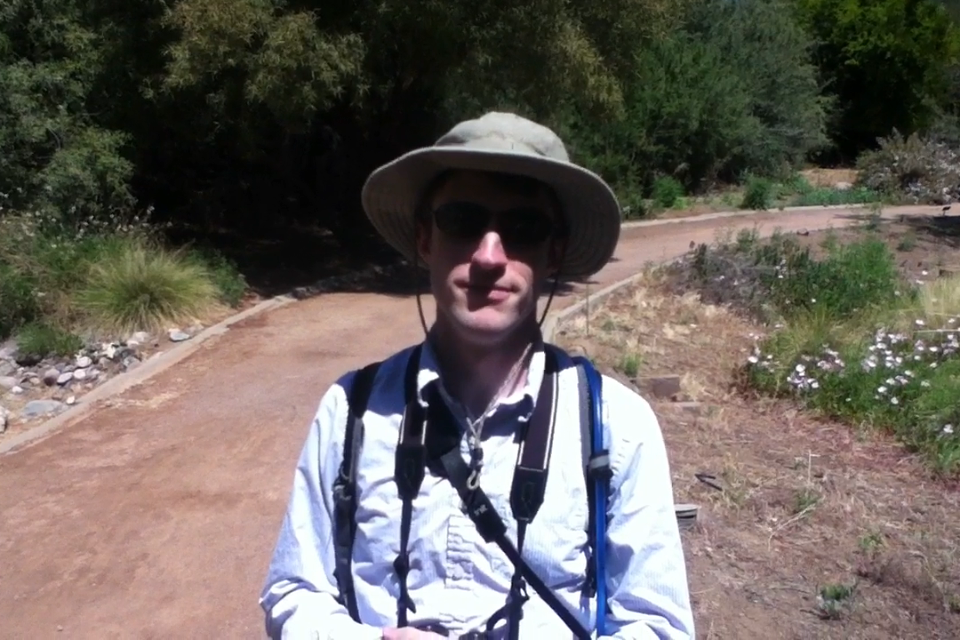
This past weekend, Gordon Karre and I explored the White Mountain region of Apache County. We had three days worth of birding that lasted from September 13 through September 15th, 2014. Our goal for the trip was to search for migrants in bodies of water as well as riparian areas. We made many stops, and found a lot of birds during the trip. Another goal was to increase our Apache County lists by exploring this expansive area. It was a special trip for me, because I've always wanted to bird in the White Mountains in a time frame outside of July/early August, which I've done a lot of in 13 summers since 2000. During this trip, birds were plentiful, and we had Wilson's and MacGillivray's Warblers literally everywhere. While we wanted to explore further north into Apache County, 2.5 days wasn't enough time to cover everything, but we were able to cover a lot of ground in the White Mountains region itself.
The White Mountain Region in Apache County is epic. This is my good friend Gordon Karre looking for birds at the Sipe White Mountain Wildlife Area. We took this trip in order to search for and find new birds for our Apache County list. As my birding roots got started in Apache County, this was my first time ever of being able to bird it in another season outside of summer. It was a huge deal for me!
On Saturday, September 13th, our first stop of the day was at the Sipe White Mountain Wildlife Area. This location has always proven to be dynamite for seeing a variety of different birds whenever I have given it a visit. With fall migration in force, we were eager to see what Sipe had to offer. And as expected, birds were everywhere and we tallied 63 species in just over three hours. We hiked the easy difficulty three mile Rudd Creek Loop Trail, which goes out to McKay Reservoir. The small lake was disappointingly dry, and had it had water, we probably would've had shorebirds and waterfowl to look at also. Other than that, the birding was a blast. The best find we had at Sipe were two GRASSHOPPER SPARROWS that were found well apart from one another. We were surprised to find them here, as it wasn't a species that we were expecting to observe. Abundant flocks of PINYON JAYS were also enjoyable to see and they seemed to be literally everywhere throughout Sipe. Out of the 63 species, other highlights included NORTHERN HARRIER, 5 COOPER'S HAWKS, SORA, female WILLIAMSON'S SAPSUCKER, 4 RED-NAPED SAPSUCKERS, a CLARK'S NUTCRACKER, 2 BANK SWALLOWS, a RED-BREASTED NUTHATCH by the visitor center in the many deciduous trees, NASHVILLE, MACGILLIVRAY'S, TOWNSEND'S, and WILSON'S WARBLERS; a big number of at least 25 GREEN-TAILED TOWHEES, BREWER'S and LARK SPARROWS, both MEADOWLARKS, and 2 YELLOW-HEADED BLACKBIRDS. Sipe was very fun to visit, and it has a lot of awesome potential.
Grasshopper Sparrow! We weren't expecting this one at all. But I'm sure they are probably annual migrants through the White Mountains, especially with all of the grassy areas the region has to offer.
Pinyon Jays were everywhere at Sipe!
The Sipe Pinyon Jays seemed to come one after the other!
Male Brewer's Blackbird
Male Mountain Bluebird
Brewer's Sparrow, one of our many Apache County lifers. An "Apacher"
Sipe White Mountain Wildlife Area
We followed Sipe up with a visit to Becker Lake just north of Springerville. A 50 minute visit produced a variety of species that included AMERICAN WIGEON, CINNAMON TEAL, NORTHERN SHOVELER, EARED GREBE, WHITE-FACED IBIS, NORTHERN HARRIER, LOGGERHEAD SHRIKE, MARSH WREN, and a flock of YELLOW-HEADED BLACKBIRDS.
Spotted Sandpiper snacking along the shore of Becker.
Loggerhead Shrike
Becker Lake
The next stop was at Wenima Wildlife Area, which is also close to Springerville and is a few miles northeast of Becker Lake. There have been some very interesting birds here in the past (Groove-billed Ani, Thick-billed Kingbird to name a few), and we were hoping to find an interesting migrant of our own. We didn't find any migrant surprises, but it was nice to see COOPER'S, SHARP-SHINNED, and a young SWAINSON'S HAWK. Our best songbird migrant was a WILLOW FLYCATCHER.
Wenima Wildlife Area
Swainson's Hawk
From Wenima, we proceeded further north to Lyman Lake State Park, where we birded at for nearly four hours. A lot of neat highlights and much needed exploring came from Lyman Lake. The best highlight at Lyman Lake came when we found a juvenile SABINE'S GULL floating out on the lake. We had it scoped and in view for a few minutes before a high-speed boat came down the lake and in the direction of the gull. Luckily, this caused the gull to kick up and take flight, and we were treated to seeing it's distinctive wing pattern, which birders commonly refer to as a "flying field mark". This was our best find of the trip and it was Gordon's life bird. Another good highlight at Lyman Lake was finding a juvenile SANDERLING on the southeast corner of the lake., another nice surprise we weren't expecting. The Sanderling eventually covered a lot of Lyman Lake just like we did, and popped up in other sections that we birded. There were several other neat shorebirds around that included three SEMIPALMATED PLOVERS, AMERICAN AVOCET, 7 BAIRD'S SANDPIPERS, a flock of 9 WESTERN SANDPIPERS, and very high numbers of SPOTTED SANDPIPERS. The highlights got better as 6-7 BLACK TERNS flew over the waters together and a single CASPIAN TERN made a visit as it flew from the west side of the lake to the east side of the lake. The lake also held high numbers of NORTHERN SHOVELERS and NORTHERN PINTAILS, as well as 3 AMERICAN WHITE PELICANS and a single SNOWY EGRET.
To be honest, we at first started to think that Lyman Lake State Park was going to be a bust. It seemed dead when we got there. But at the east side of the lake, we found a very nice sized clump of birds.
The Sanderling was quite the shocker! This is a juvenile bird, and Gordon and I both saw it at the same time. It proved to be cooperative and we were both able to get pictures of this bird. Sanderling is a rare but annual transient in Arizona. I've seen them in Maricopa County probably 4-5 times, and this is obviously an Apache County first for me. And more importantly, this was Gordon's state bird.
Sabine's Gull. The second I saw this bird on the water I knew it was something good. It was also Gordon's life bird. This is a juvenile Sabine's Gull, the "brown one".
The Sabine's Gull is one of the most distinctive gulls in North America in all plumages, especially when it takes flight. This pattern is seen in all ages and sexes on the Sabine's Gull. Birders often refer to this gull as a "flying field mark".
Semipalmated Plover
Semipalmated Plover-the mini shorebird
2 of the 6 Black Terns
Lyman Lake
After Lyman Lake, we headed south towards Alpine, where we got hit hard by rain in places during the last hour of daylight. We decided to scan Luna Lake after Nelson Reservoir was pouring rain and wasn't showing signs of letting up. As usual, Luna Lake had high numbers of expected waterfowl and grebes, and we spied highlights of PEREGRINE FALCON and two calling SORAS. Luna Lake turned out to be our last stop for the first day, which resulted in 108 species between the stops.
Luna Lake
On Sunday, September 14th, we had another early start and headed from our staying place in Greer out to the Sunrise area before heading east to South Fork. We took this route for an hour to observe the many Elk in the area, which are in the rut. At one point, we stopped at one place in Sunrise where we had great views of the open grassland and a few herds of Elk out in them. There were several bulls among them with huge racks. We had great scope views and bugling from the bulls were coming in five different directions. It was an amazing experience to watch and listen to, one I haven't enjoyed in a long time, and one of the most amazing sounds of the wilderness. If one doesn't enjoy listening to Elk bugle and watch them at this time of year, then they really don't like nature! As we were in the process of Elk searching, we did have a NORTHERN GOSHAWK briefly perched up in a tall tree by the Sunrise Lodge. We didn't think it was going to be a Goshawk at first, so we opened up the car doors quickly to get out our binoculars, which spooked the bird. Cool to see, but a perched view would've been awesome.
Elk herd. Look at the Elk on the right, a huge bull. The sounds of Elk bugles were coming from everywhere.
One large bull wandered in from the other direction, but no fights broke loose while we were watching.
We then headed east to the South Fork of the Little Colorado River, which is one of the best birding locations in the White Mountains. We covered the river area by the bridge as well as the day use area up further by the trailhead and day use area. There were very high numbers of migrants of several species such as WILSON'S and MACGILLIVRAY'S WARBLERS and female WESTERN TANAGERS. 1-2 GRAY CATBIRD(S) vocalized along the river. We had a good woodpecker fix as we had visuals of both WILLIAMSON'S and RED-NAPED SAPSUCKERS as well as a female DOWNY WOODPECKER that Gordon spied while we were driving over the river bridge. There were also a few WHITE-THROATED SWIFTS flying over the area, HAMMOND'S and WILLOW FLYCATCHERS, and flocks of PINYON JAYS. A CLARK'S NUTCRACKER was heard calling above the day use area. 39 species total at South Fork, a place that would be fun to bird on a regular basis!
White-tailed Deer
South Fork of the Little Colorado River
Willow Flycatcher
Our next stop was at the Grasslands Wildlife Area. This area is another fun one to explore and bird. For those who don't know, Long-billed Curlew and Mountain Plover have been found breeding here. Although they are rare here at the same time, it is good to keep an eye out for them. Grasslands Wildlife Area is of course dominated by grasslands, but a 2.6 mile loop trail through the area takes one through the area through pinyon-juniper as well as a few ponds and three different stands of cottonwoods. Throughout the year, the cottonwoods and ponds are probably very good for migrants. While we didn't find anything too noteworthy at the cottonwood stands and ponds themselves other than what we had observed already, finding a BURROWING OWL in it's natural habitat along one of the dirt roads in the area was very rewarding. Grasslands Wildlife Area has a section where Burrowing Owl homes have been made, and this sighting was well away from that. 29 species were recorded here, and this is another great place to observe PINYON JAYS, as we had another big flock in this area also.
Apache County Burrowing Owl!
It's awesome to see the Burrowing Owl in it's natural habitat!
We then traced our route back over to the Sunrise Area and then south from Sunrise to explore Sunrise, Crescent, Big, and Lee Valley Lakes. Sunrise Lake had an abundance of water birds from the central to east part of the reservoir. We didn't have anything noteworthy here other than a leucistic CANADA GOOSE. This lake has a lot of potential and birds come and go from previous reports I've read. We then headed down to Crescent Lake. Crescent Lake had a few highlights that consisted of our first AMERICAN PIPITS of the fall, PRAIRIE FALCON hunting along the shoreline, NORTHERN HARRIER, a WHITE-FACED IBIS, and a YELLOW-HEADED BLACKBIRD.
Crescent Lake
Big Lake didn't have a lot of birds from what we were able to see on the lake other than a few COMMON MERGANSERS, but we did come up with a SWAINSON'S HAWK and a flock of 21 WHITE-FACED IBIS feeding in a marshy area.
Mountain Bluebird and Wolf facts
Mountain Bluebird at Big Lake
Big Lake
Our final stop in this area was at Lee Valley Lake. The lake held a female BUFFLEHEAD and a short walk along the southeastern perimeter of the lake produced two GRAY JAYS. A variety of forest birds were seen and heard in the adjacent forest.
We then spent the rest of the day in the Greer area birding for about four hours. The Greer Lakes are always fun to bird, and a quick 45-minute jaunt gave us a good variety of birds that included NORTHERN SHOVELER, EARED GREBE, CLARK'S NUTCRACKER, and BANK SWALLOW.
Steller's Jay
Our next Greer stop was at Benny Creek, which is a very interesting birding location and it can be birded on both sides of Highway 373. The riparian area along Benny Creek was full of common migrants, and an OLIVE WARBLER was heard in the area. Things then got very interesting as I was looking through a dense tangle of coniferous trees and caught sight of a highly-vertical and "stick-like" perched LONG-EARED OWL. We enjoyed the Owl for a few minutes before it flew off. These owls are usually detected visually when they fly off, it was nice to actually spy it first for a change.
This could be passed off as a stick. But no, look closer, it's a Long-eared Owl!
The Long-eared Owl was in it's camouflage posture when we first found it, and it was well aware of us the entire time. One little accidental movement I made spooked the bird further into the woods.
This is now the Long-eared Owl's alert posture. Both of the postures make this bird look like an entirely different bird. The Long-eared Owl is awesome, and this was one of the trip's major highlights.
We then worked our way to the end of Greer and birded along the West Fork of the Little Colorado River while it was raining lightly. Gordon noticed white Dipper wash on many of the rocks and we walked up the river a short distance and found a juvenile AMERICAN DIPPER. Shortly after we found the Dipper, it broke out into continuous song, a song that is a very awesome one in my opinion. Our last stop for the day came from the east side of River Reservoir which is a day use area accessed from County Road 1126. Checking the lake from this angle gave us a PEREGRINE FALCON. We finished our second full day on Sunday with 95 different species.
On Monday, September 15th, we had just over a half day to bird before heading back to Phoenix. Our first stop of the day was another visit to Becker Lake. After seeing Charlie Babbit's report of Dickcissels at the lake, we wanted to give them a shot as well as bird the lake early when activity was high. We didn't see the Dickcissels, but we did have an abundance of birds as we birded around the parking area and walked along weedy areas for a half-mile along the lake's eastern perimeter. Out of 38 species, highlights included 2 adult BALD EAGLES, SORA, PEREGRINE FALCON, LOGGERHEAD SHRIKE, MARSH, HOUSE, and BEWICK'S WRENS; female INDIGO BUNTING, and many YELLOW-HEADED BLACKBIRDS by the parking area.
Bald Eagles at Becker Lake
We than gave Wenima Wildlife Area another visit, and highlights there included a LEWIS'S WOODPECKER. Our next stop was a second visit to Lyman Lake State Park. As we had many highlights from our first visit, the second visit didn't produce very much. We did have 4 LONG-BILLED CURLEWS at the east end of the lake, which was our best bird for this second visit. Our first visit AMERICAN AVOCET count was 1, but this time it was 21. The three AMERICAN WHITE PELICANS and SNOWY EGRET continued, as well as the presumably same juvenile SANDERLING and three SEMIPALMATED PLOVERS. This visit showed how things could change by the day at water bodies like this.
American Avocets and American White Pelicans
American Avocets and Western Sandpipers
The final stop of our Apache County trip came from Concho Lake, which is another awesome body of water in this region that has a lot of potential. Eric, Lauren, and David's recent epic Apache County trip and visit to this lake is what prompted Gordon and I to visit the location. Other than the lake itself, there are stands of riparian trees and surrounding juniper habitat which could harbor a lot of different bird species. We didn't see the shorebird variety that they saw, but we did have LEAST, WESTERN, and BAIRD'S SANDPIPERS all standing side-by-side for awesome comparisons. A flock of nearly 200 COMMON RAVENS was also interesting to see. Ducks on the water included BLUE-WINGED TEAL and a pair of REDHEAD. Our best bird in the riparian stand was a flock of 14 CEDAR WAXWINGS. Concho Lake was a good ending to our Apache County trip. We detected 81 species altogether for this third day of birding in Apache.
Baird's, Western, and Least Sandpipers (left to right) feeding.
What a nice comparison between the three.
The tallest of the three can see one inch higher than the others.
Size difference is noticeable between these three "peeps".
Baird's Sandpiper
Concho Lake
Concluding, the trip was a major success for both of us as we simply wanted to bird this county at a different time of year other than summer and add species to our Apache County lists. I got to bird at two locations I have never been before, and most of the area was new for Gordon. As I've mentioned before, Apache is my favorite Arizona county and I hope to explore a lot more of it throughout the year in the future. Too bad it isn't closer. With the three days combined, Gordon and I found 143 species in the county, all from the White Mountain region. If you haven't explored Apache yet, give it a trip, it's a real treat!! Thanks Gordon for the awesome trip!
Baird's Sandiper and Western Sandpiper. They were 2 out of 26 Apache County additions that I gained on this trip with 2.5 days of birding. My Apache County list went from 172 species to 198 species. The next trip will hopefully push me well above the 200 mark. The 26 additions I added to my Apache County list were: Wilson's Warbler, Townsend's Warbler, Bank Swallow, Brewer's Sparrow, Grasshopper Sparrow, Northern Harrier, White-faced Ibis, Northern Shoveler, Marsh Wren, Snowy Egret, American Avocet, Sanderling, Baird's Sandpiper, Sabine's Gull, Black Tern, Semipalmated Plover, Caspian Tern, Western Sandpiper, Hammond's Flycatcher, White-throated Swift, Burrowing Owl, American Pipit, Indigo Bunting, Bewick's Wren, Long-billed Curlew, and Cedar Waxwing.
In Arizona birding, I love it when the fall season comes around. Migration is usually in force and the potential for finding numerous migrants and unusual species increases in relative comparison to the hot, nasty, and seemingly long-lasting summer months. I'm talking about the Phoenix area that is, and any other low elevation areas to be found in Arizona. We've had some record rainfall in the state to start September off, and I was hoping that some rare birds would be blown in. With a key trip in a couple days and after getting back from my first exploration of Graham County, the funds have been tight and I've made a commitment to keep things more local and low budget.
The Glendale Recharge Ponds spoil me as a birder. I can be there in only 15 minutes after leaving my house. For a location so close to home with so many recorded bird species in it's fine tenure, I go there a lot and I've worked up quite a list for my five-plus years of birding the spot. Recently, I was stoked to look in the surroundings of the ponds to see a new location bird, a Burrowing Owl!
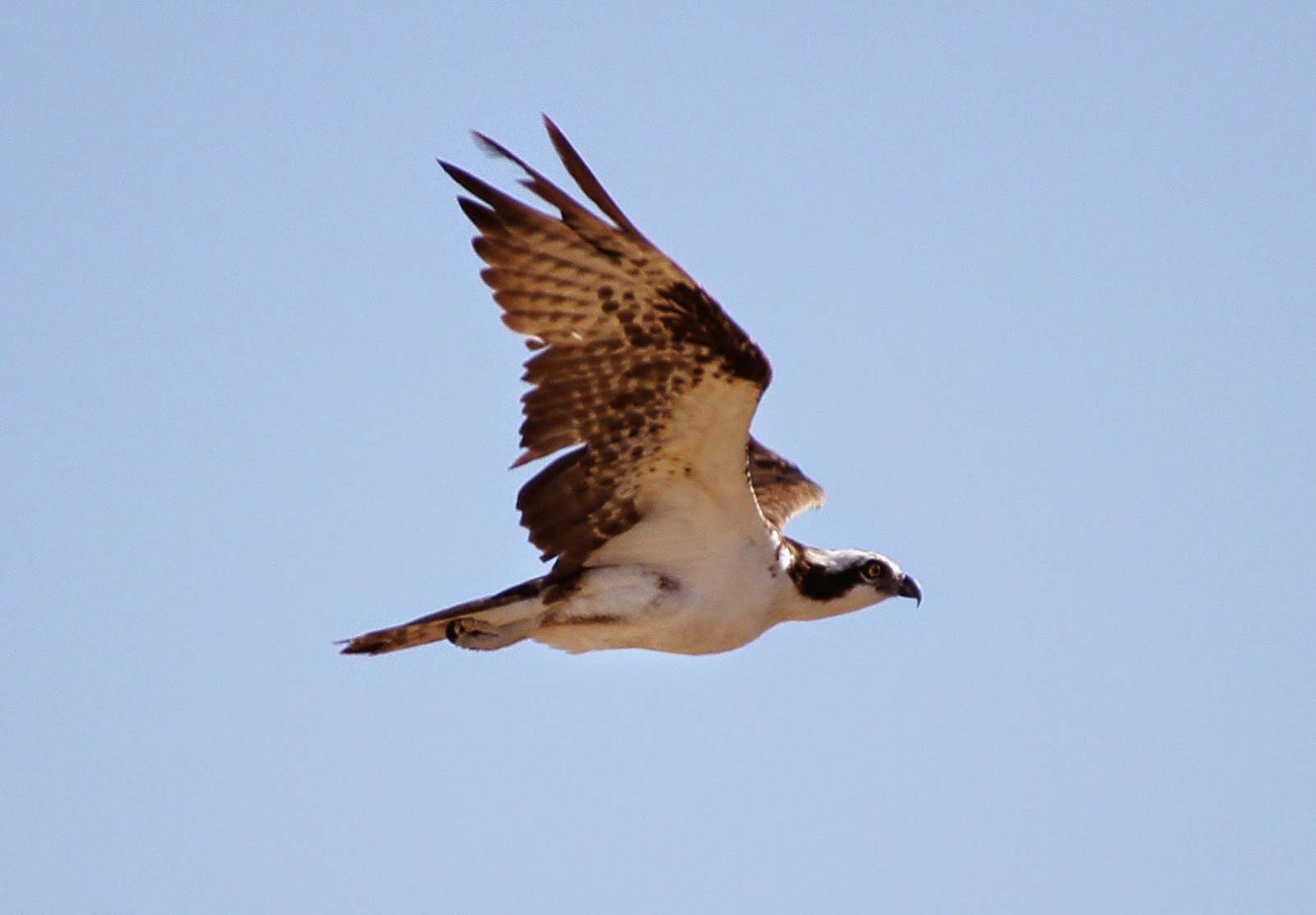
As I got home that day and e-Birded my sightings into eBird, I checked up on my total for Glendale Recharge Ponds, and it was 199. So now, I have only one more bird to go at Glendale to reach 200. I wonder what it will be? Probably a migrant in the riparian area. There's plenty of holes to fill with potential birds that could migrate through the riparian habitats. Back to the birds, birders at the Glendale Recharge Ponds are often greeted by raptors in the A.M., and they are commonly American Kestrels and Ospreys.
Shorebirds have been around in high numbers and in good force lately. Most of the expected species have arrived at the ponds at some point, and there are a few that I am still waiting for. One of the neat shorebirds has been the Semipalmated Plover, and they have been commonly foraging on mudflats with peeps.
Looking in dense flocks of Long-billed Dowitchers carefully will at times result in finding the odd and awesome Stilt Sandpiper. This Calidris is more of a mix between a Yellowlegs and Dowitcher than anything. The Stilt is one of my favorite shorebirds. and they look very different in their non-breeding plumage they are in right now as opposed to their breeding plumage.
Shorebirds often remain distant for the camera, but some may be close to the path for a decent photo, like the ones above. The American Avocet is one that usually remains cooperative time in and time out.
When the local Peregrine decides to make his daily run, he spooks every shorebird and duck in the Recharge Ponds. It looks like a cloudy mess of birds when the Falcon arrives.
When I arrived in the morning today at the Ponds, I ran into Jeff Ritz and he found a couple Soras by the parking area. There is a canal by the parking area that has marsh habitat in it, which is good during the year for Soras and Virginia Rails.
I also had the thrill of an up-close encounter with a Green Heron along a canal that goes between the Basins. He was muddy footed and grumpy at first, but then cooperatively posed for photographs.
One of the better sightings came from my first Black Tern of 2014.
I headed out west to other locations including the Arlington Valley in search of birds. I was hoping I would find a vagrant due to the recent storms in one of the many ponds in the area. The ponds were vagrantless, but one has to get their butt out there to try after big storms like this. Although there weren't any rarities around, I did have some cool sightings. It's cool to see three different white Egrets in one camera view. Great, Snowy, and Cattle, chilling like bros.
The Great left before I could get closer, but Cattle and Snowy stuck around. The Cattle Egret is uncommon while the other two are very common. It's not too often I see them up close.
A flock of about 350 White-faced Ibis were also present, but they were scared away by this Peregrine Falcon. The Ibis were very close to me when they took off, and it is quite amazing to be in the middle of a high density of them while they are in flight.
Concluding, fall has gotten off to a decent start. There are always many highlights every fall throughout Arizona. Hopefully many of those highlights will fall in the lenses of my binoculars and camera...
The following preview has been modified from it's full length feature. However, this is an extended preview about another birding movie that will hit YouTube.com. It's unlike The Big Year, A Birder's Guide to Everything, it's going to release on YouTube, hopefully someday and will be just about as long as the other features. Some may like it, and some probably won't like it. But the good thing is, it will be free for all to view anytime and anywhere (whenever it comes out). Please enjoy watching and reading this extended preview....
There are many different kinds of birds.....
Most of them are cool, and there are a few that aren't so cool. Don't worry, all of the ones above are cool. Can you identify them?
There are many different field guides to Birding in North America. Some of them are excellent...like these ones below:
These books, in my opinion, are North America's Big Five Field Guides. Each of them can teach us differently, and each of them may be good for all birding skill level. Have you picked up your copies yet?
There are also field guides to specific families of birds that draw more attention and careful identification than your typical pigeons, coots, mallard, and grackle. Some of them are excellent, like these ones below:
There are also regional bird finding guides and natural history books for specific regions. These books are published and then followed up by future editions. Some of them are excellent, like these ones below:
And then there are horrible examples of field guides for the three categories listed above. Examples could be given for each, hmmm....let's see. Nah, this blog isn't one that likes to hurt other people's feelings. Heads could be chopped off by one critical comment. But for those pictured above, give yourself a pat on the back, cause your beyond awesome! And there are plenty of excellent guides out there that aren't on here. The counter and writer don't have the room for everybody and can't afford all of them at once, but if your not up there, chances are you may be next in line :)
There are also many types of birders out there. MANY! We have experts and beginners, chasers and patch-sitters, crybabies and tough-bloods, patient and impatient, hawk-lovers and finch feeders, short and tall, good and bad, ethical and immoral, and just about everything else. When you walk down a high school hallway, you see many different stereotypes. The jocks, the cheerleaders, the teachers, the geeks, the punk-rock-emo-kids, the loners, the class clown, the bullies, the average kid, and a whole lot more. Well, the birding community and birders out there are no different. There a studs in birding, some that are nice and not-so-nice. There are jocks, good-and-bad teachers, plenty of loners, tons of geeks, a few class clowns, even a few bullies, tons of average birders, and of course, a whole lot more. And this comes to the point of this movie, which is called Birding Stereotypes. What type of birder are you? Do you fit into a certain stereotype? The birding community isn't too much like high school. Even though there are stereotypes, most of the different birders learn to get along with each other.
So I've taken the task of sort-of coming up with this task of making this movie, and so far, I have had the help of many of my friends, most of which are all birders. I'm the director of this movie, but I'll admit, I'm nowhere as funny as most of my friends. I can think of plots, but I'm not as funny in front of the camera. So I've had the help so far from some very awesome folks, most of which are birders. In the movie, Birding Stereotypes, my goal is to have 40 to 50 different stereotypes. This preview will feature 15 of those. Come along for the ride! These videos aren't public other than on here, so my readers, you are lucky (or perhaps not so lucky with a low budget and corny film!)
Hawks Only!
Eyes are on a rare bird in Arizona, but one "birder" can only see it as is a bright piece of hawk food. He yells at the other birder and describes the lookout hill as being a "hawk hill". He's on a mission, to be the best "hawker" in North America. Every now-and-then, birders do run into that "birder" who only cares about hawks. Click here below to view the video. And NOTE ALSO: If your browser runs slow by playing the video off of this screen, click on the YouTube button at the bottom right corner of this link icon to view the video in better fashion on YouTube for this and the remainder of the videos on this post.
All iPods out!
With the ever increasing demand in technology, birding has become the same way too! We now have most of North America's top field guides available with just a click of the iPod. Access to images and bird sounds has been made to be easier than before. Take a look into the eyes of the iPod/iPhone birder and play the video below!
Some Rivers Never Stop Flowing!
When Missy made the huge mistake about inviting Dr. Scenus along on a birding expedition, everyone in the vehicle had to listen to his "greatness" as a birder over decades. We have all run into birders like that, those people who never know when or where to stop talking and loving to hear themselves talk! Laugh along at the Blowhard Expert..
Take Your Field Guide Everywhere!
Some birders don't grow past the early field guide stage. They need their field guide present for all id's, and constantly flip back-and-fourth between looking at the bird and the book. Watch the video and have fun hanging out with the Field Guide Flipper!
Where's Joey At?
Irene and William keep running into the same problem from the same employee at their workplace. While they are working, their employee, Joey Brody, is usually sneaking out to look at birds. Irene and William don't understand birding, and Joey is ignorant and needs to have a job at something he really enjoys, such as avian studies. Watch the daily routine of "the guy who birds at work".
Impatient and Patient
When a reported Northern Waterthrush went undetected, one birder gave up after several minutes, while the other one never lost hope. Take a look at a double stereotype, impatient and patient.
Half Good, Half Bad
Some birders, like these two, are good in some ways, and terrible in other ways both at the same time. They know their birds, but also give their birds a very bad name...
Pitiful Peter
Peter's reputation has never been a good one. He's annoying, nasty, mean, rude, and everything else in the book. This especially takes place on birding tours, where Peter is commonly the one birders hate to be around. On the Timothy Titmouse Tours, Peter acts the same way, and guide Timothy Titmouse doesn't like it. As we all know, there's one in every group!
The Birding Guide
Rob Smith is one of the foremost birding guides in the United States. He has good ethics, knows his birds, and knows how to keep his clients happy. Join Rob as he shows his client William a variety of different target birds...
Let's Call It Right In!
Everyone knows Mr. Playback. He's the one who plays tapes to bring most of his targets in, whether they are a sensitive and limited species or a common species. Mr. Playback doesn't care either way, he wants the job to be done immediately. When others question Mr. Playback, he has excuse after excuse of why it is ok to play tapes. Take a look at Mr. Playback, he does call in a lot of birds in interesting ways with even more interesting expectations..
Josephine the Joke
When Josephine gets word of a mega Arizona rarity three hours away, she quickly hops in her car in hopes of seeing the bird. She picks up her birding friend Malcolm along the way, and they both take the long trip. Malcolm is expecting that Josephine was prepared for the trip. But with a mega rarity, freezing temperatures, and a heck of a drive, would Josephine bring all or any of the items Malcolm and she really need?
Fancy Meeting You Here!
When Birder Jr. was out birding by himself without guidance, he ran into famous field guide author and birding stud Lloyd Stillwright. While Birder Jr. wasn't expecting to run into Lloyd and yet have Lloyd talk to him much, Lloyd invited him to come along and he taught Junior many things without anything in expectation back. While some experts are thought of as being too busy, Lloyd is one who enjoys helping others just as much as he has enjoyed his own success. Doesn't watching this video below make you want to bird with Lloyd?
The Butcher Birder
The Lonerhead Shrike is a great birder. He has accomplished many things, but then he hasn't accomplished much at all. The Shrike is a jerk, and he hurts the feelings of many other birders. Because of his success, everyone wants to bird with him. But as the crowds say hi, the Shrike says bye. The heartless Shrike only cares about himself in each and every little way. He's the one birder who humble, friendly, and acclaimed field guide author and birder Lloyd Stillwright never has mentioned. The birders often say, "Who will the Lonerhead impale next?". Watch to see how the Shrike pierces his next victim.
It's Right There Guys!!!!!!
When Max birds with other people, life is never easy for him. Max often spies good birds and when he tries to get others on the birds, he can never seem to pinpoint the bird well. The other birders often get made at Max's describing skills. In the long run, how will this useless tactic affect Max's chances of birding with these birders for very long...
It's a punoo-peppwaaa
Ever run into birders who mis-pronounce the name every single bird it seems? Take a look at this Wisconsin birder, he's a prime example...
Now, that wraps up this preview of the movie-in-the-making, Birding Stereotypes, I hope you have enjoyed it. Out of the 15 stereotypes so far, which one are you or are you most like? Are you the: There's One in Every Group, The "Hawks-only Birder", The Bad Describer, Impatient or Patient, Half-good and Half-bad at the same time, the iPod Birder, The Field Guide Flipper, the Humble Expert, The Lonerhead Shrike, The Birding Guide, Mr. Playback, the Guy Who Birds at Work, The Unprepared Birder, The Blowhard "Expert", or the Bad Pronouncer? Or are you several combined?
There is a TON of work and filming left to do on this project, but you can be sure more birding stereotypes are going to be filmed. I hope you've enjoyed this preview and these clips for this film so far, which is only a third of the way done.
Actors and Actresses (so far!)
Laurence Butler
Mark Ochs
Gordon Karre
Chris Rohrer
Magill Weber
Timothy Knupp Jr.
Abigail Torres
Dominic Sherony
Nathan Williams
Tommy DeBardeleben (Me)
A huge thanks goes out to everyone who has helped so far!