After leaving Reeves County and Balmorhea Lake, we dropped down into Jeff Davis County, which is home to our next stop and pursuit, the Davis Mountains, most of which are privately owned. The Davis Mountains have amazing potential for birds, and have reminiscent bird life of those in southeastern Arizona's sky island mountain ranges such as the Huachucas and Chiricahuas. A population of Buff-breasted Flycatchers breed in the Davis Mountains. Other birds that may be found include Montezuma Quail, Mexican Whip-poor-will, Spotted Owl, and Rivoli's Hummingbird. Texas specialty wise, Colima Warblers have bred in this range, and have been found hybridizing with Virginia's Warbler. A chapter of the Nature Conservancy holds a preserve in these Davis Mountains, which would be our shot to search for these mentioned birds among others. Sadly, the Davis Mountains Nature Conservancy Preserve has a lot of limitations on when it is open, and that didn't fall in line with the April 28th and 29th that we would be visiting. Caleb and Josh came up with an alternative plan of owling on the 28th, camping out, and then birding in mountainous oak and juniper habitat during the April 29th morning hours.
We stopped at a place called Limpia Creek as we pulled up at our first roadside stop, well after dark. It was here that we would listen for owls and nightjars. Things got fun as we heard our first owls for Texas, Elf and Western Screech-Owls. Fenced off private property made it hard for us to access the habitat to pursue visuals further off of the road, but both species ended up treating us well and came within viewing range. Two women pulled up, who were also birders from out-of-state, and they enjoyed the owls with us.
 |
| Western Screech-Owl |
 |
| Elf Owl |
After owling, the four of us were exhausted and went to camp out under the stars in our sleeping bags. The crashing location was a place called Lawrence Wood Picnic Area, which would be our birding destination in the morning for the Davis Mountains due to the Nature Conservancy Preserve being closed. I remember sleeping well throughout the night, and at times another new night bird made it's way onto our Texas lists that is Common and sang out loud "Poor-will. Poor-will".


After a decent and much needed sleep, I woke up slightly before dawn as April 29th, the third full day of our trip, was upon us. The Common Poorwill continued to say his peace at times, and a Western Screech-Owl briefly joined in with his. Once dawn hit, a chorus of many different songbirds was impressive. Before it was really all that light out, we started birding. What we were really hoping for was Montezuma Quail, as the habitat was great with oak, juniper, and tall grassy areas on steep surrounding slopes. Birds who filled up our outing included Wild Turkey, Acorn Woodpecker, Western Wood-Pewee, a handful of Gray Flycatchers, Cassin's Kingbird, Hutton's and Plumbeous Vireos, White-breasted Nuthatch, Canyon, Rock, Bewick's Wrens; Western Bluebird, Cedar Waxwing, Black-chinned Sparrow, Canyon Towhee, Rufous-crowned Sparrow, Scott's Oriole, and Hepatic Tanager.
 |
| Wild Turkey |

 |
| Gray Flycatcher |
A few clear whistles echoing loudly from the slopes above us into the flat terrain we were on indicated a new life bird for me as David called out, "Black-crested Titmouse". I was pumped at the sound of a new life bird and I wanted to see it right away. Josh chimed in and said, "Tommy, they will be everywhere on this trip. Everywhere". I was glad to know that they would be everywhere, but I have a knack for wanting to see a life bird after I hear it. While I didn't rush running up into any slope after a bird that I knew would be abundant for a good portion of the trip, I did keep my ears out for them if they would come any closer. It didn't take long for the whistles to start coming from the end of the picnic area, and I made may way over to catch my first glimpse of the Black-crested Titmouse.


The Black-crested Titmouse has a range in North America that covers a lot of Texas and some of Oklahoma. It is tied to oak woodlands, and it's range continues much further south into similar habitats in Mexico. This species used to be one species with the widely familiar and eastern-tied Tufted Titmouse. The two have hybrid contact zones where their ranges meet near the central strip of Texas, but otherwise, their range doesn't overlap.


Caleb, David, Josh, and I spent close to three hours birding Lawrence Wood Picnic Area, and we had close to fifty species. It was a fun and productive location to bird. From there we went down to the southern base of the Davis Mountains, where we stopped at a few places and birded before continuing further south into west Texas. A rest stop along the Highway 118 that we were on was a good one. It had tall cottonwood and other riparian trees along a creek. A Common Black-Hawk flew out of the trees as it gave it's distinctive call. Working the riparian habitat along the creek gave us migrants of Swainson's Thrush and Northern Waterthrush among 27 species in a quick stop.

After leaving the area of the Davis Mountains, we started to make our way towards Big Bend National Park, which was a three hour drive. Big Bend was where we'd bird in several places before hitting up the Chisos Mountains within the park for a long hike to conclude the day. Along the three hour drive, we passed through this small town called Alpine, which probably wasn't named too well considering there weren't any pine trees in sight. We got plenty of food and gear we would need for the hike. After grocery shopping, we encountered Alicia's Mexican Restaurant. The food there was incredible, and it marked that second day in a row of having a great lunch at a Mexican restaurant.

Driving through some grassland-ish areas along the way was fun. Birds we had included Scissor-tailed Flycatcher, Cassin's Sparrow, and Lark Bunting. We had dropped into Brewster County, which is the home of Big Bend National Park. The aftermath of the lunch meal left us in need of some loud music, and I said, "Caleb, can we listen to Amaranthe?" Caleb let me bust it out, and while Caleb already likes the music of my favorite band, after playing a 20 song playlist Josh and David told me they enjoyed Amaranthe's music too. Score.
 |
| Lark Buntings |
Before we knew it, we entered into Big Bend National Park. As with most national parks, this one could be driven for long distances. While the Chiso Mountains were our primary destination for entering this park, there were other places to visit too. Cottonwood Campground was the first place we visited after driving a considerable distance south within the park. I reached a point of tiredness and dozed off for a half-hour. When I woke up again, we were driving into Cottonwood Campground, which I immediately thought was a cool-looking spot. The campground is well named and is filled with cottonwoods, has grassy under-stories, and the open under-stories below the cottonwoods are lined with thick mesquite and paloverde trees. Barely south of the campground is the Rio Grande River, and halfway across that river width is the country line of the United States and Mexico. It was a crazy thing to think about. But first, we stuck to the campground.


Lucy's Warblers and Painted Buntings filled up the campground sounds with their songs, but the first big highlight came quickly when Josh looked behind us and said, "Guys, I've got a Golden-fronted Woodpecker on that sign". We turned to look and see the bird Josh called out and it became a lifer for us, my fourth already at the time just in west Texas. The Golden-fronted Woodpecker didn't stay on the sign long, and flew to nearby trees. Throughout the time spent at Cottonwood Campground, it was fun to study this species (as there was a pair of them present) and to observe them up close during the time spent.


Golden-fronted Woodpeckers are very closely related to Gila and Red-bellied Woodpeckers. The trio sounds similar to one another, and in most respects, they look similar to one another in appearance, size, and structure. In the United States, Golden-fronted Woodpeckers reside throughout much of Texas and a small portion of southwestern Oklahoma. They hybridize regularly with Red-bellied Woodpeckers where their range overlaps. Golden-fronted is obviously the most striking out of the three species mentioned, and it is found mainly in decidious forests but also plenty of drier, mesquite dominated habitats as well. South of Texas, it's range continues further down into Mexico.


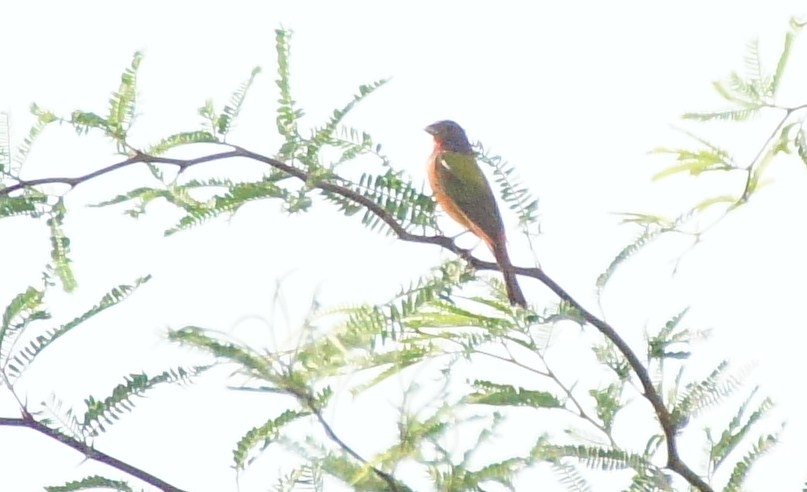
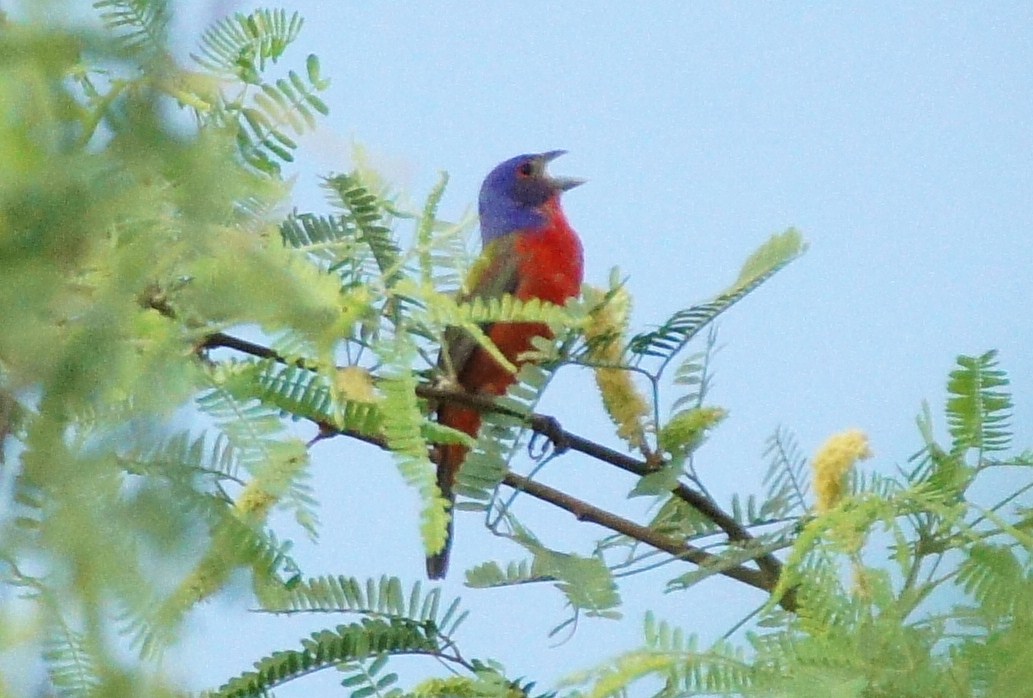
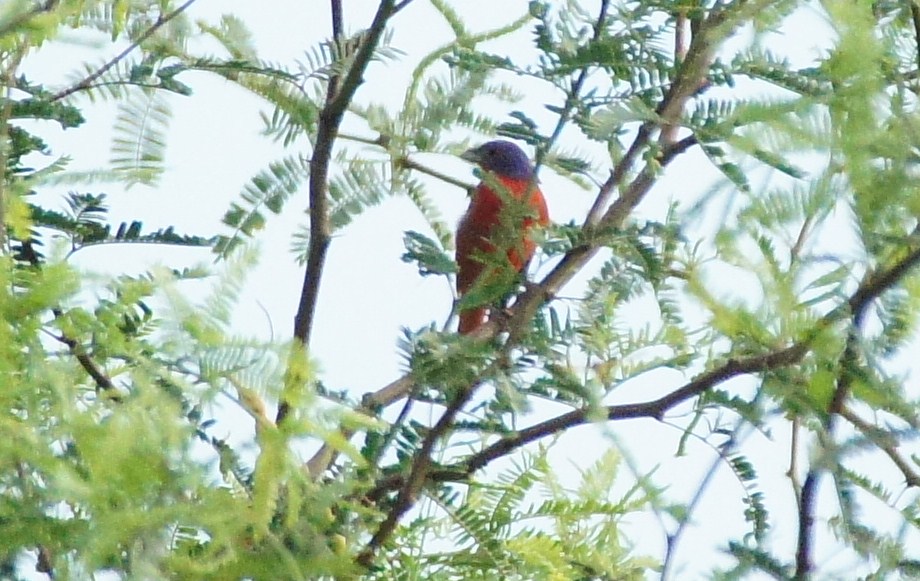
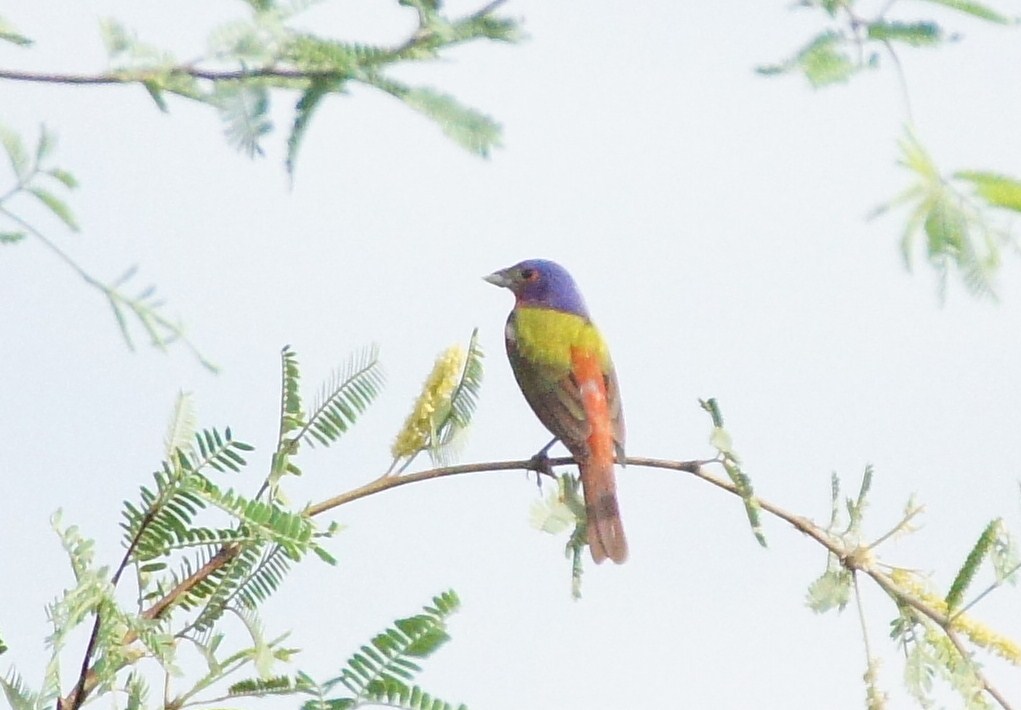
In close to two hours of birding Cottonwood Campground, other bird highlights we had among 52 species were Greater Roadrunner, Anna's Hummingbird (pretty scarce in Texas), Vermilion Flycatcher, Brown-crested Flycatcher, Bell's Vireo (some of which were definitely from the eastern population), Crissal Thrasher, Clay-colored and Black-throated Sparrows, Green-tailed Towhee, Orchard and Bullock's Orioles, Pyrrhuloxia, and stunning Painted Buntings.
 |
| Ladder-backed Woodpecker |
 |
| Lark Sparrow |
 |
| Anna's Hummingbird |
 |
| Summer Tanager |
 |
| Vermilion Flycatcher |
 |
| Painted Bunting |
It was also interesting to walk down to the Rio Grande River and look just across the river and into Mexico. Seven common species filled our Mexico lists while we stood in the United States, including Northern Cardinal and Black and Say's Phoebes. Caleb tried to chase a Greater Roadrunner into Mexico, but that plan didn't work out.


As we finished up at Cottonwood Campground after throwing around a football for fun, we would make our way much further into the heart of Big Bend National Park to the headquarters and trailhead that would take us up into the Chiso Mountains. That will be another story to tell. What was cool about driving along on our way was a remarkable view point of the Rio Grande River that showed a big "bend" in the river, which is where the park gets it's name from.