Showing posts with label Merlin. Show all posts

Thursday, February 21, 2019

In The Gila: A Swifter White-throated Bird & Company

Gila County, Arizona.

It was my favorite place to bird last year in 2018.  Earlier into this year of 2019, it's still my favorite place to bird.  February is reaching more of it's ending points, and March is right around the corner.  So far, I have made three visits into Gila County in 2019.  Last year I didn't get involved in birding the County at all until later in May, and then seriously starting in August.  By doing some math I guess that means I'm off to a better pace this year.  Yeah baby!  I hope to bird it consistently throughout the year this year.  Plus Caleb Strand alerted me to some freaking awesome possibility for Gila County, some sort of bird.  Maybe I shouldn't let that fly out quite yet.

Hint:  It's not a Northern Cardinal.  But the Northern Cardinal is spiff.  

My first trip to Gila this year came on January 23rd, and it was a lame trip to Roosevelt Lake.  Ryan O'Donnell had found a Red-throated Loon adjacent to the Grapevine Group Site prior to my visit.  I wanted to try for the Loon, and I did.  The Government shut down prevented me from going into certain locations, and it took a lot of fun out of the day.  I hiked into Grapevine for over two miles to attempt at seeing the loon.  The trip to Roosevelt Lake was one that I called lame, didn't I.  Know that if I had gotten a Red-throated Loon, I would've called it a great day.  There weren't many highlights in the places I stopped at during the day, but I did get a Mountain Bluebird at Bermuda Flat.  The Bluebird was a new Roosevelt Lake "patch" lifer.  My reason for going to Gila County was because I thought the Madera White-throated Thrush had possibly left.  Past noon I got a text saying that it was re-found.  Luckily, I got to go back and see the Thrush a week later, as my previous post explained.

On February 7th, 2019, my buddy Mark Brogie and I visited Gila County for a day long trip and we covered Roosevelt Lake for a majority of the time.  Before scanning the lake from it's many recreation sites, we stopped and birded at a few RV parks that are along Tonto Creek in the small towns of Punkin Center and Tonto Basin.  The Greenback Crossing RV Park in Punkin Center was a first time visit for me.  We had high numbers of birds, and it is a location to keep on the radar in the future for birding.  The RV Park in Tonto Basin, the one that is off of Bar X Riparian area, made for pleasant birding too.  We had numerous American Robins and Cedar Waxwings.

American Robins and Cedar Waxwings filling up


Gila County has the best dogs too.  Max made his wanted appearance.

Roosevelt Lake was pleasant as usual, and quite a few sections of the lake harbored birds in abundance.  Usual suspects were detected during our careful scans for rarities.  As we kept eyes open for the possibility of that Red-throated Loon, I did manage to find three different Common Loons during the day.  Brogie relocated the White-throated Sparrow I found last year.  The weather was great throughout the entire day.

A skulky White-throated Sparrow

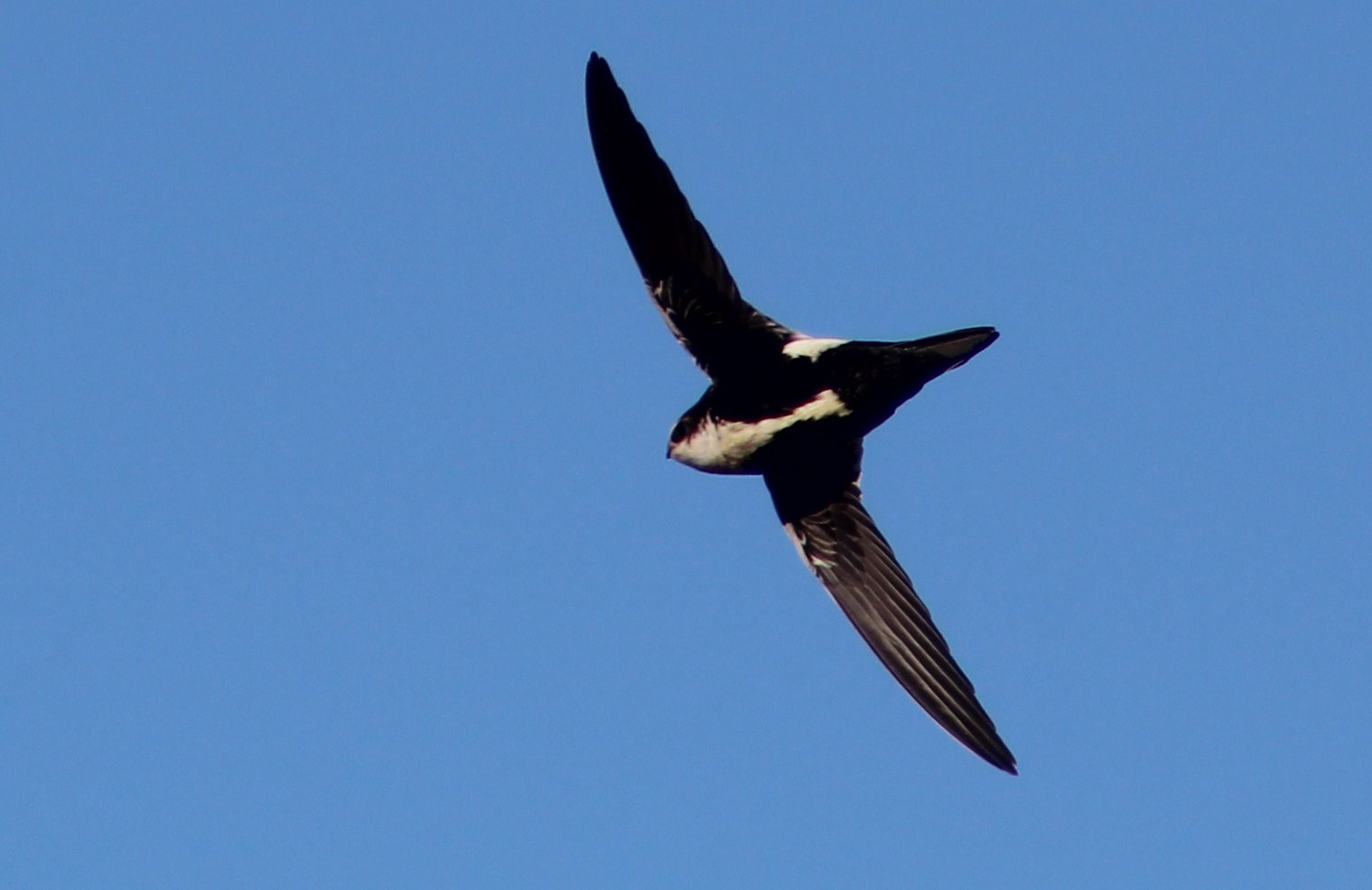
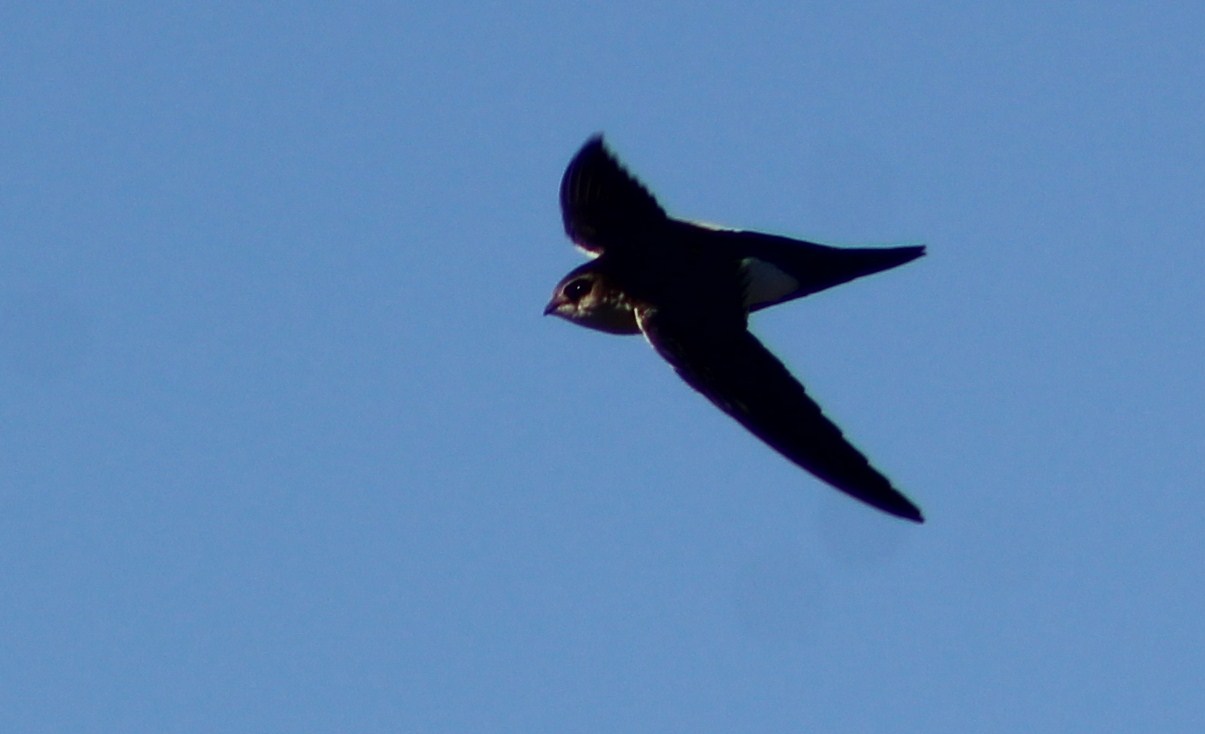
Mark and I walked out on the peninsula toward the lake's direction via the Grapevine Group Site.  It was here that we would put in a good effort to scan for that loon.  We didn't have luck with that, but as we got closer to the lake, Brogie pointed up a short distance, and said, "Hey look, White-throated Swifts!"

A short distance up for a White-throated Swift isn't seen very much, but it does happen at times.  I looked up to see White-throated Swifts going along the ridge we were walking along in good numbers.  And they were flying shockingly low.  It was incredible, and scanning the lake produced dozens and dozens of more.  The Swifts put on a show for Brogie and I, and zipped by at close-to-head levels at times.  All we could do was attempt to photograph them and hope for the best, because they are called Swifts for a reason.  White-throated Swifts fly in rapid speeds, and they have been seen fleeing from Peregrine Falcons at speeds thought of to exceed 200 mph.  They zip in and they zip out, and once they slow down for a tenth-of-a-second, they zip up again.  Photographing them is extremely difficult.  White-throated Swifts live in a variety of surrounding habitats that have a common denominator of steep and tall cliff faces among canyons and mountains.  They are a well-named White-throated bird, just like the subject bird in my previous post.  These birds are highly gregarious, and feed on a wide variety of flying insects.  For over an hour, the peninsula out to the lake became an epic Swift observing ground for Brogie and me.  And I did manage some pictures..


On February 12th, Dominic Sherony and I made plans to go to Gila County to bird within the Payson area.  Dominic is a good friend of mine, and snowbirds from New York.  He didn't come to Arizona last year, but he is back again this year.  Like me, Dominic enjoys birding in under-birded areas.  Gila County sounded fun to him, like it did to me (of course).  We decided to go up and bird just to the north of Payson along the East Verde River.  There is a road, called Flowing Springs Road, that we hiked and birded and it runs for about a mile along the East Verde.  It is a pleasant walk, and the birding there is pretty solid.  Birds of prey in both Bald Eagle and Merlin were our highlights there.


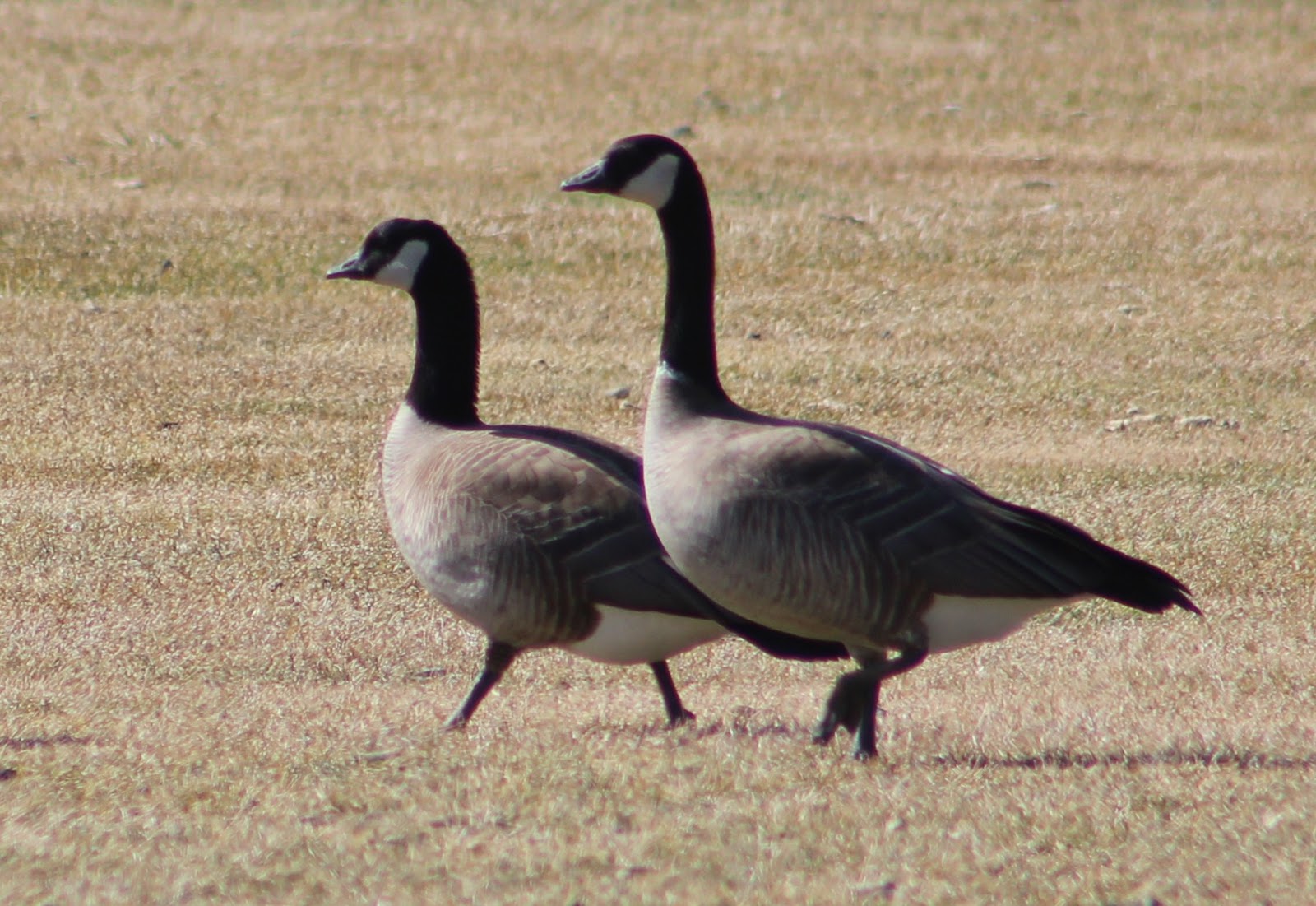
After the East Verde, we visited Green Valley Park in Payson to search for waterfowl and uncommon songbirds.  Last year, a Rufous-backed Robin and Northern Parula showed up at the park in the winter.  They were two birds that I wish I would've chased.  Dominic and I couldn't find any standout highlights.  We decided to check a golf course and pond just west and northwest of Green Valley Park.  A large flock of a hundred or so Canada Geese caught our attention.  Almost immediately a few smaller white-cheeked geese caught our attention.  When they flew, they appeared tiny and their voices were much higher pitched than the Canada Geese.  After lots of scanning, scanning, and scanning, we knew we had a few Cackling Geese.  We took distant, hopeless photographs that didn't come out too well.  The solution was to run out onto the course when there was a break in the action.  Hey, getting a new Gila County lifer calls for action!  I managed to get close to the birds and get some diagnostic photographs.  There were 4-5 Cacking Goose, with one being a Richardson's Cacking Goose and the others appearing to be the Taverner's Cackling Goose.  Lifering in Gila on a day I didn't expect to was awesome.  And Dominic started to ask quite a few questions about birding Gila County and starting to keep a list there with some good-sounding consideration.


Richardson's Cackling Goose

Cackling Goose

Richardsons's and Taverner Cackling Geese


Thanks Mark and Dominic for birding Gila County with me early into 2019.  Between the last two posts, three birds with the starting name of "White-throated" have been mentioned and featured...are there anymore White-throated birds in North America?

Thursday, November 10, 2016

Maricopa Madness: A New Record

You know what can really be frustrating when your doing a County Big Year and when your about to break the record?  The answer is silence from the birds you need.  And not just silence from ones you need, they are the ones that others find and you chase them only to miss them.  Once the Winter Wren tied my record on November 2nd at 313 bird species for Maricopa County, I was anxious to get that 314.  In the course of a week, I made 6 attempts in 6 chases at that potential record breaker.  3 times I fell to an American Bittern at Hassayampa River Preserve.  This bird would work it's schedule and would show itself on days that I wouldn't be there, or at times just hours or less before or after I would leave.  One came from a hypothetical White-winged Scoter at Lake Pleasant.  The other came from a Ruddy Ground-Dove in a backyard.  Finally, I missed an Eastern Phoebe in Phoenix, one that has a tendency to be chase able.  These birds excited me and each would have been great for 314, but as things go in a Big Year, it's always unpredictable and you never know what may happen.  But 0 for 6 over a week.  At least the company has been good with the birding buddies that I have.

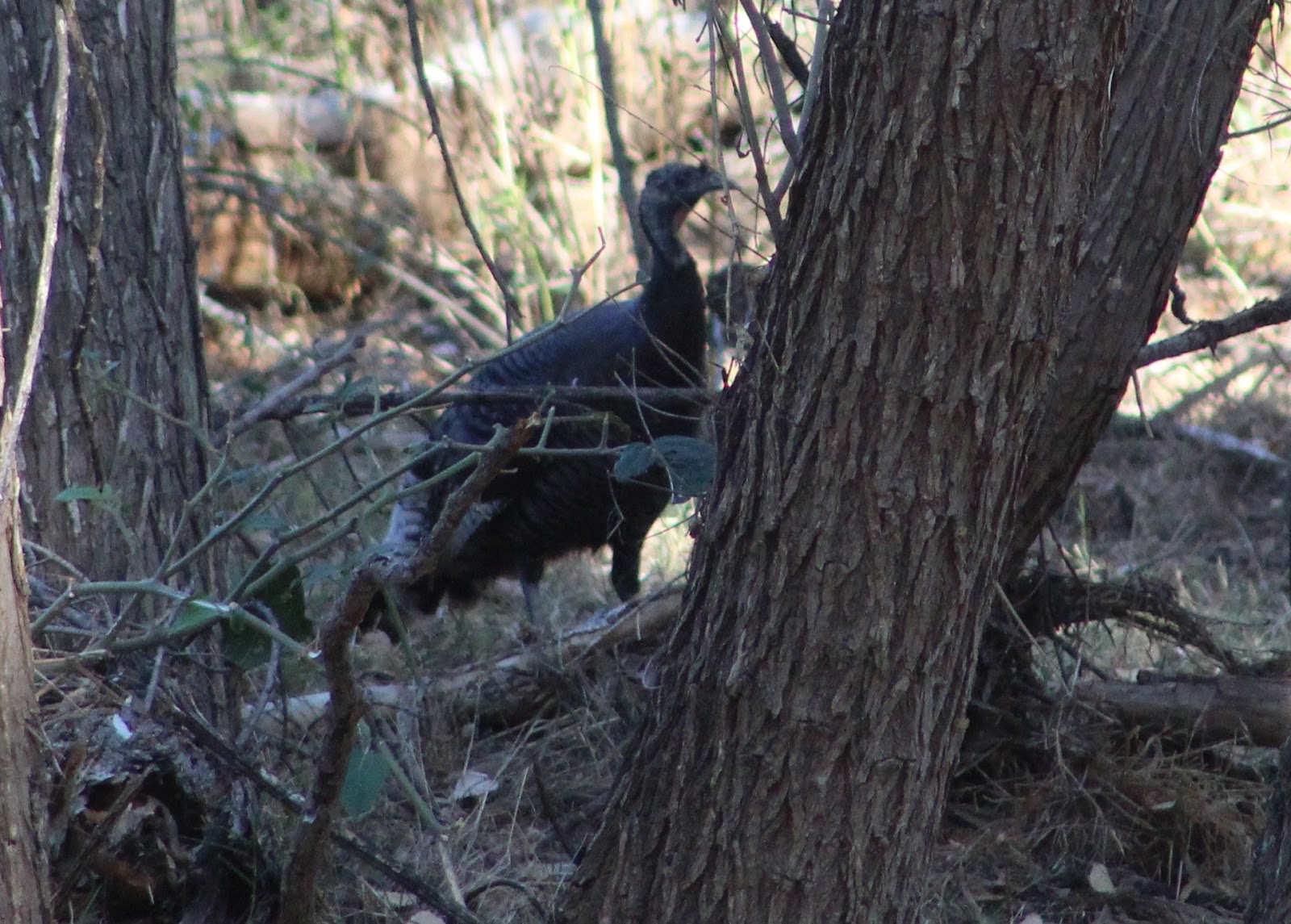
One huge plus during the week of strikeout after strikeout was getting to photograph my first Maricopa County life bird of this year, a Wild Turkey.  I wasn't able to photograph the Wild Turkeys in the Reavis Ranch area of the Superstition Mountains because of how wary they were.  A second observation of Wild Turkey at Sunflower was great but that Turkey was also too afraid of me for me to be able to snap off a documentation photograph.  But the third Wild Turkey observation came for me this year at Hassayampa.  It was mind blowing to me that after not recording a Turkey in Maricopa County ever prior to 2016, that I have now had 3 sightings in 2016 alone.  This one that I got to document at Hassayampa was very wary too, luckily I spied it at a good distance away.


Caleb Strand spied this Red-shouldered Hawk soaring over the Hassayampa.  One of our neatest hawks.


Gordon Karre and I searched for White-winged Scoters and Surf Scoters at Lake Pleasant.  We didn't get to see any Scoters, but Gordon added several birds to his Maricopa County year list that day.  Two recent additions to my Big Year, the Red-necked Grebe (far left) swam past a flock of Red-breasted Mergansers.


On the Eastern Phoebe chase in Tolleson, Gordon and I searched and searched only to miss the Eastern Phoebe.  But two Merlins were a decent consolation.


November 9th came around, a week after I tied my record and of course, a week full of six strikeouts that would have broken the record.  I had some decisions to make on the 9th, but I decided to go after an easier target and form up a good day plan that would mix together a variety of habitats to give me a shot at discovering several year birds.  That easier target was the Fox Sparrow, and I went to Rackensack Canyon north of Cave Creek to attempt that.  Rackensack Canyon is the best spot to see Fox Sparrows in Arizona, and shortly into my search, I found myself looking at my record breaker, the 314!


More than one Fox Sparrow showed itself at Rackensack, and by the end of the walk I had 5 individuals.  And there are many more to arrive at this spot where they spend the winter.  One time I had a count of 15 birds.


The rest of the 9th was spent searching and then striking out on a Black-legged Kittiwake found at Lake Pleasant by Caleb.  Luckily, Lindsay Story discovered a Golden-crowned Sparrow at Phon D. Sutton Recreation Site along the Lower Salt River.  This GCSP was a probable returning bird that spent last winter at Phon D. Sutton and was in the same area as this one.

I went to the Salt River today on the 10th in pursuit of the Golden-crowned Sparrow.  If I could land it, I would set another new record for myself at 315 Maricopa County year birds.  I got to Phon D. Sutton before the sun was up, and so did Barb Meding.  Barb and I searched the usual spot without any luck.  An hour went by, and the sparrow was a no show at it's usual spot.  I decided to work my way around the surrounding area to listen for call notes from Zonotricia sparrows.  Luckily, I found the Golden-crowned bird and was able to bring Barb into the desert so she could see it too.  After I initially refound it, I had to refind it again.  Luckily, the bird appeared for Barb and me, and it was relatively out in the open.  This was a perfect look, one that we were hoping for!  And my 315th year bird for Maricopa County was the Golden-crowned Sparrow.


At Phon D. Sutton, I also found another Winter Wren.  This one showed itself well, unlike the previous one that was a heard only.  Now if only I could find it's brother the Pacific Wren...


The Salt River was also home to this super tame Greater Roadrunner.  I even got within feet of this bird, and selfies were included!


We have 7 weeks left in 2016.  What else will show up in Maricopa County during the remainder?...

Monday, December 28, 2015

Reasons To Blow the Trumpet

2015 is coming to a close....and it's coming fast.  This year has literally flown by as quickly as I can remember previous years flying by.  2015 may just be the fastest year of life that I have lived.  It has had it's times when the clock seems to stop.  A stare down with a Long-eared Owl is one such example.  Gosh, what a cool owl.  A short observation seemed like hours..


I recently had the privilege of going to southeastern Arizona with my friend, Susan Fishburn, to chase rarities such as Short-eared Owl, Least Grebe, Green Kingfisher, Rough-legged Hawk, and more.  Susan is doing a Big Year in Arizona, and I had a day planned out that we were in strong hopes of of landing her more year birds.  As any day like this could go-the plan didn't last long and we found ourselves scampering around Arizona by the day's end.  Our first destination went as planned, which was an exploration of the San Rafael Grasslands and the Bog Hole Wildlife Area within the Grasslands.  We arrived at the Grasslands with over an hour before it got light out in a hot pursuit of any Short-eared Owls.  Despite our efforts in a 25 degree atmosphere, the Short-eared Owls didn't make an appearance.  From there, it was on to Bog Hole Wildlife Area to try for a Least Grebe that was in a pond within the area.  After a scary and needless detour, we found the Wildlife Area and started to walk through the grassland to get there.  After never having a good visual of Baird's Sparrow in my life, luck finally kicked in and one landed right in front of my face.  I had an amazing binocular view for five seconds, and I managed to get a photograph of the bird flying away.


Out of all of the times that I have been to San Rafael, I still have yet to see a Baird's Sparrow perch on a fence wire.  It is the common form of viewing that birding folks have of this Tommy repulsive sparrow.  Following the Baird's, Susan and I went down to the pond at Bog Hole and quickly found Susan the Least Grebe for her Big Year.  Gosh, this bird is tiny, and it is certainly well named.  Out of the seven Grebes in North America, it is probably my favorite, certainly not my least..


Six White-tailed Kites were also in the San Rafael Valley.  While they didn't come very close, they did provide some entertainment.  They used to be known as the Black-shouldered Kite, I guess both names suit this impressive raptor.


 Birding in the San Rafael Valley took Susan and I longer than expected.  Over breakfast in Patagonia, we talked about the remainder of the day and we had some big decisions to make.  We had a Green Kingfisher at Patagonia Lake State Park to chase, as well as Rough-legged Hawks and a Lapland Longspur in the Santa Cruz Flats.  With it being close to noon, the Kingfisher would take a long time and a majority of the rest of the day.  We wondered if we would make it to Santa Cruz Flats with any good time left in the day to visually see things.  In the process, we enjoyed this Yellow-throated Warbler in the vicinity of Patagonia City Park.  It was found earlier in the month and this rarity has been enjoyed by many birders.  After getting my first Yellow-throated Warbler in Maricopa County (without any photographs), this one didn't really compare to that one, but was still an awesome sight.


After some careful thought, we decided to head out of Patagonia and head north to Santa Cruz Flats.  It was at Santa Cruz several days before where Doug Jenness observed two Rough-legged Hawks, and Susan and I were hoping to get them for her Big Year.  The Flats were full of dozens of raptors whether hawk, falcon, vulture, or caracara, but..no Rough-legged Hawks.  Despite the disappointment, Crested Caracaras are always awesome to see!


Lightning then struck the Arizona Birding Listserv as Melanie Herring reported six possible Trumpeter Swans, all of juvenile plumage, in the the Arlington Valley in Maricopa County.  Melanie is an awesome birder, so Susan and I knew that this was a good report.  We immediately made a beeline for Arlington and Buckeye area where the Swans were being seen.  After 1.5 more hours of driving, we arrived at the spot in the area along Narramore Road and found Kurt and Cindy Radamaker watching the swans.  The chase was successful, and the Trumpeter Swans were right in front of us!


The identification between Trumpeter and Tundra Swan juveniles is one of North America's biggest identification challenges.  While we looked at these bird live in the field, all of us certainly got the impression of them being Trumpeter Swans.  Susan and I backtracked a short distance to pick up Caleb Strand, and the three of us all lifered on this huge bird.  For the time being, we enjoyed these Swans up close.


When the day was all said and done and after birders returned from the field, Kurt Radamaker quickly realized how difficult it was going to be to confirm the birds as certain Trumpeter Swans, because juvenile Tundra Swans can look extremely similar. Kurt emailed experts around the country, and both Kurt and I corresponded on our opinions of the birds.  As I did research, I went back-and-fourth between both species as my conclusion, and so did Kurt.  For our main impressions during this time, we felt as if the birds were Trumpeter Swans.  On the flipside, some of the characteristics matched up with the Tundra Swan too.  Trumpeter is noticeably bigger than Tundra, but size comparison is difficult in the field when one species is present.  These swans did seem husky and bulky like Superman.  The birds also didn't have any pale or yellow spots on any of their lores, which at least some of these six birds should have by now if they were Tundra.  The swans also had a long flat bill and a flat forehead to go along with the bill.  They were huge!  As experts discussed the identification, the consensus favored Trumpeter over Tundra even though these Michael Jordan's of birding couldn't say for sure what species it was.  Doesn't that say something about how difficult these birds are to identify?!


Although not a for-certain field mark, most Tundra Swans become whiter by this time of the year.  To have six birds like this with only one of them having lots of white on it while the contrary was the other five being a dusky gray-brown, also says something.  To be honest, the research was fun, but the in-conclusions were downright annoying.  


Melanie found these birds on December 19th, and on the following days the Swans weren't seen.  Well, it turns out they cover a large area within the Palo Verde section of the Arlington Area.  They are never in one place for very long.  Jay Taylor relocated them on Christmas Eve and several birders saw them on the following Christmas Day, where on Christmas they were seen quite easily by most who went out to see them.  It's as if the Swans knew it was Christmas.  Interestingly, several birders heard the swans giving vocalizations, and said they sounded like Trumpeter Swans.  Magill Weber even heard their heh-heh multi-part vocalizations.  When I read these reports, I was stoked!


 I then set out on a journey over December 26th and 27th during the mornings, I wanted to find the Trumpeter Swans and obtain recordings of them calling.  With me loving to bird by ear so much, I wanted to hear the swans vocalizing.  Despite careful searching, I couldn't find the swans.  But others did, including Melanie.  When Melanie found them, they landed in the Lower River Road Ponds.  During this time, Melanie documented a constant head-bobbing behavior displayed by the Swans that they display before takeoff.  Every one of the six swans participated in the head bobbing that Melanie was able to film.  And no, there was no rock music playing, they just like to bob their heads a lot.  Interestingly, this is a behavior that Tundra Swans do not show.  Yes, Tundra Swans nod their head up and down at times, but not in this constant motion.  Melanie then got some vocalizations on film that matched Trumpeter when these birds took off.  When birders saw these videos, particularly Phoenix ones who have seen these swans, we all blew our trumpets.  While no official releases have been made yet, I don't see this one going down as "maybe Trumpeter" any longer!  If confirmed, it will also be a first Maricopa County record, and one of only a handful of records for Arizona.  A life bird for me if so also..


Besides, don't they look like Goliath?  


See these two awesome kids?  This is Caleb Strand (left) and Walker Noe (center).  This picture was taken by Dave Noe, Walker's dad, who is also cool.  We recently birded and found neat birds on Christmas Eve before all of the cool Christmas activities began.


Remember the magnificent Yellow-throated Warbler that Caleb found through the Tres Rios fence?  The three of us caught sight of it as we were at Tres Rios.  It was still in the same spot, 100 feet away (maybe more), but for once it was hopping around on the outskirts of one of the cottonwoods.  My desperation shots finally showed something...


And actually, one day I somehow got closer to the Yellow-throated Warbler...closer than the 100 foot shots that are shown above...


I recently also saw this Common Ground-Dove..


As well as this Marsh Wren!  It's not often Marsh Wrens are cooperative for photos, these are the best I have ever obtained of the species.


On one of the last two days I have been looking for the Trumpeter Swans to study them for myself further, I have seen some other cool birds in the Arlington area.  The time frame also falls into place with the 35th annual Gila River Christmas Bird Count, which is led by Troy Corman.  I ran into Troy and he showed me this Merlin, who was feasting on a bird.


It's also impressive to see a large "clump" of Yellow-headed Blackbirds.


Even though on December 26th and 27th when I missed the Trumpeter Swans after wanting to see them further, the trips I took to the Arlington Area weren't without a major reward.  On the 27th (yesterday), I ran into Melanie Herring at the Lower River Road Ponds.  While we were talking about the swans, a shorebird buzzed past us and was calling.  It briefly landed behind one of our trucks.  Right away, I had a strong feeling it was a Mountain Plover.  Actually, I knew it was a Mountain Plover.  The bird then flew away from us and barely across the street, landing on a berm.  It was a Mountain Plover!  


Mountain Plovers are considered to be very rare in Maricopa County, and if the Trumpeter Swans get accepted as by the ABC that would be my 374th Maricopa County bird, which means this Mountain Plover is my 375th.  Yep, it's a Maricoper, one that I have always wanted to see in Maricopa County.  Ever since I've actively birded in Maricopa County, this is only the 3rd time I've heard of a Mountain Plover observation.  What was more surprising is that the habitat that it landed on and around isn't Mountain Plover-like.  This bird seemed lost, and Melanie and I got extremely lucky that it landed here.  Sometimes birding comes down to being in the right place at the right time!


A rule of birding often goes like this:  "When your looking for a mega-rarity, always keep an eye out for other things, because those other things show up when they aren't the sole focus of the efforts".  I never thought in a million years I would see a Mountain Plover by scanning the Lower River Road Ponds!  As the Plover stood on the berm, it flushed by a passing car as Melanie and I were trying to get closer.  I was able to snap a diagnostic flight view, which was cool because we first saw it in flight as it zoomed by us.


When the Mountain Plover took flight, Melanie and I thought it was gone.  But we then caught another sight of it in the same area.  It was running down a dirt road that was in the middle of tall alfalfa fields.  Again, a bizarre way and location to see a Mountain Plover.  This time, we had better looks.


The Plover disappeared again from our sight and we heard it calling abruptly as it flew over the alfalfa field.  It probably knew it was lost and out of habitat, and we didn't find it again after that.  We were in the right place at the right time, and that sequence was one of the best I've ever had as a Maricopa County birder.  Lucky is the word for it!  Troy Corman said it was the first Mountain Plover ever for the 35 year old Gila River Christmas Bird Count Week.  

This year has been phenomenal for seeing birds, and it has been another excellent year of Maricopa County birding.  In 2014, I added 8 birds to my Maricopa County list.  I thought that was a lot and was much more than what I expected, and in this year, I also added 8.  That will likely be the outcome, unless another amazing rarity is found in these last days of 15'.  Greater Pewee and American Golden-Plover were my first two additions to my County list this year, and the last six came from October and after.  5 of those came after November started, these last two months have been crazy.  A Red-eyed Vireo came in October, November held Heerman's Gull and Purple Finch, and December has yielded Yellow-throated Warbler, Trumpeter Swan, and Mountain Plover.  For every Maricopa County lifer I get, it's always fun to predict what the next will be.  Most of the time, the predictions are never close...